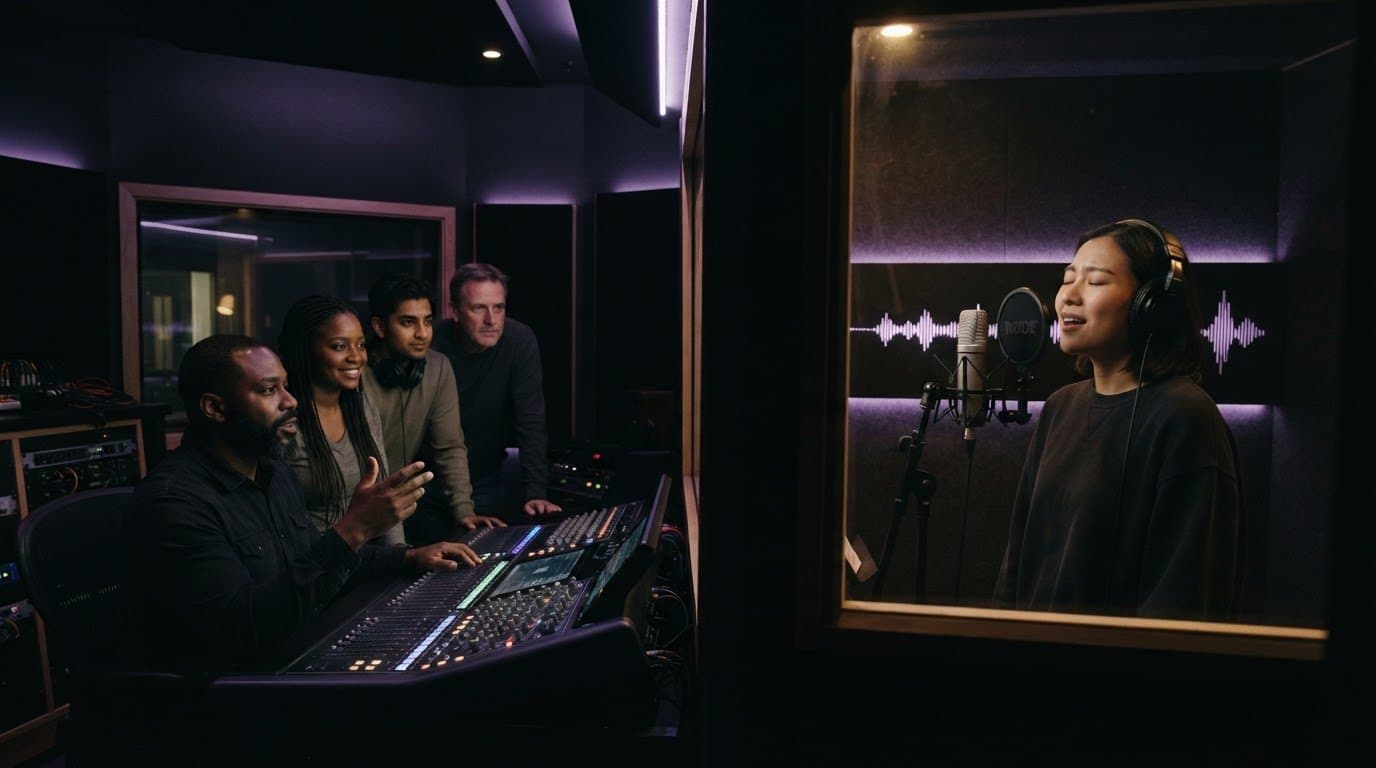
Producer vs mixing engineer: who does your song need?
Producer vs mixing engineer which do I need? Choose by your song's unfinished work, compare roles, and prepare a clear brief before you hire a pro.
October 26, 2026
FRANKLY with Frank Lee
Hire a producer if your song still needs creative decisions; hire a mixing engineer if the recorded parts are finished but need balance, clarity, and cohesion. Neither title automatically includes recording, editing, or mastering, so define those jobs before you book. For your 2026 project, choose the person who solves the unfinished work—not the person with the longest equipment list.
- Producer vs mixing engineer which do I need? Choose production for unfinished musical decisions; choose mixing for finished recordings.
- A producer shapes arrangements, sounds, and performances; a mixing engineer balances and processes recorded tracks.
- Oohyeah connects musicians with music professionals; choose by relevant work samples and an agreed scope.
- Need production and mixing? Approve the arrangement before the final mix begins.
Why this matters
A muddy chorus can come from competing parts, poor recordings, or an unclear mix. Those problems sound related, but they need different work. Paying someone to rebalance tracks will not settle whether the chorus needs a different bass line.
Name the problem before you name the role. If your arrangement is already locked, start with whether hiring a mixing engineer for one song is worth it. If you still want help deciding what the song should become, start with production.
Producer vs mixing engineer: who does your song need?
Choose by the decisions you want someone to make. A producer helps shape the recording's musical direction; a mixing engineer turns its recorded elements into a coherent mix. Their skills can overlap, but the booking needs a clear boundary.
| Role | Best for | Typical work to discuss | Strength | Limitation |
|---|---|---|---|---|
| Producer | Songs with unresolved creative decisions | Arrangement, instrumentation, sound selection, performance direction | Connects individual decisions to the song's overall direction | Production alone does not guarantee a finished mix |
| Mixing engineer | Completed recordings needing sonic balance | Levels, panning, EQ, compression, effects, automation | Makes recorded parts work together | A mix cannot supply a missing performance or rewrite an arrangement by itself |
| Producer handling mixing | Artists wanting continuity across both stages | Production followed by a separately defined mixing stage | Keeps creative direction with the same collaborator | Strong production work does not establish mixing ability; assess both |
Job titles are not deliverable lists. Some producers record and mix; others direct sessions or build arrangements without handling the final mix. Ask what the person will actually deliver for your song.
Hire a producer when the musical decisions are unfinished
Best for: artists who need help developing the song's direction. Bring in a producer when you like the idea but cannot settle the arrangement, sounds, or performances that will carry it.
Production questions include:
- Does the chorus need a different groove or a stronger entrance?
- Should the guitar carry the hook, or does it compete with the vocal?
- Does the song need another section—or fewer sections?
- Is the vocal performance convincing, or should you record another take?
- Which instruments belong in the recording at all?
A producer can help connect these choices instead of treating each as an isolated fix. That is useful when adding another layer keeps making the track busier without making it better.
The limitation is scope. A producer booked for arrangement feedback is not automatically booked to record vocals, edit timing, mix, and master. For a 2026 production brief, list the decisions you want help making and the tasks you expect someone to perform.
Choose a producer when you need to change what the song contains. Do not book production simply because you want the existing tracks to sound clearer.
Hire a mixing engineer when the recordings are ready
Best for: artists with approved arrangements and completed recordings. Choose a mixing engineer when you want to keep the parts, but their levels, tone, space, or movement are not working together.
Mixing questions include:
- Can the lead vocal stay intelligible without sounding detached from the band?
- Can the kick and bass occupy clearer roles?
- Does the chorus feel bigger without every instrument getting louder?
- Are reverbs and delays obscuring important phrases?
- Do particular words or fills need level changes?
EQ changes frequency balance. Compression controls dynamics. Automation changes settings over time—for example, raising a quiet vocal phrase without raising the entire vocal track.
A mixing engineer uses these tools in service of the song. The benefit is focused sonic work on performances you already approve; the limitation is that processing does not replace missing musical material.
Choose a mixing engineer when you want to change how the recorded parts fit together. If the singer needs another take, settle that before requesting a final mix.
Hire for both when the song needs development and finishing
Best for: projects that need creative development followed by a finished mix. You can work with separate specialists or hire someone who explicitly offers both services. Assess their production and mixing work separately.
Continuity is the advantage of using the same collaborator. A separate mixing engineer brings another listening perspective, but that handoff requires organized files and clear notes about the production choices you want preserved.
Set an approval point between the stages. Confirm the arrangement, chosen performances, and sound-defining effects before final mixing starts. If you later replace the drums or rewrite the bridge, discuss the changed scope rather than treating it as a routine balance adjustment.
For your 2026 booking, write down who approves the production handoff. The artist should know when creative exploration ends and final mix decisions begin.
Why the right hire varies
The right hire depends on what remains unresolved, not whether you record at home or in a commercial studio. Review these factors before sending a brief:
- Arrangement readiness: Unsettled sections, instrumentation, or hooks point toward production.
- Performance readiness: Missing takes need recording or performance work before final mixing.
- Sound direction: Choosing the character of the record is a production task; refining approved sounds can be mixing work.
- Editing needs: Comping, timing correction, and tuning need an explicit owner rather than an assumption.
- Deliverables: A stereo mix, instrumental, session files, and mastering are distinct items to agree on.
- Creative responsibility: Decide whether you want someone to challenge the song or preserve its current direction.
A rough recording does not automatically need a producer. A polished demo does not automatically need only mixing. Listen for the decisions still open underneath the sound quality.
Can a mixing engineer fix a weak arrangement?
A mixing engineer can improve separation, but unresolved arrangement choices need production decisions. EQ and panning can help competing instruments coexist; removing a part or rewriting its rhythm changes the arrangement itself.
Some mixing engineers also offer production input. Ask before booking, especially if you want them to mute, replace, or rebuild parts rather than preserve the supplied arrangement.
Can my producer mix the song too?
Your producer can mix the song if mixing is part of the agreed service and their work fits your needs. Listen to projects they specifically mixed, not just recordings carrying a producer credit.
Ask which responsibilities they held on each relevant example. A finished record can involve several specialists, so the credit needs context.
Do I need mastering instead of mixing?
Choose mastering when the approved mix needs final preparation, not when individual tracks still need balancing. Mastering works with the approved mix and prepares the final audio deliverables; it is not a substitute for fixing an unresolved lead-vocal balance inside the session.
If your notes repeatedly name individual instruments, discuss mixing first. If you approve the internal balance, ask what mastering work remains and who will handle it.
Test the song before you send a brief
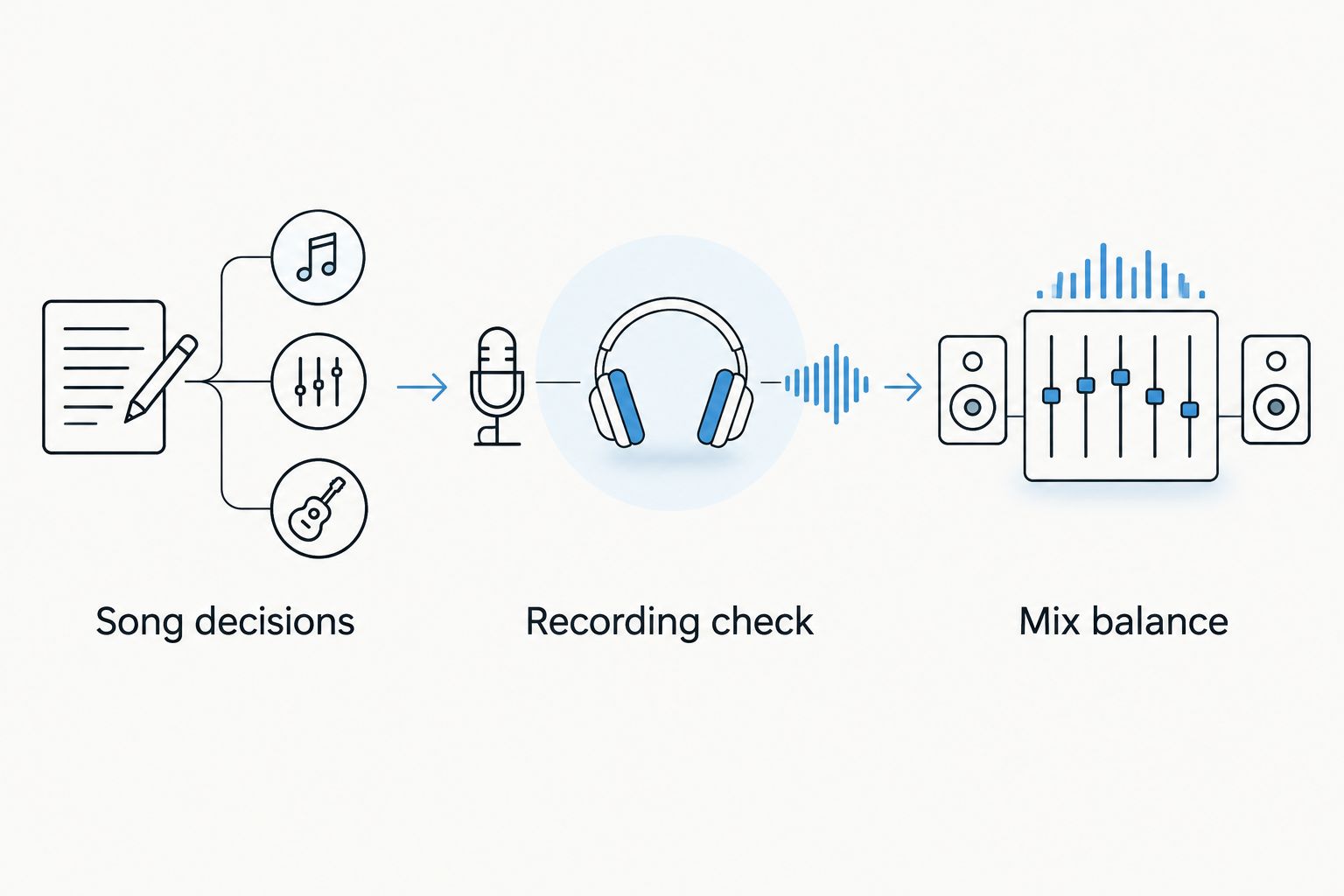
Give the song 3 playback passes with a different question each time. This is a practical sorting exercise, not a technical standard. Keep your monitoring level consistent enough that louder playback does not make the decision for you.
- Song decisions: Ignore polish. Write down sections, parts, or performances you still want to change.
- Recording check: Listen for missing takes, unwanted distortion, distracting noise, and edits that interrupt the performance.
- Mix balance: Focus on levels, tonal balance, stereo placement, and effects among the parts you want to keep.
If your first pass produces substantial changes, discuss production. If the second exposes recording problems, resolve those before committing to a final mix. If only the third produces notes, a mixing engineer is the clearer fit.
Keep the notes specific. Describe the audible problem rather than prescribing a plugin: say the vocal disappears when the chorus guitars enter, not that the engineer must use a particular compressor.
Write a brief someone can act on
A useful 2026 brief describes the song's current state, the work you want, and the decisions you have already made. Attach your rough mix so the professional can hear the starting point.
Include:
- Current stage: Demo, partly recorded production, or completed multitrack recording.
- Requested role: Production, mixing, or both with a defined handoff.
- Reference tracks: Choose 2 reference songs and explain the relevant qualities, such as vocal intimacy or drum space.
- Keep list: Identify performances and effects that are essential to the song.
- Open decisions: Name what the professional is allowed to change.
- Delivery expectations: Agree on file formats, alternate versions, revision scope, and approval responsibilities.
Ask the recipient to confirm the scope in their own words. That response should distinguish creative development from mixing and identify any recording or editing work required first.
Prepare files without erasing the production
Ask how the engineer wants to receive the session before exporting. Unless requested otherwise, preserve a copy of the original project and identify effects that define a sound, such as a rhythmic delay or a distorted synth chain.
If the engineer requests consolidated audio, provide 1 continuous file per track from a shared start point. Consolidation places each track on the same timeline so the files line up when imported. Clearly name the parts and identify the approved takes.
Do not remove every effect automatically. Supply dry alternatives when requested, while keeping a reference that demonstrates the intended sound. The goal is a usable handoff, not a different production by accident.
Find the collaborator who fits the work
Oohyeah is a music-professional marketplace for musicians looking to hire producers and engineers. Use it to find collaborators, then judge each candidate against the work your song actually needs.
The useful fit is access to music professionals alongside the broader music community. The limitation is that a marketplace listing does not define your project's scope: you still need relevant work samples, confirmed responsibilities, and agreed deliverables.
For a 2026 shortlist, ask candidates what they hear as the main unfinished task. Compare that answer with your listening notes before committing.
Find your next music collaborator
Explore Oohyeah, then discuss your song's production or mixing needs with a music professional.
FAQ
How do I know if I need a producer or a mixing engineer?
Hire a producer for unresolved musical decisions and a mixing engineer for completed recordings that need sonic balance. List what you want changed before choosing the role.
Can one person produce and mix my song?
One person can produce and mix your song when both jobs are explicitly included. Check examples of their work in each role and agree when production ends and final mixing begins.
Does a mixing engineer record my vocals?
Vocal recording is not automatically included in mixing. Confirm whether recording, comping, tuning, and timing edits are included or need separate arrangements.
Should I finish recording before hiring a mixing engineer?
Finish and approve the performances before final mixing begins. You can consult a mixing engineer earlier about preparation, but replacement takes change the material being mixed.
Are stems the same as individual tracks?
Stems are grouped audio exports, such as combined drums, while individual tracks keep separate sources available. Ask which format the engineer needs rather than using the terms interchangeably.
Will mastering fix a vocal that is too quiet?
A vocal that is too quiet relative to the instruments is best addressed in the mix. Return to the mix session when the problem needs control over the vocal independently.
Can I find producers and engineers through Oohyeah?
Oohyeah connects musicians with music professionals, including producers and engineers. Confirm each candidate's relevant experience, project scope, and deliverables before booking.
One last thing
Being able to hear a problem does not mean you need to know its technical solution. Send a timestamp, describe what distracts you, and explain what you want the listener to notice instead. That gives a producer or mixing engineer something useful to act on without forcing you to diagnose the session yourself.