Handling Merch Shipping Delays and Fan Communication: An Artist’s Guide
Master handling merch shipping delays and fan communication. Learn how to update fans honestly, protect trust, and stay FTC compliant with clear templates.
October 19, 2026
FRANKLY with Frank Lee
A merch delay doesn’t have to cost you a fan’s trust. Silence can. Handling merch shipping delays and fan communication starts with sharing what you know, even when you don’t have a confirmed delivery date yet.
You may not know exactly what caused the delay or when the order will arrive. That uncertainty can make it tempting to wait for better news. But fans need a clear update, not a guess. The FTC’s Mail, Internet, or Telephone Order Merchandise Rule also requires sellers who can’t meet a promised shipping deadline to notify customers before it passes and offer the choice to accept the delay or cancel for a prompt refund.
This guide covers how to write a calm, honest message without promising more than you can verify. You’ll learn how to explain the situation, set a realistic time for your next update, and keep fans informed as facts change. You’ll also find ways to follow up once orders ship or the issue is resolved, so communication stays clear from delay to delivery.
Key Takeaways
- Check preparation, dispatch, and tracking status before explaining a delay. Separate verified facts from estimates so your message stays accurate.
- Choose the right channel for the update: contact affected buyers directly, and use a public post when broader context would help.
- Make handling merch shipping delays and fan communication more manageable with a simple sequence: acknowledge the delay, share verified status, explain the next step, and set an update time.
- Use adaptable message templates to communicate clearly without inventing a cause, delivery date, or other promise.
- Close the loop when an order ships or the issue is resolved, then use what you learned to make future merch expectations clearer.
Why merch shipping delays need clear fan communication
A merch shipping delay means the expected dispatch or delivery timing has changed. It describes what fans can expect differently, not why the delay happened. An order may still be in preparation, may have left the seller, or may be moving through transit. Until you verify the cause, don’t present a guess as an explanation.
For artists, merch carries more than a tracking number. It can mark a tour, release, or connection with the people who support your work. A delay can feel personal, and it’s understandable to worry that fans will be disappointed. A clear, timely update gives supporters something useful: the facts you have, what happens next, and when you’ll check in again.
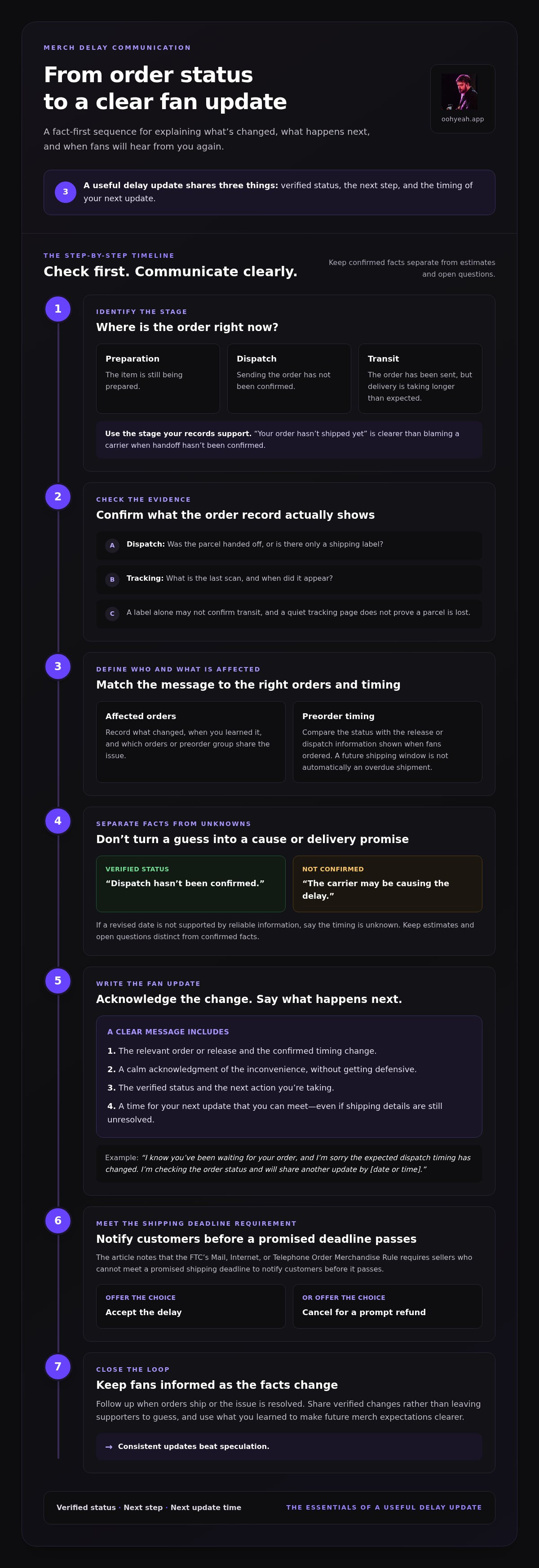
A useful delay update shares verified status, the next step, and the timing of your next update. It doesn’t need to solve the delay in one message. It needs to show fans you’re paying attention and won’t leave them guessing. Understanding how connected supply chain stages work can help explain why an order may be affected at different points, but your message should stay grounded in the status you can verify.
Which part of the merch order is delayed?
First, identify the stage. Is the order still being prepared, has dispatch not been confirmed, or has it entered transit? These call for different updates. For example, “Your order hasn’t shipped yet” is clearer than “The carrier is delayed” if you don’t have confirmation that the package was handed over. A broad overview of the supply chain can provide context, but it can’t verify what happened to a particular order.
Keep preorder timing separate, too. A preorder with a stated future shipping window isn’t automatically the same as an item that was expected to ship already. Tell fans which timing applies, and describe only the change you’ve confirmed. This keeps your update specific without assigning blame to a production partner or carrier based on an assumption.
What fans need to know first
Lead with the relevant order or release, then state the confirmed change in plain language. Acknowledge the inconvenience without getting defensive: “I know you’ve been waiting for your order, and I’m sorry the expected dispatch timing has changed.” Then share the verified status and the next action you’re taking.
If you don’t have a reliable delivery estimate, say so. Don’t replace uncertainty with a date you can’t stand behind. Give fans a clear point for the next update, such as: “I’m checking the order status and will share another update by [date or time].” Choose a time you can meet, even if the shipping details remain unresolved. In handling merch shipping delays and fan communication, consistency beats speculation. Fans may not like the delay, but they can understand an honest update and know when they’ll hear from you again.
Identify the delay before choosing what to tell fans
Before drafting an update, build a clear picture of the order’s current status. A delayed order can mean preparation is taking longer than expected, dispatch hasn’t been confirmed, or tracking hasn’t changed during transit. Each status calls for different wording. Report what you can verify instead of trying to solve the mystery by guessing.
A useful distinction is simple: a dispatch delay means the order hasn’t been confirmed as sent; a transit delay means it has been sent, but delivery is taking longer than expected. Use that language only when the order record or tracking information supports it. A label or shipping notice alone may not confirm that a parcel has entered transit.
Dispatch delays, preorder timing, and carrier updates
For a dispatch delay, check whether the order has actually left your hands or fulfillment point. If it hasn’t, say dispatch is still pending rather than suggesting the carrier is responsible. For a preorder, compare the current status with the release or dispatch information shown when fans placed their orders. If tracking has paused, share the last scan and its date. A quiet tracking page doesn’t prove a parcel is lost.
Create a fact-check before sending an update
Record what changed, when you learned it, and which orders are affected. Then compare the order details with the listing, preorder information, and applicable return terms. This helps you avoid messaging the wrong buyers or describing options that don’t match the terms of their purchase.
Use this quick fact-check before writing:
- Order preparation: Is the item still being prepared, or is that status only an assumption?
- Dispatch: Is there confirmation that the order was handed off, or only a shipping label?
- Tracking: What is the last scan shown, and when did it appear?
- Scope: Which orders or preorder group share this issue?
- Timing: Is a revised date supported by reliable information, or is it still unknown?
- Terms: What do the original listing and relevant return terms say about the order?
Keep confirmed facts separate from estimates and open questions. “Dispatch hasn’t been confirmed” may be a fact, while “the package may be delayed by the carrier” is speculation unless you have evidence. If the new timing isn’t reliable, use a placeholder in your draft, such as [next update date], and fill it with a time you can stand behind. Don’t turn an estimate into a delivery promise.
That fact-first habit is central to handling merch shipping delays and fan communication. OohYeah! is a music marketplace where fans can discover artists and music-related listings, including merchandise. Sellers should keep order updates grounded in verified information. You can explore OohYeah!’s music marketplace.
Choose a fan communication approach that fits the delay
The best channel depends on who needs the information. An individual buyer needs an update about their order. Fans following a preorder release may need the same general context. Choose a channel that reaches the right people while keeping personal purchase details private.
Use this quick comparison to match the message to its purpose:
- Direct order message: Audience: affected buyers. Best use: sharing order-specific status and next steps. Caution: keep each message accurate to that person’s order.
- Email: Audience: buyers or subscribers who should receive a fuller update. Best use: explaining a change that affects a group of orders. Caution: make the affected release or order group clear.
- Public social post: Audience: the wider fan community. Best use: sharing broad context about a preorder or release that affects many supporters. Caution: don’t include private order details or imply every order has the same status.
Private order updates versus public posts
Send personal order details through a direct channel, not a public comment thread. A public post can explain a wider preorder change, but it shouldn’t identify buyers or expose order information. If someone asks about their purchase publicly, acknowledge them briefly and invite them to continue through a private channel. You can point buyers to a general announcement without revealing who placed an order.
Think of public and private updates as serving different jobs. A public post gives context to the community. A direct message tells an affected fan what applies to their purchase. If you share a public update, keep it broad and direct buyers to a private conversation for personal order questions.
Set a realistic update rhythm
At the end of each message, say when fans can expect to hear from you again. Keep that commitment even if the status hasn’t changed. If a meaningful, verified change happens sooner, share it sooner. This creates a dependable rhythm without sending repeated messages that add no new information or leaving fans to interpret silence.
Choose a follow-up point you can meet, such as a specific date or a clear interval. If you’re still waiting for information, say the status is unchanged and confirm when you’ll check in next. Don’t describe an estimated timeframe as a guaranteed delivery date. An estimate can help fans understand what you currently expect, but label it clearly and update it if the facts change.
For handling merch shipping delays and fan communication, consistency matters more than posting everywhere. A buyer who needs an order-specific answer shouldn’t have to search through social posts. A broad release update shouldn’t require every affected fan to ask the same question individually. Match the channel to the audience, keep private details private, and make the next step clear in every update.
Write merch delay messages fans can act on
A good message gives fans a clear picture of what changed and what they can expect from you next. Keep the wording warm, direct, and grounded in the status you’ve verified. Use this sequence to build each update:
- Acknowledge the change. Name the affected order, item, or preorder and briefly recognize the inconvenience.
- State the verified status. Say whether preparation, dispatch, or transit is affected. Leave out any cause you can’t confirm.
- Explain the next action. Tell fans what you’re doing or what information you’re waiting for.
- Set update timing. Give a realistic time for your next message, even if you don’t have a revised delivery estimate.
These steps keep handling merch shipping delays and fan communication clear without turning an estimate into a promise. Adapt the templates below by replacing each bracketed prompt with details that apply to the affected fans.
Template for the first delay notice
Start with the order context and the change. Apologize briefly, state only what you’ve verified, then tell fans what happens next. Keep the message focused so the practical information is easy to find.
“An update on [order, item, or preorder]: the expected [dispatch or delivery timing] has changed. I’m sorry for the inconvenience. The confirmed status is [verified status]. I’m [next action], and I’ll share another update by [date or time].”
Template for follow-up and resolution
If you still don’t have a new estimate, say so plainly. Keep the promised update rhythm and avoid filling the gap with speculation. If dispatch is confirmed, share only the shipping details available to you. When the issue is resolved, thank fans without suggesting every order has arrived.
“A quick update on [order, item, or preorder]: I don’t have a new [dispatch or delivery] estimate yet. The status remains [verified status], and I’m [next action]. I’ll update you again by [date or time].”
“Dispatch is confirmed for [order or affected group]. The available shipping information is [verified details or tracking information]. I’ll share another update if the status changes.”
“The [delay or issue] affecting [order, item, or preorder] has been resolved. [State the confirmed next step.] Thanks for your patience and for supporting my work.”
Before sending, remove any placeholder you can’t fill accurately. Check that the message describes the right order group, doesn’t blame an unverified cause, and gives a next update time you can meet. A reusable structure saves time, while a personal detail, such as naming the release fans ordered, helps the message feel like it comes from you.
OohYeah! brings together artist discovery and music-related listings, including a merchandise marketplace. Artists can explore the OohYeah! music marketplace as a place to share and sell music-related offerings.
Close the loop and make merch expectations clear
A delay update shouldn’t be the last message fans receive. When an order’s status changes, tell affected buyers what changed and what happens next. If dispatch is confirmed, share only the shipping details you can verify. If an issue is resolved but delivery is still underway, say that plainly. Closing the loop means keeping fans informed, not claiming every order has arrived.
Follow up after dispatch or resolution
Send the follow-up through a direct channel to the buyers affected. For a wider release update, you can also share general news publicly, but keep personal order details private. If a fan raises an order-specific concern in a public thread, invite them to reply privately so you can discuss their purchase without exposing personal information.
Keep buyer options accurate, too. Refer to the return policy and terms that applied to the specific listing rather than assuming every order has the same options. A useful follow-up might say: “Dispatch is confirmed for your order. The current shipping information is [verified details]. For questions about your order or the options in its listing terms, please reply privately.” Adjust the wording to match the actual status and terms.
Set clear expectations when selling through a marketplace
Prevention starts with clear listings. State the dispatch method and relevant timing information, and make preorder details easy to understand before a supporter buys. Keep listing-specific terms consistent with the updates you send if circumstances change. This won’t prevent every disruption, but it gives fans a useful reference point and helps you explain what has changed without creating a new expectation you can’t support.
After the delay, review the timeline. Note where the information first changed, which update helped fans understand the situation, and whether the listing could have set expectations more clearly. Use those lessons to refine future preorder or dispatch wording. Don’t promise perfect delivery. Focus on setting honest expectations and responding clearly when they change.
For artists listing through OohYeah!, a signed Seller Agreement is required before items can be listed. OohYeah! is a music marketplace where fans can discover music-related listings. Sellers handle their own order fulfillment and communication with buyers, so keep listing information clear and order updates specific. For creators managing bulkier goods or boxed collections, preparing logistics through specialized ecommerce fulfillment for heavy items can help avoid warehouse bottlenecks and unexpected shipping delays.
OohYeah! offers a merchandise marketplace with zero seller commissions, forever. Explore OohYeah!’s marketplace to connect your music-related listings with a wider music community.
Turn every update into stronger fan trust
The next merch release is a chance to set expectations before the first order comes in. Make shipping details part of your planning, then keep your communication grounded in facts if plans change. Handling merch shipping delays and fan communication isn’t about having every answer right away. It’s about giving supporters a clear reason to trust your next update.
Your creative work deserves a marketplace built to support the people behind music. OohYeah! brings together curated categories and hand-picked listings from trusted sellers, with zero seller commissions, forever. Sellers handle their own order fulfillment and communication, so keep your listing details clear and your fan updates personal.
Ready to connect your work with a music community? Explore OohYeah!, the music marketplace for everyone who makes music happen. Keep creating, keep showing up for your fans, and let every honest update strengthen the connection you’ve built.
Frequently Asked Questions
How should I tell fans their merch order is delayed?
Tell affected fans directly, using a private channel that lets you identify the relevant order without exposing personal details. Good handling merch shipping delays and fan communication means making the update easy to act on: explain what the buyer needs to know, what action you’re taking, and how they can reply with an order-specific concern. Keep the subject line or opening specific, such as “Update about your tour shirt order,” rather than “Important news.”
When should I notify fans about a merch shipping delay?
Notify buyers before the shipping deadline you gave them passes if you can’t meet it. The FTC Mail, Internet, or Telephone Order Merchandise Rule says sellers need a reasonable basis for stated shipping times; if no timeframe was stated, the default is 30 days. When a deadline can’t be met, sellers must notify buyers and offer the option to accept the delay or cancel for a full, prompt refund.
What should I do if merch tracking has not updated?
Check the latest tracking entry and compare it with your order or dispatch records. Confirm whether the parcel was handed off, and note the date and wording of the last scan. If dispatch is confirmed but tracking remains unchanged, tell the buyer what the record shows and that you’re checking the status. Don’t describe the package as lost based only on a tracking pause. Keep the buyer’s order details private.
How often should I update fans when there is no new shipping information?
Update fans at the time you previously said you would, even if the status hasn’t changed. A short check-in can confirm that you’re still looking into the issue and give the next point when they’ll hear from you. Set a cadence you can maintain based on when you expect to review the order again. Send an additional message sooner if you receive a material, verified update.
What happens if a fan says their merch order is marked delivered but has not arrived?
Respond privately and check the order details with the buyer before drawing conclusions. Confirm the delivery address on the order and review the tracking record, including the delivery date and status. The buyer can also check with household members or building reception and look around their usual delivery spot. If the parcel still can’t be located, document what you’ve checked and follow the relevant seller and carrier processes.
Can I offer a refund or another solution for delayed merch?
You can offer a solution that fits the order’s terms, but don’t promise an option that doesn’t apply. Under the FTC rule, if you can’t meet the promised shipping deadline, you must offer the buyer the choice to accept the delay or cancel for a full, prompt refund. Review the applicable terms and communicate any available next steps clearly. Don’t imply that every delay automatically has the same remedy.
How should I communicate a preorder delay differently?
Refer to the preorder information buyers saw when placing their orders, then explain how the current timing differs. Make clear whether the change affects the expected release, dispatch, or delivery, since those milestones aren’t interchangeable. If you can’t meet the stated shipping deadline, notify buyers before it passes and provide the required choice to accept the delay or cancel for a full, prompt refund. Don’t present a preorder estimate as a guaranteed arrival date.