Delivering Monthly Unreleased Acoustic Tracks to Subscribers
Learn how delivering monthly unreleased acoustic tracks to subscribers builds fan loyalty with a sustainable plan, clear metadata, and exclusive access.

November 4, 2026
FRANKLY with Frank Lee
Monthly acoustic releases can strengthen a connection with subscribers, but they work best when each track is prepared with care. When delivering monthly unreleased acoustic tracks to subscribers, give an acoustic version a unique ISRC if you deliver it to Spotify, and use a separate code for a live version. Accurate metadata and a realistic release plan help listeners find and identify each track.
A fresh, intimate recording gives supporters a reason to return. But a monthly deadline can squeeze the time needed to record, prepare, and promote each release. Consistency matters, but not at the expense of the music or the listening experience.
This guide covers the practical details of a sustainable monthly release strategy. Learn how metadata and ISRCs distinguish acoustic versions, what to include in your release workflow, and where a monthly schedule can create pressure. You’ll also see how exclusive content and direct digital downloads can help you share music with the supporters who value it most.
Key Takeaways
- Build a release rhythm around recording, delivery, and promotion so each track gets the attention it needs.
- Keep track details consistent across files and listings to make acoustic versions clear to supporters.
- Choose a subscription setup that fits how you want fans to access exclusive audio and downloads.
- Set clear access and delivery practices to share unreleased recordings with your subscriber community.
Monthly release strategy drawbacks
A monthly schedule sets a recurring deadline for recording, preparing, and promoting each track. That pace can compete with the time needed to maintain quality and build listener interest.
Recurring Release Challenges
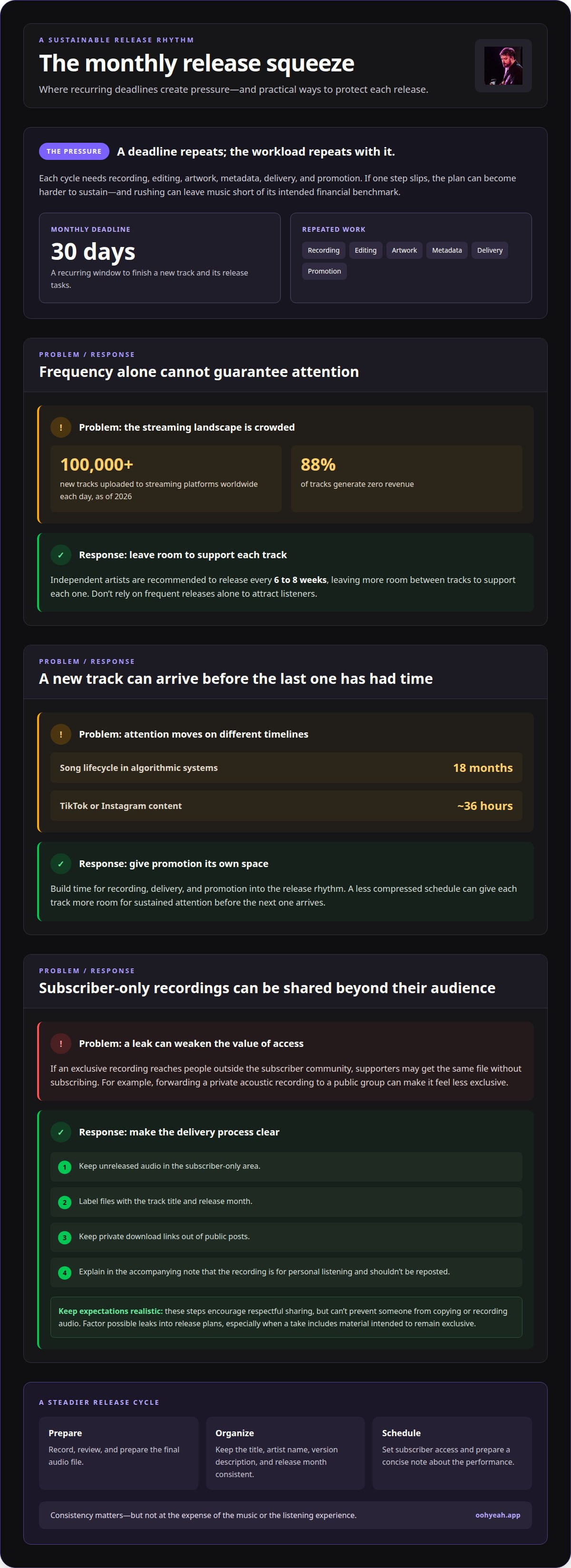
A recurring release challenge is the pressure to finish a new track before each monthly deadline. Rushing production and marketing to meet a 30-day deadline can leave music short of its intended financial benchmark. The workload also repeats: recording, editing, artwork, metadata, delivery, and promotion must each fit the cycle. If one step slips, the release plan can become harder to sustain.
The wider streaming environment adds pressure. As of 2026, more than 100,000 new tracks are uploaded to streaming platforms worldwide each day, and 88% of tracks generate zero revenue. Those figures make it difficult to rely on frequent releases alone to attract listeners. Independent artists are recommended to release every 6 to 8 weeks, leaving more room between tracks to support each one. A song’s natural lifecycle in algorithmic systems is described as 18 months, while TikTok or Instagram content lasts approximately 36 hours. A monthly plan can therefore produce another track before the previous one has received sustained attention.
Subscriber-Only Track Leaks
A subscriber-only track leaks when an exclusive recording reaches people outside its intended audience. Unauthorized sharing can weaken the value of subscriber access: supporters may get the same file from someone else without subscribing. For example, forwarding a private acoustic recording to a public group can make it feel less exclusive to the people it was meant for.
Reduce avoidable exposure with a clear delivery process. Keep unreleased audio in the subscriber-only area, label files with the track title and release month, and don’t put private download links in public posts. In the accompanying note, explain that the recording is for personal listening and shouldn’t be reposted. These steps encourage respectful sharing, but can’t prevent someone from copying or recording audio. Factor possible leaks into your release plans, especially if an acoustic take includes material intended to remain exclusive.
Deliver monthly unreleased acoustic tracks to subscribers
A release workflow is the sequence of steps for preparing a recording for subscribers. For a monthly acoustic track, plan the recording, file preparation, metadata, access, and announcement as one connected process.
Choose the track and set its delivery date first. Leave time to record and review the performance, then prepare the final audio file. A stripped-back vocal and guitar take, for example, may need a different edit from the original studio recording. Name the file clearly so it identifies the song and acoustic version. This makes it easier to select the right recording when uploading and sharing.
- Prepare the track. Finalize the recording, listen through the exported file, and make sure it plays from beginning to end.
- Organize its details. Use a consistent song title, artist name, version description, and release month in the upload and announcement.
- Schedule access. Set the subscriber delivery date, prepare a short note about the performance, and place the track in the intended access area.
Metadata is the information used to identify and distinguish a recording. Label the acoustic version clearly rather than presenting it as the original studio track. If you deliver the acoustic version to Spotify, give it a unique ISRC; a live version should also have its own unique ISRC. Consistent names for the audio file and its listing help listeners recognize what they’re receiving.
On delivery day, publish the track with a concise message explaining what makes this take distinct, such as an alternate arrangement or an intimate vocal. A dedicated subscriber-only listening space can keep the monthly release alongside other exclusive material, giving supporters one clear place to access it.
Best platforms for monthly music subscriptions and exclusive audio releases
A music subscription platform gives fans a recurring way to support an artist and access content. The right fit depends on whether you want to build public reach, deliver subscriber-only recordings, or do both.
Public streaming services are designed for a broad audience, while exclusive-content platforms limit access to a defined supporter community. For example, Spotify can carry a track for public streaming, while a subscriber space can host an unreleased acoustic take. Make each version’s purpose clear so fans know where to find it.
A direct-download option lets supporters obtain audio files instead of only streaming them. This can suit a monthly release built around a downloadable recording, such as a guitar-and-vocal version with a note about its arrangement. Decide how you want listeners to access the track, then choose a platform model that supports that experience.
Compare platforms by the release workflow they support, not just their popularity. Look for a clear way to organize monthly tracks, present titles and descriptions, and distinguish exclusive material from public releases. Consider how a fan moves from discovering your artist profile to accessing the recording. A confusing path can make an otherwise strong release harder to enjoy.
- For public discovery: Choose a streaming service when you want a track available to a broad audience.
- For private access: Use a subscriber-focused space for recordings intended only for supporters.
- For file ownership: Consider downloads when fans should keep an audio file for personal listening.
One platform model may not serve every release goal. You can use separate channels for a public single and an exclusive acoustic version. Before settling on a setup, map one track’s journey from upload to fan access. This simple exercise shows whether your chosen platform supports the listening experience you want to create.
Align platform updates with the roadmap spanning 12 weeks: devote 90% of pre-release content to musical talent and the creation process, share milestones and social proof in weeks 3 through 8, and don't abandon a song after two weeks.
How to distribute unreleased tracks securely to subscribers
Secure distribution means limiting access to unreleased recordings and reducing accidental exposure. No delivery method can prevent every subscriber from copying or recording audio, so focus on controlling access and setting clear expectations.
Start by choosing the destination: use a subscriber-only area rather than a public post or open download page. Upload the final file, then review the page from a listener’s perspective. Make sure the track title, description, and access setting match the intended audience. For example, clearly label a private acoustic version if it appears beside a public release.
Keep private delivery separate from public promotion. Announce that a new exclusive recording is available, but keep the audio file and its access path within the subscriber area. Don’t post a direct download link in a public caption, email, or social profile. Fans may forward a public link beyond its original audience.
Set expectations in the release note. Explain that the recording is for personal listening and shouldn’t be reposted or shared. A short message makes the request clear without turning a music release into a legal notice. Use consistent titles and dates so supporters can identify the right track, especially when your archive includes alternate takes.
Before publishing, use this practical sequence:
- Upload the final audio to the subscriber-only destination.
- Review the track title, description, and access setting.
- Open the release as a subscriber and confirm the intended track appears.
- Publish a separate announcement without exposing the audio file itself.
For a monthly acoustic series, repeat the same sequence with each release. Consistent handling makes mistakes easier to spot, such as an incorrect version or a public-facing link. Create an exclusive listening space for supporters to access unreleased music.
Keep payment logistics separate from access controls. Payout costs affect earnings, not subscriber access to a recording. Planning for them can help you manage revenue while keeping unreleased audio in the intended subscriber-only space.
OohYeah!
OohYeah! gives artists a place to share exclusive recordings directly with supporters. Exclusive Content Access can support a monthly acoustic series, while Artist Profile Hosting helps fans find an artist’s work in one place. Digital Music Downloads provide another way to share recordings beyond streaming.
Turn to OohYeah! when you want to bring exclusive audio and your artist presence together for your fan community. Artists retain 100% of their sales revenue from music and merchandise, helping keep the value of supporter purchases with the creator.
For a monthly release, use exclusive access to build a direct connection with fans through each new acoustic track. Explore OohYeah!’s platform and see how it fits your music plans.
Shape a release rhythm that lasts
Treat your release calendar as a creative choice, not a fixed obligation. Let each acoustic track earn its place through its distinct performance, story, or connection with supporters. If a monthly pace leaves little room to develop those qualities, adjust the schedule instead of rushing another recording. A thoughtful cadence gives listeners a reason to return and gives you space to make music with purpose.
As you plan for delivering monthly unreleased acoustic tracks to subscribers, consider how each release fits into your wider relationship with fans. A track can be more than a file: it can open a conversation, reveal a different side of a song, or invite supporters into your creative process. Choose a sustainable schedule and make each delivery feel intentional.
Talk with OohYeah! about your release plans, and keep building a music experience that feels true to you and your community.
Frequently Asked Questions
How to schedule and promote monthly acoustic track releases?
Set a consistent monthly date, prepare each track in advance, and promote it with a short, clear campaign. For delivering monthly unreleased acoustic tracks to subscribers, choose a release day fans can remember, then work backward: finish the recording, upload it as exclusive content, and draft the announcement and preview. Use OohYeah!’s Exclusive Content Access for supporters, and direct each announcement there. Share a short preview before launch, then post a reminder on release day.
Copyright and licensing rules for sharing unreleased music with subscribers
In the release note, explain that the recording is for personal listening and shouldn’t be reposted or shared. Keep the audio in a subscriber-only area and don’t expose its download link publicly.
How to set up recurring payments and subscriber-only music access
Use a subscriber-focused space that lets fans support you and access exclusive content. Upload the track, set the intended access, and review the page as a subscriber before announcing the release.