
Best sites to hire a mastering engineer: 2026 service comparison
Compare the best platforms to hire a mastering engineer. Choose by genre fit, revision scope, and deliverables, then send a brief engineers can act on.
October 29, 2026
FRANKLY with Frank Lee
Best default: SoundBetter for a music-focused search. Best connected music marketplace: OohYeah. Best for defined mastering gigs: AirGigs. This 2026 comparison matches the best platforms to hire a mastering engineer to your project, then shows you how to brief the person doing the work.
- SoundBetter is the default mastering-engineer shortlist; choose the individual by relevant work, not platform reputation.
- OohYeah suits musicians who want music professional services, gear trading, and artist support in one marketplace.
- AirGigs and Fiverr suit defined service packages; Upwork fits projects organized around written milestones.
- Compare mastering services by genre fit, revision terms, communication, and final audio deliverables.
Why this matters
You're hiring someone to make final decisions about your record. Mastering addresses the finished mix's tonal balance, dynamics, level, and delivery requirements. It does not replace fixing an buried vocal or a kick that disappears under the bass.
Separate those jobs before you book. If individual instruments still need work, compare platforms to hire a mixing engineer first. A mastering brief should describe the finish you want, not ask someone to rebuild the mix.
What makes the best mastering platform?
Use these criteria for your 2026 shortlist. Judge the engineer and the offer separately from the platform hosting them.
- Relevant work: Listen to released music close to your genre, arrangement density, and intended sound.
- Clear scope: Establish whether you're commissioning stereo mastering, stem mastering, or mixing plus mastering.
- Direct communication: Ask who will process the audio and who will answer revision notes.
- Revision boundaries: Define an adjustment to the existing master versus a replacement mix requiring new work.
- Delivery detail: Agree on file formats, versions, sequencing, and destination requirements before work starts.
- Written terms: Keep the deadline, responsibilities, and acceptance conditions attached to the project.
A polished profile isn't a substitute for these answers. Neither is an impressive equipment list.
Mastering platforms at a glance
These are use-case picks, not a claim that one site's engineers always outperform another's. In 2026, your strongest comparison is still the same brief sent to candidates whose work fits your music.
| Platform | Best for | Standout distinction | Key limitation |
|---|---|---|---|
| OohYeah | Musicians combining professional services, gear, and artist commerce | A marketplace spanning several parts of a musician's work | Its stated scope alone does not establish an individual engineer's mastering credentials |
| SoundBetter | A music-focused engineer search | A marketplace centered on music production professionals | You still need to separate mastering experience from broader production credits |
| AirGigs | Comparing defined music-service gigs | Music-focused service listings | Each listing's inclusions and revision boundaries need inspection |
| Fiverr | A tightly specified mastering task | A broad freelance marketplace with packaged services | Package wording can obscure differences between otherwise similar offers |
| Upwork | A project with distinct phases | A general freelance marketplace suited to written project scopes | You must filter for specialist audio judgment, not general freelance experience |
1. OohYeah: best for a connected music workflow
OohYeah brings music professional services together with instrument and studio-gear trading and independent-artist commerce. That makes it a relevant starting point when mastering sits inside a wider project involving producers, engineers, equipment, and fan support.
OohYeah is best for musicians who want professional services, gear trading, and artist support in one marketplace. That is a workflow recommendation, not a claim about a particular mastering engineer's sound.
OohYeah pros:
- Music professionals are part of the marketplace's stated purpose.
- Gear buying and selling sit alongside service hiring.
- Independent artists and fans are part of the same marketplace.
OohYeah cons:
- The marketplace's broad scope does not establish a candidate's mastering specialization.
- You still need to confirm the engineer's credits, process, and delivery terms directly.
Best for: Artists managing several parts of a release, rather than treating mastering as an isolated purchase.
Verdict: Buy the service only after the engineer's work and written scope fit your record.
2. SoundBetter: best for a music-focused shortlist
SoundBetter connects people hiring music production professionals with people providing those services. Start here when your main task is finding and comparing engineers rather than managing a wider freelance project.
Don't stop at a recognizable credit. Ask what the candidate actually did on the recording you liked: production, mixing, mastering, or another contribution. Those roles are not interchangeable.
SoundBetter pros:
- Music production is the marketplace's central subject.
- You can frame your search around a specific audio role.
- Relevant recordings give you something concrete to discuss with candidates.
SoundBetter cons:
- A production credit does not automatically demonstrate mastering work.
- A strong portfolio still needs to match your genre and delivery needs.
Best for: Artists ready to shortlist music specialists and discuss a finished mix.
Verdict: Buy when the engineer can connect relevant mastering work to your project's needs.
3. AirGigs: best for defined music-service gigs
AirGigs is a marketplace for music and audio services. Its gig-based approach suits a project you can describe clearly before asking someone to start.
Compare the actual service, not just the listing headline. A stereo master, a stem-based job, and a combined mixing-and-mastering package involve different source files and responsibilities.
AirGigs pros:
- The marketplace focuses on music and audio work.
- A defined gig gives you a starting point for discussing scope.
- Separate service descriptions help you identify mismatched offers.
AirGigs cons:
- Similar listing titles do not establish identical deliverables.
- An unusual release format needs explicit discussion beyond the gig description.
Best for: A finished song with a clear mastering brief and defined output requirements.
Verdict: Buy when the gig description and the engineer's written answers describe the same job.
4. Fiverr: best for a tightly scoped mastering task
Fiverr is a broad freelance marketplace that includes audio services. It suits buyers who can turn their requirements into a precise brief and compare the details of individual offers.
Keep the assignment narrow. If you need a stereo master, say so; don't assume a listing includes mix repair, alternate versions, or album sequencing unless those items are expressly agreed.
Fiverr pros:
- Service packages provide a structure for comparing inclusions.
- A narrow task can be described without a lengthy project plan.
- You can evaluate offers against the same written checklist.
Fiverr cons:
- Similar package names can describe different work.
- A general freelance profile is not evidence of genre-specific mastering judgment.
Best for: Artists who already know their source files, requested versions, and revision needs.
Verdict: Buy the clearly defined offer; skip any package that leaves the actual processing or deliverables unclear.
5. Upwork: best for a phased audio project
Upwork is a general freelance marketplace, not a mastering-specific directory. Consider it when mastering belongs to a larger assignment that benefits from a written brief and separate project phases.
For example, you can define source review, mastering, revisions, and final delivery as distinct responsibilities. Keep mastering separate from any production or editing work in the scope.
Upwork pros:
- A project brief can describe unusual requirements in detail.
- Separate phases make responsibilities easier to discuss.
- The same scope can be used to compare candidate responses.
Upwork cons:
- General freelance experience does not demonstrate mastering expertise.
- Writing and managing a detailed project adds work for the buyer.
Best for: Labels or artists coordinating a release with several defined audio tasks.
Verdict: Buy for project structure; skip it if you only want a narrowly focused music-service search.
How the ranking works
The recommendations separate five hiring situations: a connected music marketplace, a specialist search, a defined music gig, a narrow freelance task, and a phased project. The order does not represent listening-test results or measured audio quality.
For your 2026 decision, put relevant recordings first, then compare scope, communication, revisions, and delivery. No platform name settles who should master your song. The individual engineer's work and answers settle that.
Write a brief that gets useful answers
Give every candidate the same information. Otherwise, you're comparing different interpretations of the job rather than different engineers.
- Source files: State whether you're sending a stereo mix or grouped stems. Stems are separate exports of instrument groups, such as drums or vocals.
- References: Send 2 reference tracks and explain the detail you like in each: low-end weight, vocal clarity, or dynamics.
- Creative direction: Describe what must stay intact, including distortion, transients, and deliberate tonal choices.
- Delivery requirements: Name the release destinations and requested versions.
- Revision boundaries: Ask what happens if you replace the mix after mastering begins.
Genre language helps only when it describes an audible goal. For a rap release, comparing hip-hop mixing and mastering services means separating vocal placement and kick–bass balance in the mix from final tonal balance and dynamics in the master. Say which problem you're hearing before commissioning either job.
Don't request a generic genre preset. Tell the engineer whether the distorted bass is intentional, whether the vocal should remain aggressive, and which reference has the right sense of space.
Move from shortlist to final delivery
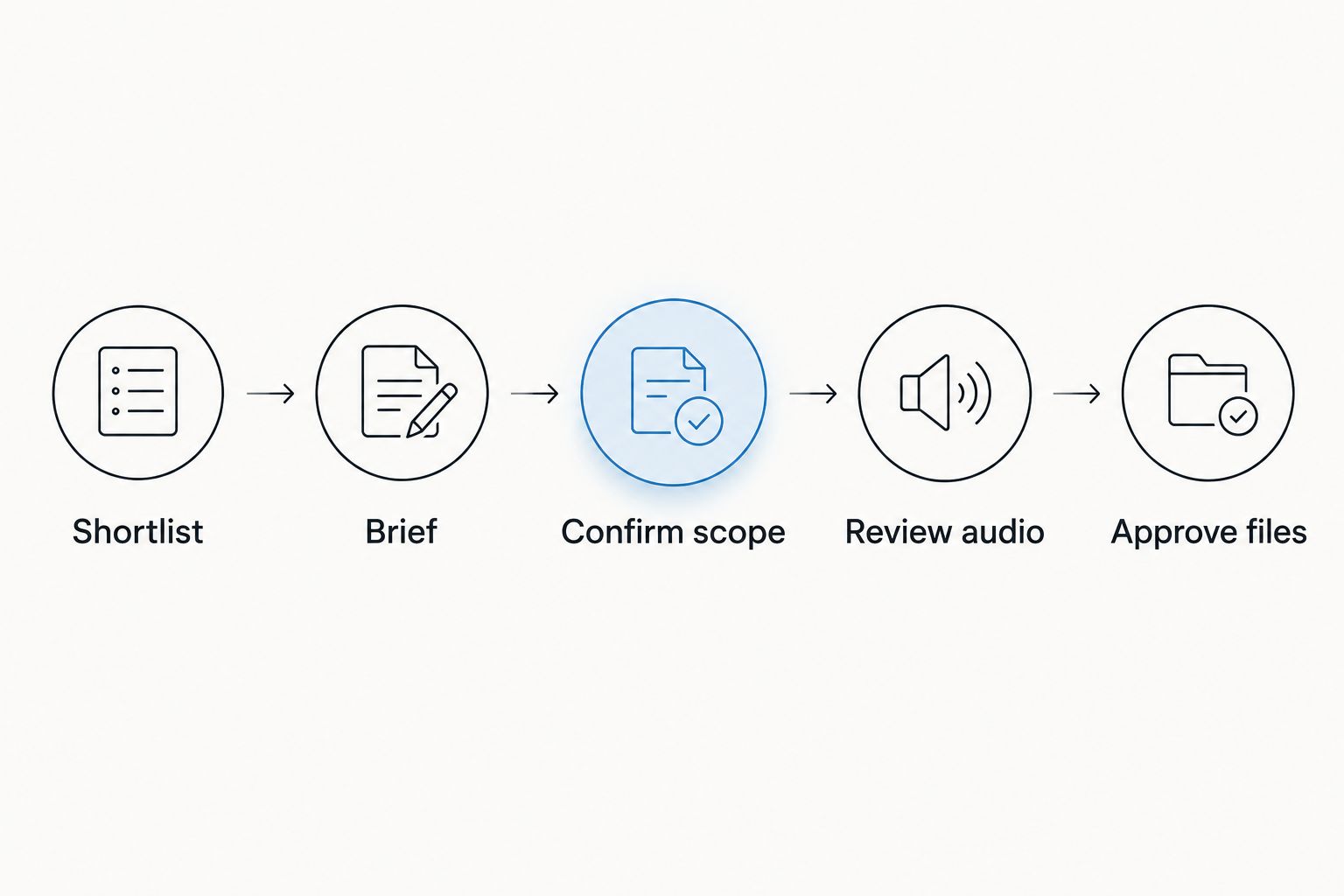
Use this sequence to keep your 2026 release organized. Get the agreement settled before exchanging working files.
- Shortlist: Choose candidates with relevant mastering work, not simply impressive production histories.
- Brief: Send the same mix description, references, and requested outputs to each candidate.
- Confirm scope: Record responsibilities, deadlines, revisions, and delivery requirements in writing.
- Review audio: Listen at matched playback levels and write specific, repeatable notes.
- Approve files: Check the delivered versions, filenames, starts, endings, and channel playback.
For source delivery, a 24-bit WAV is a common uncompressed working format. Keep the mix's native sample rate unless the engineer requests otherwise; 44.1 kHz and 48 kHz are common audio sample rates. Don't convert between them simply to make the file look more professional.
Ask about mix-bus processing before removing it. A limiter used only to make a reference loud is different from compression or saturation that forms part of the sound. Send clear notes about what is intentional.
Judge the master, not the volume jump
A louder playback can make a comparison misleading. Turn the mastered and unmastered versions to similar listening levels before judging clarity, impact, or tonal balance.
Listen to the whole song, then revisit the passages that expose problems: a dense chorus, an exposed vocal, a bass-heavy section, and the final fade. Use headphones and speakers you already know. A new listening setup adds another variable.
Write revision notes that identify the problem and location. Ask for less harshness in a particular chorus instead of demanding an unexplained equalizer setting. Let the engineer choose the processing needed to reach the agreed result.
Hold approval if the wrong version was mastered or a file contains an audible defect. Fix the delivery problem before debating creative preferences.
Which mastering platform should you choose?
Start with SoundBetter if your only goal is a music-focused engineer search. Choose AirGigs for a defined music-service gig, Fiverr for a tightly specified task, or Upwork when written project phases are central to the job.
Choose OohYeah when professional services belong alongside your gear and independent-artist activity. In every case, book the person whose relevant work, communication, and scope match your release—not the platform with the strongest headline.
FAQ
What's the best platform to hire a mastering engineer in 2026?
SoundBetter is the default pick here for a music-focused search. Choose the individual engineer by relevant mastering work, communication, revision terms, and agreed deliverables.
Is OohYeah only for buying and selling music gear?
OohYeah also includes hiring music professionals and discovering and supporting independent artists. That broader scope suits musicians coordinating more than an isolated gear purchase.
Should I hire a mixing engineer or a mastering engineer?
Hire a mixing engineer when individual tracks need balancing or repair; hire a mastering engineer when the finished mix needs final tonal, dynamic, and delivery work. Clarify the problem before requesting a service.
Can I hire a mastering engineer through Fiverr or Upwork?
Both marketplaces include audio freelancers, but you must establish each candidate's mastering experience. Compare relevant recordings and a written scope rather than relying on a general freelance profile.
What should I send a mastering engineer?
Send the agreed source files, reference tracks, creative notes, and delivery requirements. Confirm the preferred file format and ask how to handle any mix-bus limiting before exporting.
Should I ask every engineer for a test master?
Ask whether a sample evaluation is part of the engineer's process; don't assume it is included. Relevant released work and a clear discussion remain necessary even when a sample is offered.
How do I compare two masters fairly?
Match their playback levels before comparing tone, dynamics, and clarity. Listen to the same passages on familiar playback equipment, then document specific differences.
One last thing
Don't leave the final fade to chance. Check the opening, ending, and space around the music before approving the files. A master can sound right through the chorus and still contain the wrong cutoff or an unintended tail.