Professional Recording Studio Equipment List: Complete Gear Guide
Build your pro studio with the right gear. Here's the complete equipment list every recording studio needs to capture, mix, and master audio like a pro.
November 11, 2026
Music Marketplace Advisor
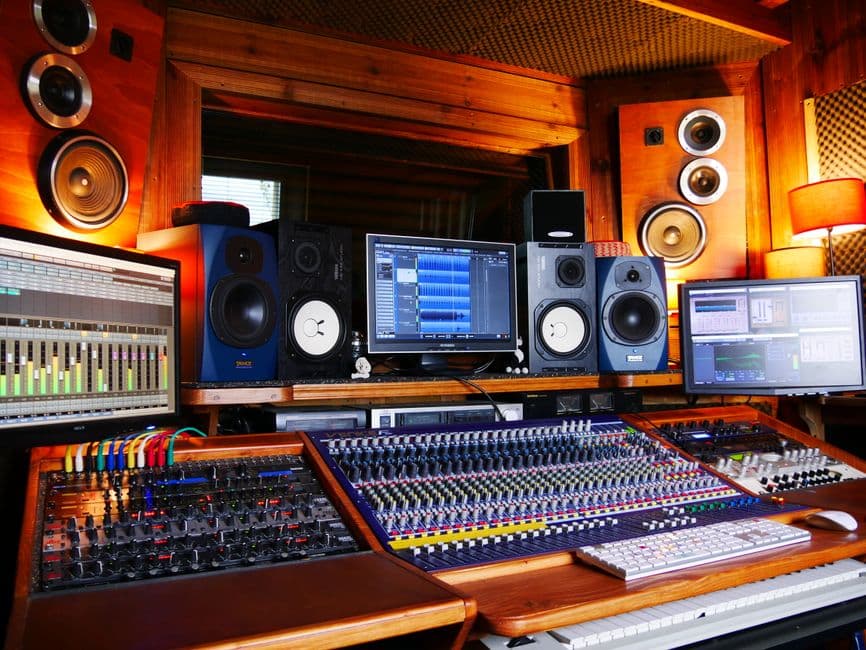
Buying & SellingIf you're setting up a professional recording studio, you need to know exactly what gear matters and what doesn't. A solid recording studio equipment list starts with five core pieces: a computer, an audio interface, a quality microphone, studio monitor speakers, and recording software. Everything else builds from there.
The difference between a bedroom setup that sounds amateur and a professional studio that clients trust comes down to choosing the right tools. Let's break down exactly what you need.
Related: Home Recording Studio Setup: Your Complete Beginner's Guide
The Essential Core Equipment
Start here. These five items are non-negotiable.
Computer (DAW Host)
You need a machine that can handle recording sessions without crashing or lagging. Most studios run either Mac or Windows. What matters is processing power, RAM (aim for 16GB minimum), and solid storage. A computer is your foundation, so don't cheap out here.
Audio Interface
This is the bridge between your instruments and your computer. An audio interface converts analog signals from your microphone or guitar into digital data your computer understands. It also sends audio back out to your speakers. Look for at least 2 in/2 out channels to start, phantom power for condenser mics, and low-latency USB or Thunderbolt connectivity.
Microphone
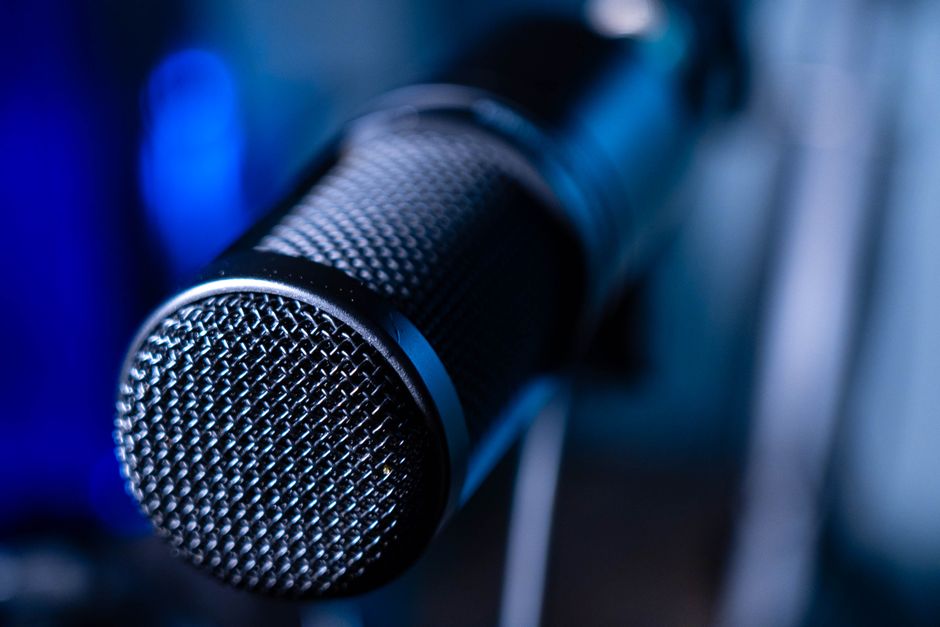
The microphone is where your recordings live or die. A precision condenser microphone captures vocals, acoustic instruments, and room ambience with clarity that cheap mics can't touch. This is worth investing in. You'll use it on almost everything you record.
Studio Monitor Speakers
Never use regular speakers or headphones as your only monitoring solution. Studio monitors are engineered to reproduce sound accurately and flatly, so you can make mixing decisions you'll trust. Your mixes will translate to car speakers, earbuds, and club sound systems because you mixed on honest speakers.
Recording Software (DAW)
Your digital audio workstation is where you record, edit, arrange, and mix everything. Popular options range from free to premium, but what matters is that you learn one deeply. You'll spend thousands of hours in this software, so pick something you enjoy using.
Monitoring & Headphones
You can't mix what you can't hear clearly.
Professional Headphones
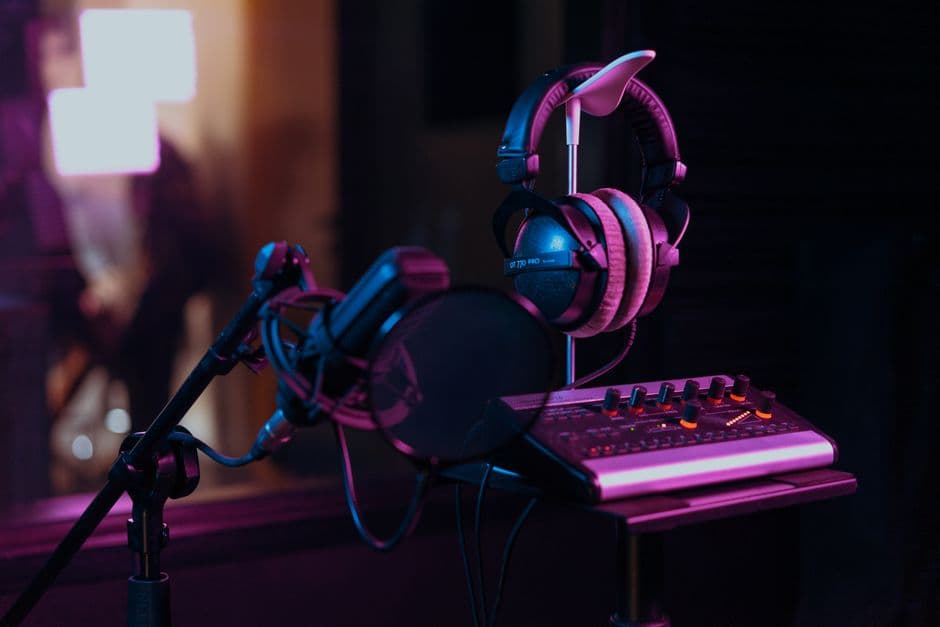
Get a closed-back pair for recording (so the talent doesn't hear playback bleeding into the mic) and an open-back pair for critical listening. Headphones let you catch details your speakers might miss, especially low-end problems and click/pop artifacts.
Studio Monitor Stands or Isolation Pads
Speakers need to be positioned at ear level and isolated from vibration. Proper stands or isolation pads prevent bass from bouncing around the room unpredictably. This changes everything about how your mixes translate.
Microphone & Signal Chain Gear
Once you've got the basics, invest in gear that shapes tone and captures cleaner recordings.
Microphone Stand & Shock Mount
You need a sturdy stand so the mic doesn't move during takes. A shock mount cradles the mic and decouples it from vibrations traveling through the stand. Cheap stands will buzz and rattle. Spend the money.
Pop Filter
Vocal recordings need protection from plosives (hard P and B sounds). A pop filter sits between the vocalist and the mic, eliminating most wind noise without degrading tone.
XLR Cables
Quality mic cables prevent noise and signal loss. Don't skimp here. A bad cable will introduce hum or high-frequency noise into every recording. Get balanced XLR cables rated for professional audio.
Direct Box
If you're recording guitars, bass, or keyboards directly into your interface, a direct box converts instrument-level signals to microphone-level signals. This is essential for clean, noise-free direct recordings.
Outboard Preamp or Compressor
Once you master the basics, an outboard preamp adds color and character to recordings. A hardware compressor shapes dynamics in real-time during tracking, giving you more control over tone and presence. These aren't beginners' purchases, but they're worth saving for.
Acoustic Treatment

Your room is an instrument too. Bad acoustics kill good recordings.
Related: Best Professional Recording Studio Equipment 2026: Top 6 Ranked
Bass Traps
Low frequencies bounce around corners and build up in small rooms, distorting your mixes. Bass traps in room corners absorb these reflections. You'll hear the difference immediately.
Acoustic Panels
These absorb midrange and high-frequency reflections. Without them, your room sounds boxy and your mixes will have weird phase issues. Panel placement matters more than quantity.
Reflection Filters
If you can't treat your whole room, at least treat the wall behind your microphone. A reflection filter reduces room noise captured during vocal and acoustic recordings.
Recording Instruments & Optional Outboard Gear
What you add next depends entirely on what music you make.
If you're recording drums, you need drum mics and a kick beater mic. If you're tracking live bass, a bass amp and DI box. If you're doing vocals, maybe a second large-diaphragm condenser for backing vocals and gang harmonies.
Outboard gear like equalizers, reverb units, and analog tape emulators come later. They're nice to have, but they're not essential until you've mastered your core setup.
The gear you choose should match the music you record. A hip-hop producer needs different tools than a classical recording engineer. Start with the fundamentals, and add specialty gear as you grow.
How to Source Quality Studio Gear
Building a professional studio equipment list doesn't mean buying everything new. Used gear is where smart studios save money without sacrificing quality.
Tons of professional producers, engineers, and studios upgrade their gear constantly. That means solid used microphones, interfaces, monitors, and outboard equipment hit the market regularly. You can grab legendary gear at half the new price.
If you're selling used recording equipment or looking to buy from other studios and producers, OohYeah connects you directly with the music community. No marketplace commissions eating into your budget. Just fair prices and real gear from people who actually use it.
Building Your Setup in Phases
You don't need to buy everything at once.
Phase 1: The Bare Minimum
Computer, audio interface, microphone, headphones, one pair of studio monitors. Budget modest, but buy quality. This is your foundation.
Phase 2: Acoustic Treatment & Monitoring
Add bass traps, panels, monitor stands, and isolation pads. Your room will sound 10 times better, and your mixes will be 100% more trustworthy.
Phase 3: Signal Chain Upgrades
Add preamps, compressors, specialized mics, and converters. At this stage you're refining tone, not building from scratch.
Phase 4: Specialty Gear
Outboard effects, vintage units, instrument-specific mics. You're maximizing your creativity and workflow.
Most studios take years to mature. That's okay. Build smart, buy used when you can, and invest in what your recordings actually need.
Where to Find Professional Studio Gear
Hunting for used recording equipment? Other studios, freelance engineers, and producers are constantly listing quality gear at better prices than retail. Whether you're building a new studio or upgrading, shopping used saves serious money.
Check OohYeah for used audio interfaces, microphones, studio monitors, and outboard gear from people who know exactly what they're selling. No middleman. No inflated marketplace fees. Just direct connection with the music community.
What's the most important piece of studio equipment?
Your microphone. Everything else supports it, but your microphone is where the sound enters the system. A quality mic makes a bigger difference in recording quality than anything else you can buy. Invest there first.
Do I need an audio interface if I'm just recording vocals?
Yes. An audio interface is how your microphone connects to your computer and how audio leaves your computer to your speakers. Even if you're only recording one thing, an interface is essential. Your computer's built-in audio input won't give you the quality or low-latency you need.
Can I use regular speakers instead of studio monitors?
No. Regular speakers color the sound and add bass boost to make music sound "cool" when you're listening casually. Studio monitors are designed to be flat and accurate so you hear what's really there. You'll make bad mixing decisions on regular speakers.
How much space do I need for a professional studio?
A dedicated room the size of a bedroom or office (roughly 100-150 square feet) is enough to start. Larger rooms give you more acoustic flexibility, but a smaller space treated properly will sound better than a huge untreated room. Room treatment matters more than room size.