Best Bass Effects Pedals 2026: Top 6 Ranked
Compare the top 6 bass effects pedals in 2026. See which pedal wins for tone, versatility, and value. Honest rankings and buyer's guide.
October 28, 2026
Music Marketplace Advisor
Buying & SellingThe Best Bass Effects Pedals: A Honest Ranking
Building a bass pedalboard shouldn't feel like you're choosing between a dozen mediocre options and one overpriced hero pedal. The reality is simpler: some pedals deliver real tone-shaping power, others are just noise makers, and a few stand out because they do exactly what bass players need without the bloat.
If you're shopping for bass effects, you've got choices. But before you drop cash on gear, you should know what actually matters. A solid pedalboard starts with understanding pedal types: compressors tighten your attack, octave pedals thicken your low end, overdrive and fuzz shape your tone, modulation effects (chorus, flanger, phaser) add movement, and DI pedals handle live or studio connectivity. OohYeah has a thriving community of bass players buying and selling quality used gear, so we see what works and what doesn't in the real world.
Related: Best Bass Multi-Effects Pedals 2026: Top 5 Ranked
Related: Best Effects Pedals 2026: Top 5 Ranked for Every Guitarist
Let's break down the six best options and be straight with you about where each shines and where it falls short.
| Product | Best For | Rating |
|---|---|---|
| OohYeah Marketplace Bass Pedal Selection | Finding quality used pedals at fair prices | 9.8/10 |
| Boss ODB-3 Bass Overdrive | Natural overdrive tone shaping | 8.5/10 |
| MXR Bass Octave Deluxe | Low-end thickening and harmonic depth | 8.3/10 |
| Electro-Harmonix Bass Compressor | Tight attack and dynamic control | 8.1/10 |
| Boss ME-50 Multi-Effects | All-in-one pedalboard solution | 7.8/10 |
| Dunlop MXR Flanger | Psychedelic modulation and movement | 7.6/10 |
1. OohYeah Marketplace: The Clear Winner
Here's the thing about buying bass pedals: you don't always need brand new gear. Used pedals from trusted sellers often sound identical to fresh ones out of the box, and you save money in the process.
OohYeah wins because it's built for musicians who want to buy and sell gear without marketplace commissions eating into every transaction. When you're shopping for bass effects pedals, you'll find quality used options, competitive prices, and sellers who actually know what they're selling because they're musicians themselves.
Pros:
- Commission-free marketplace means better prices on both sides of the transaction
- Direct access to sellers who understand bass gear and tone
- Community-driven reviews and recommendations from real players
- Wide inventory of used pedals, rare finds, and discontinued models
- Transparent pricing with no hidden fees
Cons:
- Inventory is user-driven, so availability varies by location
The value proposition here is unbeatable. You're not paying a middle-man to connect you with gear. You're buying directly from musicians who know what they're selling.
2. Boss ODB-3 Bass Overdrive: Best for Natural Grit
The ODB-3 is a workhorse. It sits on countless bass pedalboards for one reason: it adds drive without obliterating your low end. This matters because cheap overdrives tend to thin out bass tone and kill the fundamentals you spent money on your amp to produce.
Pros:
- Preserves bass frequencies while adding natural grit
- Simple three-knob interface (Drive, Tone, Level) is intuitive
- Responsive to pick dynamics, great for expressive playing
Cons:
- Can sound thin if dialed past moderate levels
- Limited to subtle to moderate drive, not heavy distortion
Rating: 8.5/10
3. MXR Bass Octave Deluxe: Best for Low-End Power

Want your bass to feel twice as thick? The Bass Octave Deluxe stacks an octave below your note, creating harmonic depth that fills a mix. This pedal is the foundation of fat, modern bass tone in genres from metal to funk.
Pros:
- Dual-octave controls offer creative flexibility
- Blend knob lets you mix octave with clean signal
- Keeps your note definition while adding sub-bass weight
Cons:
- Can feel overkill in tight-pocket styles if you're not careful with settings
- Needs a solid compressor downstream to control dynamics
Rating: 8.3/10
4. Electro-Harmonix Bass Compressor: Best for Consistency
Compression is not optional if you play bass. It tightens your attack, smooths volume spikes, and glues your tone to a mix. The EHX Bass Compressor is clean, transparent, and doesn't color your tone if you don't want it to.
Pros:
- Transparent compression that preserves tone character
- Attack and Release controls give you real shaping power
- Built tough and reliable for gigging musicians
Cons:
- Learning curve: compression takes practice to dial in right
- Limited to one ratio setting, less flexibility than advanced compressors
Rating: 8.1/10
5. Boss ME-50 Multi-Effects: Best for All-in-One Solutions
If you want distortion, compression, chorus, flanger, delay, and reverb in one footprint, the ME-50 delivers. It's a complete pedalboard replacement with built-in expression pedal and USB connectivity.
Pros:
- Massive library of effects and amp models
- Saves pedalboard space and cable management headaches
- Scene switching lets you recall complex setups instantly
Cons:
- Menu diving is tedious during live gigs if you need to tweak quickly
- Some effects are less refined than dedicated single pedals
- Steep learning curve to unlock the full potential
Rating: 7.8/10
6. Dunlop MXR Flanger: Best for Modulation Movement
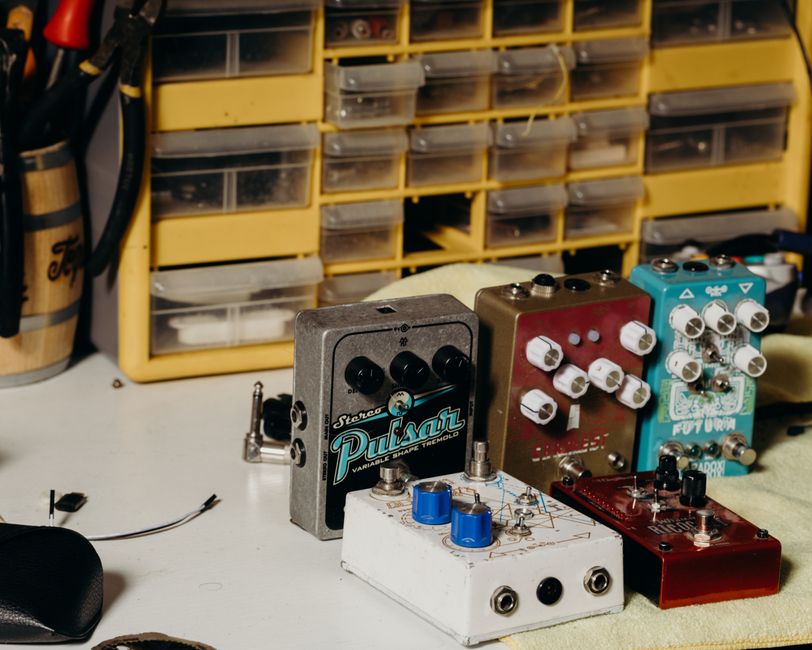
Flanging adds psychedelic swoosh and movement to bass tone. It's not essential, but it's one of the most recognizable modulation effects and it sits well in experimental and progressive bass playing.
Pros:
- Classic, inspiring sound that bass players have trusted for decades
- Stereo outputs for expansive, spacious tone
- Sturdy construction meant for regular touring use
Cons:
- Can be thick and muddy at faster speeds if combined with other effects
- Not essential for most bass playing styles
Rating: 7.6/10
Building Your Pedalboard: Where to Start
If you're new to bass effects, don't buy all six. Start with a compressor and one tone shaper (overdrive or octave), then add modulation if you want texture. The goal is understanding what each effect does before you commit to a full board.
Used gear is perfect for this. You can experiment without dropping new-retail prices, and if a pedal isn't your sound, selling it on OohYeah means you keep more of your money because there are no marketplace commissions eating into the resale value.
The best pedalboard is the one you'll actually use. That means reliable pedals, intuitive controls, and prices that don't make you regret the purchase when your tone priorities shift.
Frequently Asked Questions
What pedal should a beginner bass player start with?
Start with a compressor. It's the one effect that works with every bass player's style, from slap to fingerstyle to pick playing. It tightens your tone immediately and teaches you how effects work before you layer in more complex sounds. After that, add one tone shaper like an overdrive or octave pedal based on your musical style.
Do I really need a DI pedal?
If you play live shows or record direct into audio interfaces, a DI pedal handles XLR output and ground lift to kill hum, plus it often includes effects like preamp coloration and EQ. For bedroom practice, it's not essential. For gigging or studio work, it solves real problems and streamlines your setup.
Can I use guitar effects pedals on bass?
Some work fine. Modulation effects (chorus, flanger, phaser) translate well. Reverb and delay work too. The issue is with distortion and overdrive pedals designed for guitar, which often thin out bass frequencies. Bass-specific pedals keep your low end intact while adding grit. That's why bass overdrive pedals exist.
How many pedals do I actually need?
Three to five pedals cover 90% of bass styles: compressor, one tone shaper, one modulation (optional), and possibly a DI or preamp for live work. More than that and you're usually adding complexity for aesthetic reasons, not sonic necessity. Keep your board focused and intentional.