
You Are My Rock: Meaning, History, and How to Support
Discover the true meaning behind "you are my rock," its origins in song, and heartfelt ways to support someone who means that much to you.

October 22, 2026
Music Marketplace Advisor
Buying & SellingWhen you call someone your rock, are you describing that person, the song that carried you through a hard week, or the role you've assigned to both? Most short definitions skip that question. They treat you are my rock as a simple compliment, yet the phrase carries devotion, romance, family loyalty, friendship, and sometimes an uncomfortable amount of dependence. Understanding those layers changes how you hear it, sing it, and share it.
Why This Phrase Keeps Appearing in Music
You've probably heard it at a wedding, in a worship service, or in a chorus sent by a friend who didn't know what else to say. Someone sings you are my rock, and the room understands before anyone explains it. That instant recognition is part of its power.
The phrase doesn't require a long argument. It doesn't list everything a person has done or every hardship a relationship has survived. Instead, it offers one solid image and lets listeners fill in their own memories.
A Small Phrase With a Large Job
Think of the physical object first. A rock can be a foundation, a shelter from wind, a place to stand, or something solid to hold when the ground feels unstable. Songwriters borrow all those associations in only a few words.
That flexibility explains why the language fits more than one setting:
- Worship: A congregation directs the words toward God as protector and refuge.
- Romance: A singer thanks a partner for steadiness during uncertainty.
- Friendship and family: The phrase honors someone who answers calls, shows up, and stays calm.
- Fan devotion: A listener may apply it to an artist or song that provided comfort.
Those uses look similar on the surface, but they don't mean the same thing. A spouse, a parent, and a favorite singer occupy very different places in your life. The emotion may rhyme, yet the responsibilities don't.
A useful question to carry into any song is simple. Who is being called the rock, and what kind of support is that person actually being asked to provide?
That's where many explainers stop too early. They settle for dependable emotional support and move on. But the phrase becomes richer when you trace where it came from, notice how modern recordings reuse ancient language, and ask whether total reliance on one person is always healthy.
For independent artists, those distinctions also matter practically. A clear context can turn familiar words into a specific story instead of a generic declaration. For listeners, context helps you choose the right song for gratitude, comfort, worship, or encouragement.
The Biblical Roots of the Rock Metaphor
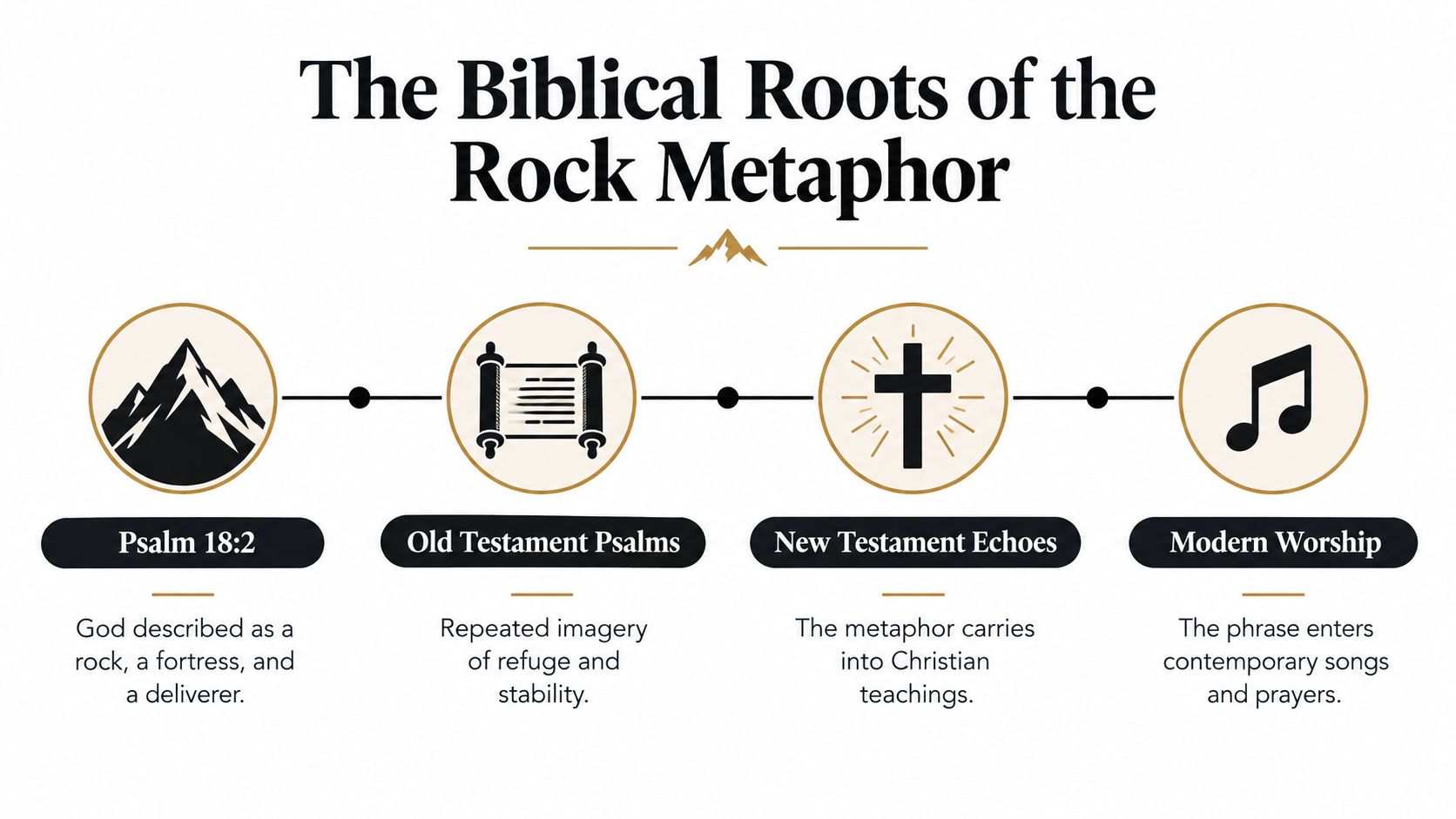
The clearest foundation for you are my rock is in the Hebrew Bible, not modern popular music. In Psalm 18:2, the Lord is called “my rock” alongside fortress, deliverer, shield, and stronghold, a cluster of images tied to protection, stability, refuge, and deliverance in the collection of biblical passages on God as rock.
That company matters. The psalmist isn't using rock to mean someone pleasant or generally supportive. He's describing safety when danger is real.
Psalm 31:2 brings in refuge and guidance, which widens the picture. A rock can be both a hiding place and a fixed point that helps someone find direction. It doesn't merely endure trouble. It gives the vulnerable person somewhere secure to stand.
David, Danger, and Thanksgiving
The language also appears in 2 Samuel 22, the parallel account associated with David's song of thanksgiving after deliverance from enemies. That background adds survival to the metaphor. The speaker isn't reflecting calmly on an ideal relationship. He's looking back at danger and naming the source of rescue.
Readers who want a devotional reflection connected with this wider biblical world may appreciate The Bible Seminary on this verse as a companion for slower reading. Placed beside the psalms, it reinforces how scripture often turns ordinary materials into images of faithfulness.
Why Stone Works So Well as an Image
- Permanence: Rock changes slowly compared with weather, crowds, or human moods.
- Strength: It can support weight and withstand pressure.
- Resistance: It remains recognizable when conditions around it change.
- Elevation: A high rock can represent safety above flood or attack.
Those qualities explain the metaphor's durability better than sentiment alone. People forget explanations, but they remember images they can picture. Rock is easy to visualize and hard to mistake.
This history also sets a boundary for interpretation. In its earliest framework, the phrase is devotional poetry about God. Later secular uses borrow that emotional force, even when the speaker is addressing a partner or friend.
A Notable Recording and Its Place in Modern Worship
A concrete modern example is “You Are My Rock” by Hillsong London. The recording appears on Shout God's Fame, listed with a release date of March 1, 2004, and runs 5 minutes and 40 seconds, according to the album track listing for the Hillsong London recording.
That length tells you something about its intended setting. It's built for extended worship rather than the compact shape of many radio singles. A congregation needs time to learn the declaration, repeat it, and settle into it together.

From Ancient Poetry to Shared Singing
The recording doesn't preserve the psalm in a museum. It translates established biblical language into contemporary congregational music. Ancient refuge becomes something a room full of people can sing in the present tense.
That move is central to modern worship. Familiar scripture gives a new melody authority, while the arrangement gives old words a fresh emotional setting. Neither side works quite the same without the other.
Listeners exploring related worship artists can compare that approach through worship music and artist discovery. The value isn't finding an identical song. It's noticing how different communities carry the same scriptural image with different pacing, instrumentation, and emphasis.
What Artists Can Learn From the Title
A short title can connect a release to a much older symbolic vocabulary. When listeners already know the image, the artist doesn't have to spend the opening minute explaining it. The song can begin closer to the emotional center.
That recognition still leaves room for interpretation:
- Genre can make the declaration sound reflective, triumphant, or intimate.
- Arrangement can stress shelter through softness or strength through scale.
- Performance length can turn a statement into meditation.
- Audience context can frame the words as prayer, testimony, or communal reassurance.
No verified sales, streaming, or chart figures are available for this recording in the material used here. Its importance doesn't depend on inventing commercial proof. Its documented place in a 2004 worship album already shows the metaphor moving from scripture into organized global repertoire.
What the Phrase Means in Different Relationships
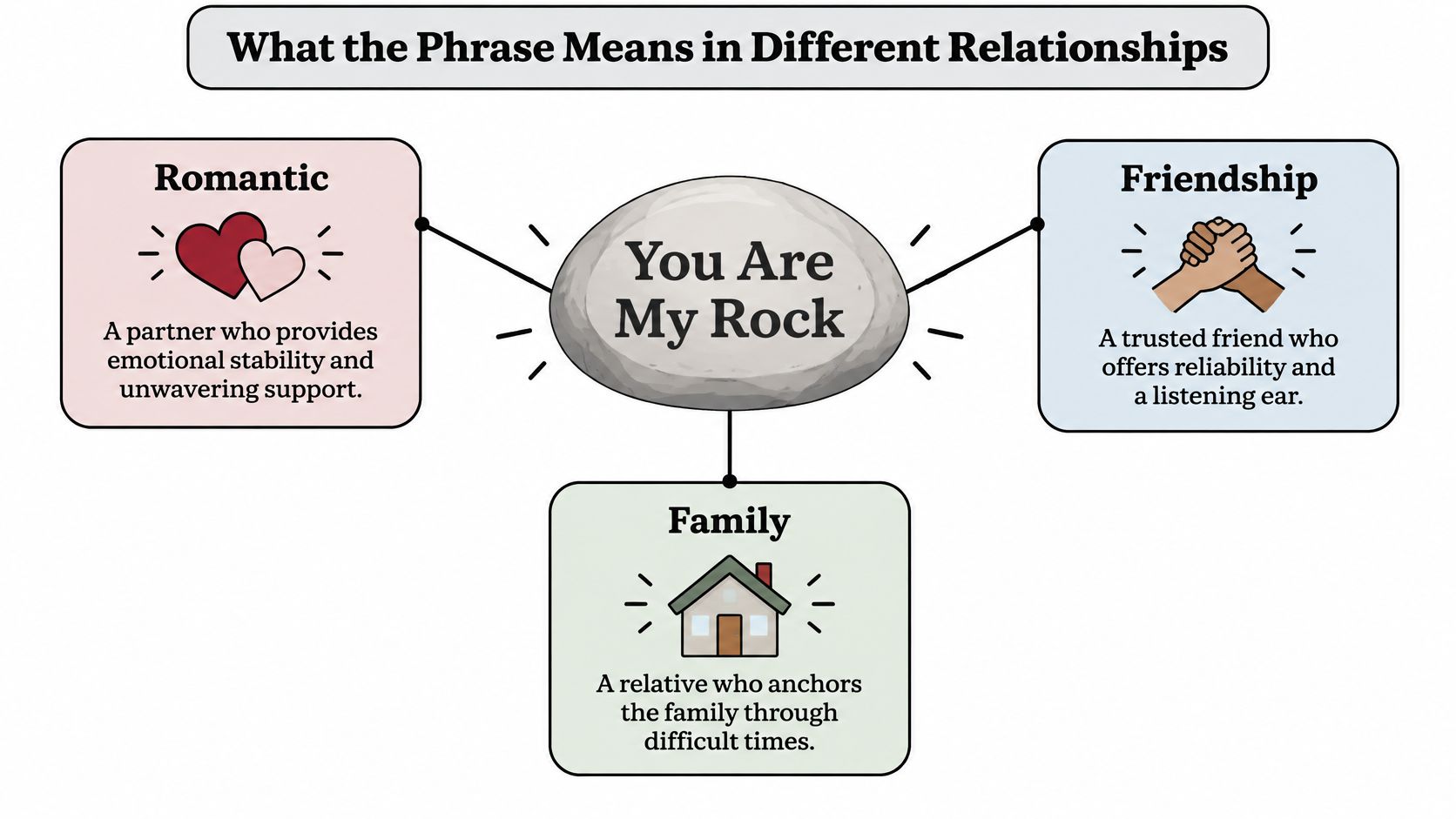
The same words can change meaning when the relationship changes. Calling a partner my rock usually praises emotional steadiness and reliability. Calling God your rock makes a theological claim about refuge and deliverance. Calling an artist your rock may describe comfort, identification, or gratitude, but it shouldn't imply that the artist knows you personally.
That's the distinction simple definitions often miss. If you're choosing words for someone who needs encouragement, it helps to choose a Bible verse to encourage with the relationship and setting in mind, rather than assuming one phrase fits every situation.
Five Common Contexts
- Romantic: Your partner remains present through conflict, illness, work pressure, or grief.
- Friendship: A trusted friend listens without disappearing when support becomes inconvenient.
- Family: A parent, sibling, or older relative holds people together during a crisis.
- Spiritual: God is understood as the secure refuge described in the psalms.
- Artist and fan: A song, voice, or public story helps a listener feel less alone.
Music makes the last category especially powerful. In a survey of 1,040 people aged 13 to 30, more than 69% said they definitely used music as consolation, drawing on musical texture, personal meaning in lyrics, and perceived closeness to artists and other listeners, as summarized alongside the common explanation of the idiom's meaning and biblical connection.
Notice the order in that finding. Texture and lyric meaning matter, while closeness to the artist plays a less central role. A listener may say an artist is their rock when, more precisely, the song performed a comforting role during a particular season.
That precision helps songwriters too. Instead of writing a vague tribute, you can name the setting, the act of support, and the change it made. Specific details keep the phrase from becoming a reusable greeting card line.
Healthy Support Versus Emotional Overdependence
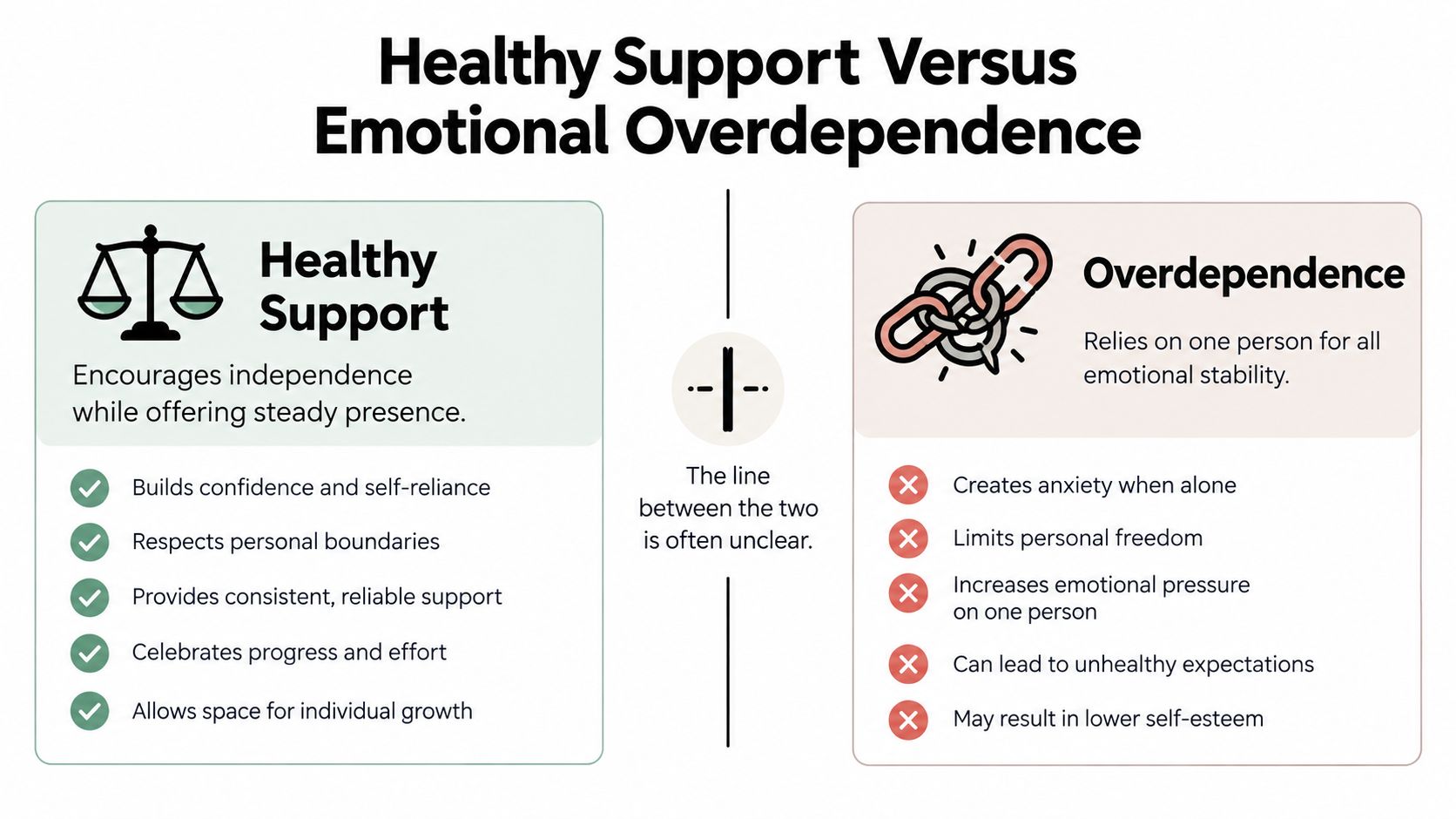
Calling someone your rock sounds wholly positive. It can be, but praise becomes a burden when one person is expected to regulate every emotion, solve every crisis, and remain endlessly available. A human being isn't stone, even when the metaphor flatters them.
Healthy support involves presence, honesty, and practical help. It also leaves room for rest, disagreement, outside friendships, and professional care when circumstances require more than a loved one can provide.
Where the Line Starts to Blur
- Support: “You helped me steady myself, and I also have other people and tools I trust.”
- Overdependence: “You're the only reason I can cope, so you can't set limits with me.”
- Support: Gratitude recognizes effort without demanding perfection.
- Overdependence: Idealization treats ordinary tiredness or absence as betrayal.
The risk of putting someone on a pedestal is explored in the idealization insights from HolyJot, which offers useful language for separating admiration from unrealistic expectations. That distinction matters in families, romances, and fan communities alike.
Music can help people process difficult experiences without becoming a substitute for care. In research involving more than 5,600 respondents, listeners selected songs with themes such as loss, life and death, belonging, or soul when struggling or reflecting, according to the study summary on song lyrics and mood management.
That finding explains why comforting lyrics can feel personal. A song may name grief or hope at the moment a listener needs language. Still, supportive art and professional mental health care serve different purposes.
Artists can offer companionship through a song without promising rescue. Clear boundaries protect the listener, the creator, and the work itself.
Responsible creators can encourage peer support, share appropriate resources, and avoid presenting direct messages as private counseling. Those limits don't weaken intimacy. They make the relationship safer and more sustainable.
Producing a Song That Honors the Phrase
A production about steadiness shouldn't sound emotionally flat. The track needs movement, because the listener should hear the difference between vulnerability and reassurance. Let verses stay restrained, then allow the chorus to become wider and denser when the central declaration arrives.
That contrast can disappear when everything is pushed to maximum level. A study of 7,200 mainstream recordings from 1967 to 2014 found loudness and dynamic compression were driven more strongly by release year than genre, with the loudness war trend peaking around 2007 before declining, according to the long term analysis of recording loudness and compression.
Build Impact Through Contrast
- Automate first: Ride vocal and instrument intensity during verses and choruses before relying on bus compression.
- Protect transients: Use moderate mastering control so drums and consonants retain definition.
- Watch crest factor: Rock mastering research reports typical values around 10 dB, with 8 to 12 dB commonly considered balanced across playback systems in the same dynamics analysis.
- Leave breathing room: A quieter pre chorus makes the title line feel earned rather than forced.
Heavy compression can also introduce gain change artifacts, noise floor modulation, and distortion. Those problems are especially damaging when the lyric depends on trust. The performance may sound loud while feeling less believable.
Keep the Words Intelligible
Research on 55 human made rock multitracks found a relationship between loudness and spectral centroid, and showed mixing priorities shift with monitoring conditions, according to the study of spectrum and loudness in human made rock mixes. Experienced mixers emphasized spectral balance on strong systems, while poorer monitoring encouraged attention to individual track comprehension.
Keep vocal consonants clear in the upper midrange and prevent guitar presence frequencies from masking them. Automation is usually better than raising the vocal fader. Test the chorus on headphones, phone speakers, and small Bluetooth systems at low volume.
Artists building a release around such detail can use tools and guidance for independent artists to organize the business side after the mix serves the message. The artistic rule remains simple. Stability should feel grounded, not compressed into sameness.
How to Discover, Stream, and Support the Track
Start by identifying the exact recording you want. Several artists may use the same title, so search with the artist name, album title, or a distinctive lyric fragment. For the example discussed earlier, pairing Hillsong London with Shout God's Fame is more reliable than searching the title alone.
Check the track length, album artwork, release date, and credits before saving it. That prevents a common frustration where a playlist adds a cover or a different worship arrangement. Small details help you build a collection intentionally.
Ways to Listen More Deliberately
- Compare versions: Hear how worship, rock, pop, or acoustic arrangements change the emotional emphasis.
- Read the lyric context: Notice whether the song addresses God, a partner, a friend, or a community.
- Follow the album: One track may sit within a bigger story about refuge, gratitude, or recovery.
- Create purpose based playlists: Separate songs for worship, encouragement, remembrance, and celebration.
Streaming is convenient, but it isn't the only meaningful form of support. Buying a download, ordering merchandise, attending a performance, or joining a subscription gives the artist a clearer signal than passive listening alone. Sharing a track with a specific person can also matter more than posting it without context.
Direct to fan spaces add another option. Fans can explore ways to discover music and support artists directly, including closer interaction and access that doesn't depend only on a general streaming catalog. The practical benefit is control. You can choose the artist, format, and level of support instead of letting an algorithm decide what happens next.
Support can be thoughtful without becoming excessive:
- Pay when you can for recordings or merchandise you value.
- Engage respectfully through comments, community posts, and permitted messages.
- Credit creators correctly when sharing covers or clips.
- Respect boundaries when an artist limits personal access.
Discovery works best as a loop. A familiar biblical phrase leads you to one recording, that recording leads to another artist, and direct support helps new interpretations reach listeners who need them.
Why the Phrase Endures and What It Means for You
The phrase endures because it solves a communication problem. People often feel gratitude, relief, dependence, and devotion at the same time, but ordinary conversation doesn't always provide language for that mixture. You are my rock compresses dependable support into an image almost anyone can grasp.
Its history gives it depth. The psalms frame rock as refuge, protection, and deliverance. Modern worship carries that language into communal singing. Secular songs and everyday speech then adapt it for partners, friends, and family members.
Yet the metaphor shouldn't be used carelessly. A rock doesn't get tired, need boundaries, or ask for help. People do. The healthiest use of the phrase honors support without turning one person into the sole foundation for another person's life.
Three Ways to Engage More Thoughtfully
- As a listener: Ask who the song addresses and what kind of refuge it describes.
- As a friend or partner: Pair the compliment with respect for limits, rest, and shared responsibility.
- As an artist: Give the familiar image a specific story, setting, and emotional turn.
The phrase stays meaningful when it points toward real support rather than replacing it with a slogan.
That applies to fan culture as well. A song may console you, and an artist may inspire you, but gratitude doesn't require unhealthy dependence. You can buy the recording, share it with someone who needs encouragement, and still maintain appropriate distance.
Future artists will keep reinterpreting these words because each generation faces its own instability. Some will sing them as prayer. Others will hear steadiness in a friend who stayed, a parent who held the family together, or a community that refused to disappear.
The next time the chorus reaches you, listen for more than the compliment. Hear the ancient refuge behind it, the relationship in front of it, and the responsibility that comes with being trusted.
If you are my rock has led you to a recording or artist you want to support more directly, OohYeah gives fans free access to commission free downloads, exclusive content, direct messaging, voice notes, and community posts. Visit to discover independent creators, support the songs that steady you, and help more of what you spend reach the artists behind the music.