Your Guide to Release an Album and Get Heard
Ready to release an album? Our guide covers everything from pre-production and distribution to marketing strategies that get your music noticed.
January 20, 2026
Music Marketplace Advisor
Buying & SellingReleasing an album that truly connects requires more than just great music; it demands a smart, strategic plan that guides you from the first creative spark to post-launch promotion. The entire process can feel overwhelming, but by breaking it down into distinct phases—planning, production, and promotion—you can turn that massive undertaking into a series of achievable steps.
Laying The Groundwork For A Successful Album Release
An album isn't just a collection of songs. It's a statement, a milestone, and often the culmination of years of work. But before you ever press "record," the most important work has already begun. The foundation of any successful release is a well-thought-out plan that marries your artistic vision with the practical realities of getting it made and heard.
Think of this early stage as drafting the blueprint for your entire project. Skipping it is a recipe for wasted time, blown budgets, and creative frustration. A solid plan gives you direction, keeps everyone on the same page, and helps you see roadblocks long before you hit them.
Defining Your Album's Core Identity
Every great album has a soul—a core identity that makes it feel cohesive. What’s the story you're trying to tell? Is there a central theme, a specific sound, or an emotional journey that connects all the tracks? Nailing this down early will inform every decision you make, from songwriting and production straight through to your artwork and marketing copy.
This conceptual framework is what turns a random playlist into a unified body of work. It gives your audience a reason to listen from start to finish, creating an experience that's far more immersive and memorable. A huge part of this is understanding the importance of brand awareness; it’s how you build a real connection with fans who will stick with you for the long haul.
Your vision also has very practical implications. A raw, stripped-down acoustic record will have a completely different production schedule and budget than an ambitious, multi-layered electronic album. Get crystal clear on what you want to achieve sonically and emotionally right from the start.
Building A Realistic Production Timeline
When it comes to releasing music, timing really is everything. A detailed timeline is your roadmap, breaking the entire project into smaller, more manageable tasks with firm deadlines. A typical album cycle can easily span six to twelve months, sometimes even longer, so mapping it out is non-negotiable.
This high-level overview shows the key phases and timelines needed to pull off a well-executed and impactful album release.
| Phase | Recommended Timeline | Key Objective |
|---|---|---|
| Pre-Production | 3-6 Months Out | Finalize songwriting, arrangements, and demos. Lock in the album's creative direction. |
| Production | 2-4 Months Out | Record all instruments and vocals. Complete the core creative work. |
| Post-Production | 6-8 Weeks Out | Mix and master all tracks to professional standards. Finalize the audio. |
| Distribution & Setup | 4-6 Weeks Out | Deliver final masters, artwork, and metadata to your distributor. |
| Marketing Push | 8+ Weeks Out | Begin promoting lead singles, launch pre-save campaigns, and pitch to press/playlists. |
| Release & Post-Launch | Release Day & Beyond | Execute the launch-day plan and continue promoting the album for several months. |
This timeline clarifies that a successful launch isn't a linear process but one with overlapping efforts, where marketing starts long before the production is even finished.
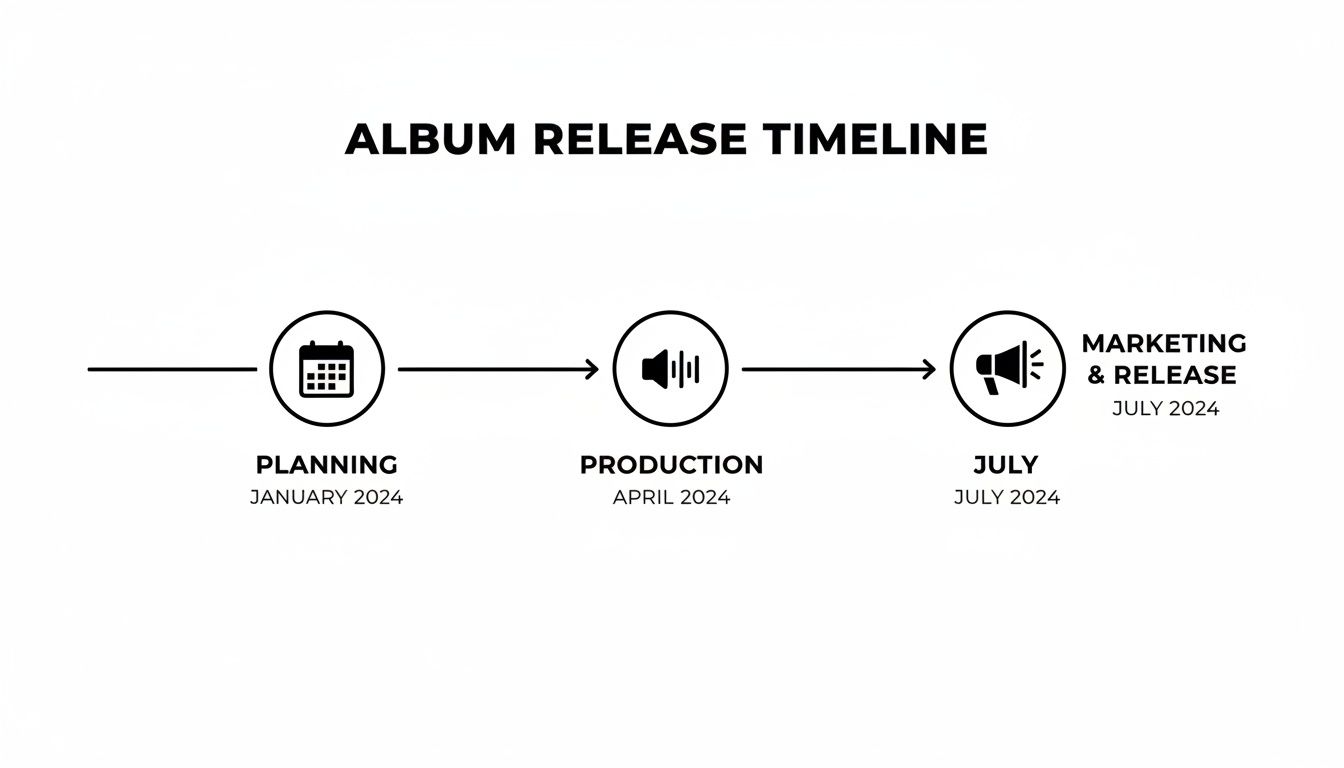
This visual really drives home how different phases need to run in parallel. Your marketing efforts should be well underway while you're still wrapping up production.
One of the biggest mistakes artists make is underestimating the lead time needed for distribution and playlist pitching. You absolutely must deliver your final, mastered album to your distributor at least four to six weeks before your release date. This is the minimum window to be eligible for those coveted editorial playlist spots on platforms like Spotify.
Setting Measurable Goals
What does a "successful" release actually look like for you? The answer is personal. By setting specific, measurable goals, you give your project a clear purpose and a way to track your progress. Ditch vague aspirations like "get more fans" and focus on concrete targets.
Here are a few examples of what strong, measurable goals look like:
- Hit 50,000 streams on Spotify in the first month.
- Sell 100 vinyl pre-orders before release day.
- Add 500 new subscribers to your email list.
- Land a premiere or review on three specific music blogs.
These kinds of goals give you clear benchmarks to aim for and can be a huge motivator during the long haul of making and releasing music. As you build your strategy, you'll also need to decide if you want to lead with a few singles to build buzz. For more on that, check out our guide on the advantages of releasing singles vs albums.
From Studio Sessions to Final Masters
With your album roadmap in hand, it's time to get into the studio and make some noise. This is where the magic happens—where raw ideas are forged into polished, professional tracks. But it's less about magic and more about smart preparation, solid collaboration, and a relentless focus on quality.
The path from a rough demo to a final master is a delicate one. Think of it as a chain: recording, mixing, and mastering are all linked. A weak recording can’t be magically fixed in the mix, and a muddy mix gives the mastering engineer nothing to work with. You have to nail every step.
Maximizing Your Studio Time
Studio time is expensive. It's often the biggest line item in an album budget, so walking in unprepared is like setting a pile of cash on fire. The studio is for capturing performance, not for rehearsal.
Before you even think about booking time, make sure every song's structure, tempo, and key are locked down. Everyone in the band needs to know their parts cold. Pre-production is non-negotiable; get detailed demos recorded, even if they're just on a laptop. These demos become the blueprint for the real thing.
Here’s how to walk in ready to go:
- Gear Check: Get your instruments in pristine condition. New guitar strings and drum heads are a must. Check every cable, pedal, and power supply. Don't waste paid time troubleshooting a faulty patch cord.
- Reference Tracks: Curate a playlist of songs that have the sound you're chasing. This is the fastest way to get your engineer and producer on the same page about the vibe you're after.
- Session Plan: Map out a realistic schedule for each day. Decide which songs or parts you’re tracking and when. Always pad the schedule a bit—you need room for those unexpected creative sparks or the inevitable technical glitch.
The Art of Collaboration
The dynamic between the artist, producer, and engineer is everything. It can elevate a good album to a great one. A skilled producer isn't just a technician; they're an objective ear, helping you make decisions that serve the song, not your ego.
This relationship is built on trust. You hired them for a reason, so be open to their ideas. That said, it’s your music. Never be afraid to speak up if something doesn’t feel right. Clear, honest communication is the key to ensuring the final record is a true reflection of your vision.
An effective collaborator doesn't just press record; they help you translate the sound in your head into a final product. The best engineers and producers are part psychologist, part technician, and part creative partner. They create an environment where you can deliver your best performance.
From Mixing to Mastering
Once tracking is complete, the project moves into the mixing phase. This is where the raw tracks are balanced, sculpted with EQ, and given life with effects like reverb and delay. A great mix creates a three-dimensional soundscape where every instrument has its own space to shine, delivering clarity and emotional punch.
Mastering is the final coat of polish. It’s the last quality control check before your album goes out into the world. A mastering engineer uses subtle compression, EQ, and limiting to make sure your album sounds cohesive from track to track and plays well everywhere, from tiny earbuds to massive club sound systems.
Seriously, don't skip professional mastering. It's one of the most common rookie mistakes, and it’s the single biggest difference between an album that sounds like a demo and one that sounds like a legitimate release.
Finalizing Your Visuals and Metadata
While the audio is getting its final touches, you need to be working on the visuals. Your album artwork is the face of your record. It’s the first thing people see on Spotify or Apple Music, and it needs to make an immediate impact. It should capture the album's theme and your artistic identity. If you're planning a physical run, this is also when you’d lock in designs for things like custom CD covers to match your aesthetic.
At the same time, it’s time for some crucial admin work: gathering your metadata. This stuff might seem boring, but it's how you get paid. Get it wrong, and you're leaving money on the table.
Essential Metadata Checklist:
- ISRC Codes: The unique fingerprint for every single track.
- Songwriter & Publisher Credits: Make sure every contributor is listed correctly.
- Album and Track Titles: Check for 100% accuracy in spelling and capitalization.
- Genre and Sub-genre: Helps your music find the right audience on digital platforms.
Your distributor will require all this information to get your music online. With your final masters approved, your artwork looking sharp, and your metadata organized, you're finally ready to get this album out into the world.
Navigating Modern Music Distribution
You've got the final masters and killer artwork. Now comes the real test: getting your album out into the world. The old model of shipping CDs to brick-and-mortar stores is long gone. Today, distribution is a digital game, and understanding the new rules is the only way to make sure your music actually gets heard.
Distribution in the streaming era means delivering your tracks to hundreds of digital service providers (DSPs). We're talking about the big players like Spotify and Apple Music, of course, but also social media libraries on TikTok and Instagram, and countless online music stores around the globe. Your distributor is the pipeline that connects your music to all of them.
This digital-first world gives independent artists a direct line to a global audience—something that was nearly impossible in the old gate-kept industry.
Choosing Your Distribution Partner
Let's be clear: not all distributors are the same. You'll find a huge range of services out there, each with a different way of doing business. Some charge a flat annual fee. Others will take a cut of your royalties. Many do a bit of both. This decision directly shapes how much you earn and how much control you keep.
Services like TuneCore or DistroKid can get your music everywhere for a fee, but you have to read the fine print. Royalty splits and hidden costs can eat into your earnings. On the other hand, artist-focused platforms like OohYeah are built to give you more power. With a direct-to-fan model, you can often keep a much higher slice of the pie—even 100% on direct sales—and get your hands on tools that go way beyond simple delivery. For a much deeper breakdown, check out our guide on how to choose the right music distribution service.
When you're weighing your options, ask yourself these questions:
- Fees and Commissions: What’s the upfront cost, and what percentage do they keep from my earnings?
- Artist Support: Do they offer real, human support and analytics that actually help me make decisions?
- Creative Control: Can I set my own prices for downloads or bundle my music with merch?
- Speed and Reach: How fast do they get my music live, and which platforms will it be on?
Preparing Your Files For Upload
After picking a partner, it's time to prep your assets for delivery. This part is all about technical precision. Seriously, don't mess this up. Submitting files in the wrong format is a surefire way to get delayed or rejected, which can throw your entire release schedule into chaos.
For audio, the industry standard is a 16-bit, 44.1 kHz WAV file. Never upload MP3s. You'll undo all the hard work your mastering engineer put in by introducing compression artifacts.
Your artwork is equally crucial. Most platforms need a high-resolution square image, usually at least 3000 x 3000 pixels at 300 DPI. Stick to JPG or PNG formats. And keep it clean—just the artist name and album title. No social media handles, website URLs, or release dates on the cover.
The single biggest mistake I see artists make is not leaving enough lead time. You need to upload your finished album and all the metadata to your distributor at least four to six weeks before your release date. This buffer is non-negotiable if you want to pitch for playlists and ensure a smooth, simultaneous launch everywhere.
The Power of Data And Timing
The numbers don't lie: strategic releases make a huge difference. Global on-demand audio streams soared to 5.1 trillion in 2025, up 9.6% from the year before. This proves the appetite for new music is massive. What’s really interesting, though, is that 57% of U.S. streams came from catalog tracks—music released before 2021. This shows a well-planned album can have a very long life, well beyond its first week.
Platforms like OohYeah are designed to help artists capitalize on this by providing analytics to pinpoint the best release timing and direct-to-fan tools to build momentum. Choosing the right partner isn't just about delivery; it's about giving yourself the tools to succeed long-term.
Your Pre-Release Marketing Playbook
A great album dropped into a silent void is just... silent. The real magic, the kind that launches a record successfully, starts weeks or even months before anyone hears the full project. This pre-release window is your time to build a groundswell of anticipation and turn casual listeners into an army of fans waiting to hit play the second it’s live.
This isn’t about a single "coming soon" post and crossing your fingers. We're talking about a deliberate campaign, a slow burn designed to build momentum. Every move you make should feed the next, creating a story that pulls people in.
Strategic Single Releases
Dropping two or three singles ahead of the full album isn't just a good idea anymore; it's standard practice for a reason. Each single is its own mini-launch event—a new reason to talk to your fans, a new track to pitch to playlist editors, and a fresh reminder that something bigger is coming.
Think of your singles as chapters leading up to the main story. The first one sets the scene, introducing the sound and vibe of your new era. The second can show a different side of your artistry, keeping things interesting. A final single, released just a couple of weeks out, is the final push to drive those crucial pre-saves.
This staggered approach keeps you in the conversation for months, not just a day. Instead of one big spike in attention, you create a series of peaks that build into a massive wave on release day.
The Power Of Pre-Saves And Pre-Orders
The moment your release date is locked in with your distributor, your focus should shift to setting up a pre-save or pre-order campaign. This is one of the most effective tools you have to guarantee a strong launch.
A pre-save on platforms like Spotify or Apple Music is basically a fan RSVP-ing to your release party. When they click that button, your album automatically lands in their library on day one. This is huge for two key reasons:
- It creates an immediate surge of day-one streams, which is a massive signal to the platform's algorithms that your music is worth pushing.
- It turns a passive "I'll check it out" into a concrete action, making sure they don't forget.
If you're selling physical copies or offering direct downloads, a pre-order campaign is a must. It helps you figure out demand, covers production costs upfront, and builds a sense of exclusivity. You can sweeten the deal by bundling pre-orders with signed vinyl, limited-edition merch, or exclusive behind-the-scenes videos.
The whole point here is to make your release an active event. You aren't just hoping people show up; you're giving them a ticket to be part of the launch from the very beginning.
Crafting Your Narrative
Your music is the centerpiece, but the story around it is what makes people connect. What's this album about? What inspired you? What did you go through to create it? This story is the connective tissue holding your entire marketing plan together.
You need to weave this narrative into everything you do:
- Social Media: Go deeper than "new song out now." Post candid clips from the studio, break down the meaning of a specific lyric, or jump on a livestream to answer questions about the process.
- Email Newsletters: Your email list is your inner circle. Give them the inside scoop—exclusive updates, early song previews, and personal stories about the album they won't see anywhere else.
- Press Outreach: When you're pitching to blogs and journalists, lead with your story. A unique angle is infinitely more interesting than a generic press release. For a deep dive on this, check out our complete guide on how to market your music as an independent artist.
A well-told story combined with great music is a powerful force. Just look at Bad Bunny, whose 2025 album became Spotify’s top global album and helped him rack up an incredible 19.8 billion streams. This success mirrors a larger industry trend, with global music revenues soaring past $20 billion for the first time in 2024, overwhelmingly driven by streaming. You can read more about Spotify's 2025 streaming trends.
Expanding Your Reach
Finally, don't go it alone. Find ways to amplify your message by working with others. Look for influencers, content creators, or even other artists who have an audience that would vibe with your music.
Send them a personal message—not a copy-paste job. Offer them an early listen and pitch an idea for a collaboration that feels natural for both of you. This could be as simple as them using your track in a TikTok or as involved as co-hosting a livestream. The key is finding partners who genuinely dig your music; their endorsement will come across as authentic and powerful to their followers.
Sustaining Momentum After Release Day
The energy of release day is electric, but it's a huge mistake to treat it as the finish line. In reality, it’s the starting pistol. The real work of building a lasting impact happens in the weeks and months that follow, turning that initial spike in attention into genuine career growth.
From this point on, your new album is the sun in your creative solar system. Every social media clip, every piece of merch, every live show should orbit around it and point people back to the music. The initial launch buzz gives you a powerful platform, so use it to connect with fans who showed up on day one and grab the attention of those just discovering you.
Capitalize on Launch Energy
That immediate post-release window is golden. Your most dedicated fans have just binged the album and are fired up. Now is the time to channel that excitement into tangible support for your work.
Don't be hesitant to push your merchandise. A well-timed email or social post thanking fans for their release-week support, paired with a link to a new t-shirt or vinyl variant, can work wonders. Limited-run items tied directly to the album’s launch also create a sense of urgency that encourages immediate sales.
This is where platforms like OohYeah really shine. They let you bundle a digital download with a physical piece of merch, and you get to keep 100% of the revenue. That direct-to-fan connection is powerful—it makes your supporters feel like they're truly part of your journey.
Analyze Your Data to Inform Next Steps
After a week or two, you’ll have a goldmine of data waiting for you. It's time to get your hands dirty in your Spotify for Artists, Apple Music for Artists, and distributor dashboards. This isn’t about stroking your ego; it's about gathering real intelligence for your next move.
Here’s what to look for:
- Top Performing Tracks: Which songs are getting the most streams and saves? These are your clear fan-favorites and prime candidates for a music video, a stripped-down acoustic version, or a live performance clip.
- Playlist Adds: Check out which user-generated playlists are picking up your songs. This tells you exactly who is connecting with your music and can give you a list of similar curators to reach out to.
- Audience Demographics: Where in the world are your listeners? This is crucial for tour planning. Knowing you have a budding fanbase in a specific city takes the guesswork out of booking shows.
Don't just glance at the numbers; listen to what they're telling you. If a track you never intended to be a single is suddenly blowing up, your audience is giving you a direct order. Pivot your content strategy and lean into that unexpected momentum.
Extend the Album's Lifespan
A successful album release is a marathon, not a sprint. The goal is to keep the conversation going for six months, a year, or even longer. This requires a smart, long-term content plan that constantly finds new angles to reintroduce your album to the world.
Think about how you can repurpose everything. Turn a powerful lyric into a shareable graphic. Create a short video telling the story behind a specific track. Host a livestream to perform an acoustic version of a song your fans are loving. Every new piece of content is another doorway for a potential fan to discover your work.
The industry itself proves the power of the album format. In 2024, U.S. recorded music revenue climbed to $17.7 billion, driven by over 100 million paid streaming subscriptions. This trend continued into 2025, where vinyl dominated with over 75% of physical sales, showing that fans are more invested than ever. As an independent artist, you can tap into this by creating a unified ecosystem for your music and merch, building a sustainable career one album at a time. For a deeper dive, check out the latest trends in music revenue.
Common Questions About Releasing an Album
Diving into your first album release can feel like navigating a maze. A lot of questions pop up, and getting solid answers can mean the difference between a launch that lands with a thud and one that truly takes off. Let's tackle some of the most common questions I hear from independent artists.
How Far in Advance Should I Plan My Album Release?
I always tell artists to give themselves 6-9 months from the moment they decide to release an album until the day it goes live. That might sound like a lifetime, but trust me, you’ll use every single day of it. A proper rollout can't be rushed.
Breaking it down, you're looking at about 2-3 months for songwriting and pre-production, another 1-2 months for tracking and mixing, and a month just for mastering and finalizing your artwork. Most critically, that leaves you with a 2-3 month window to get your distribution sorted out and run a marketing campaign that actually builds momentum.
Rushing is the enemy of a good release, especially when it comes to playlists. Spotify and Apple Music need your tracks weeks in advance for editorial consideration. If you submit last-minute, you’re forfeiting one of the biggest discovery tools you have.
What Is the Most Important Focus for an Independent Release?
If you take away only one thing, let it be this: the single most critical factor is building an engaged audience before your album comes out. The "if you build it, they will come" fantasy just doesn't work in music anymore. A masterpiece of an album released to an empty room is just a tree falling in the forest.
Your energy should be almost entirely focused on creating a real community around your music. That means getting practical:
- Be consistent online. Share behind-the-scenes content, talk about your writing process—give people a reason to care about your journey, not just the final product.
- Own your audience. An email list is gold. A direct-to-fan platform like OohYeah is even better. You need a way to talk to your supporters without an algorithm getting in the middle.
- Use singles to build the story. Each single is a breadcrumb leading your fans to the main course. It keeps the conversation going and builds genuine anticipation.
This pre-release groundwork is what separates a launch that makes an impact from one that disappears after a day.
How Can I Budget for an Album Release with Limited Funds?
Most of us aren't working with a major label budget, and that's okay. A tight budget forces you to be smart and prioritize what truly matters, instead of just throwing money at problems.
There are two things you absolutely cannot skimp on: professional mastering and high-quality artwork. These two elements scream "professional" or "amateur" before anyone even hears a full chorus. A brilliant mix will sound flat with bad mastering, and terrible artwork will make people scroll right past your music.
To make the numbers work, get creative everywhere else. You can track drums at a pro studio but do all the guitars and synths at home. You can book a great engineer for a day just to mix the most important tracks. For marketing, your best tools are free—your personality on social media, your email list, and collaborating with other artists in your scene.
Should I Release Singles Before the Full Album?
Yes, one hundred percent. Releasing 2-3 singles in the months leading up to an album isn't just a good idea; it's the industry standard for a reason. It works.
Think of each single as its own mini-launch. It’s a new chance to pitch to playlists, a new reason to post on social media, and a fresh reminder to your audience that something bigger is coming. This strategy turns your album release from a one-day firework into a slow-burn campaign that builds real, lasting heat.
Use every single to drive pre-saves for the full album. That's how you make sure your release day is a huge event, not just a quiet drop.
Ready to take full control of your music and connect directly with your fans? With OohYeah, you can sell music, merch, and subscriptions with zero commission fees, giving you the tools to build a sustainable career on your own terms. Start your journey on OohYeah today and turn your passion into your profession.