Marketing for Music Industry Success
Discover proven marketing for music industry strategies. This guide covers artist branding, digital promotion, and release plans to grow your audience.
August 19, 2025
Music Marketplace Advisor
Buying & SellingGreat music marketing is all about forging a real, direct connection with fans. It’s a blend of building an authentic brand, using digital platforms like Spotify and TikTok intelligently, and turning people who just happen to hear your song into a true community. This guide will walk you through exactly how to do it.
Why Music Marketing Matters Now More Than Ever

The path from the studio to a sustainable career looks completely different today. The old gatekeepers of the industry are gone. In their place is a digital-first world where artists have an incredible amount of control over their own destiny. Marketing is no longer a game of chasing radio spins; it's the very engine that powers discovery, forges community, and builds a career with real longevity.
This isn't just a philosophical shift—it's happening inside a thriving market. The global recorded music industry hit $29.6 billion in 2024, capping off a decade of steady growth. Streaming was the undeniable force behind this surge, making up a massive 69% of all revenue.
The Modern Artist as an Entrepreneur
In today's industry, artists are entrepreneurs. Your music is your business, and a smart marketing plan is what makes that business work. Without one, even the most incredible song can easily get lost in the endless sea of new releases.
A solid marketing plan is what helps you:
- Define Your Brand: Figure out who you are and build a unique identity that connects with the right people.
- Build Your Audience: Stop waiting for fans to find you and start actively building a community that cares about your story.
- Drive Engagement: Turn casual listeners into real supporters who stream your music, share it with friends, and buy your merch.
- Create Longevity: Build a career that can last, one that isn't just riding the wave of a single viral moment.
Think of your music marketing strategy as the bridge between your art and your audience. It's the intentional process of guiding listeners to your work and giving them compelling reasons to stay, listen again, and join your journey.
This guide is your roadmap, whether you're an independent artist or part of a small team. We'll break down how to build your brand, master the most important digital channels, and launch your music for maximum impact. If you're just getting started on your own, our dedicated guide on how to market your music as an independent artist is the perfect place to begin.
Ultimately, a strong marketing foundation is what gives you the power to turn your creative passion into a lasting career.
Defining Your Core Artist Identity

Before you spend a single dollar on promotion, you have to answer the most important question of all: who are you? Real marketing for the music industry isn't about just making noise; it’s about telling a consistent and compelling story. It all starts by defining your core artist identity—the unique DNA that sets you apart from everyone else.
Think of your brand as a promise you make to your audience. It’s the total package—your sound, your look, your message, and your values—that builds a real connection. When a fan stumbles across your album art or a new post, they should instantly know it’s you. This identity is the bedrock of every marketing move you'll ever make.
Without that clarity, your efforts will feel random and fall flat. A strong identity ensures every tweet, music video, and stage outfit feels genuine and connected, which is how you build deep-seated trust and loyalty with the people who matter most.
The Four Pillars of Your Artist Brand
Your brand is so much more than a cool logo. It’s a complete ecosystem, and it’s built on four interconnected pillars. If you take the time to define each one, you’ll have a powerful compass to guide every creative and promotional decision you make.
These are your essential building blocks:
- Your Story (The Narrative): What’s the real story behind your music? This isn't just a bio; it’s your background, your inspirations, and the journey that brought you here. This is the human element people crave.
- Your Values (The Mission): What do you truly stand for? Your values shape your message and attract listeners who see the world the same way you do. This could be anything from social justice to pure, unadulterated creative freedom.
- Your Visuals (The Aesthetic): How do you make your music look? This covers everything from color palettes and fonts to your fashion sense and photography style. For many new listeners, your visuals are the very first handshake.
- Your Sound (The Sonic Signature): What makes your music undeniably yours? Go beyond genre. Think about your signature production techniques, your vocal delivery, and the lyrical themes that tie your work together into a cohesive sonic world.
As you define this identity, the next step is to translate it into a memorable presence everywhere you show up online. For a deeper dive into this, check out this essential social media branding guide.
A powerful artist brand doesn't just attract listeners; it creates a tribe. It gives people something to believe in and belong to, transforming them from passive consumers into active, passionate advocates for your music.
Crafting Your Brand Identity
Alright, let's put this into practice. To start shaping your brand, you need to get real with yourself and ask some tough questions. This is about honest self-reflection, not about fabricating a persona you can't maintain.
The framework below is designed to help you pinpoint the core components of your identity. Think of it as your brand's compass.
Artist Brand Identity Framework
| Brand Component | Guiding Questions | Example (Indie Folk Artist) |
|---|---|---|
| Story & Narrative | What experiences shaped my music? What is the core message of my songs? | "I write about reconnecting with nature after living in the city for ten years." |
| Core Values | What beliefs are non-negotiable for me? What do I want my music to inspire? | Authenticity, environmentalism, and quiet introspection. |
| Visual Aesthetic | What colors, textures, and imagery represent my sound? | Earth tones, film photography, natural light, vintage and handmade clothing. |
| Sonic Signature | What are the recurring elements in my music? What instruments define my sound? | Acoustic guitar, layered vocal harmonies, ambient field recordings, sparse percussion. |
Working through this process gives you a North Star for all future decisions. Once you know who you are at your core, you'll know which collaborations to pursue, what merch actually makes sense, and how to talk to your audience in a way that resonates. In a crowded industry, that kind of clarity is your single greatest advantage.
Mastering the Digital Channels for Fan Growth

Once you’ve nailed down your artist identity, it’s time to meet potential fans where they already live. Modern music marketing isn't about shouting into the void; it's about strategically placing your music and your story across the digital channels that actually drive discovery and build a real community.
You don't need to be everywhere at once. A winning strategy is about mastering the platforms that truly matter for your music and your audience. Think of these channels in three core buckets: streaming services where the music is consumed, social media where culture is built, and direct-to-fan channels where you forge true loyalty.
Each one serves a very different purpose in a listener's journey, from that first casual listen to becoming a dedicated supporter. Understanding how to use each one will shift your entire approach from just releasing music to actively cultivating a fanbase that sticks around.
Optimize Your Presence on Streaming Platforms
Let's be clear: streaming isn't just a distribution pipeline. It's the main discovery engine for nearly everyone. The numbers don't lie. Music streaming now accounts for about 84% of the industry's total revenue, a figure projected to jump from $17.5 billion to over $30 billion by 2027.
With 78% of listeners using these services as their primary way to find and listen to music, your presence here is non-negotiable. But just uploading your tracks to Spotify or Apple Music is the bare minimum. Your artist profile is your digital storefront, and you only get one chance to make a good first impression.
A complete, professional-looking profile signals to fans and playlist curators alike that you’re a serious artist. It builds instant credibility and gives new listeners a central place to land when they discover you. For a deep dive, check out our guide on how to attract fans to your music profiles.
Here are the essentials you need to get right:
- High-Quality Photos: Invest in professional, high-resolution images for your profile and header. Make sure they match your brand aesthetic.
- Compelling Bio: Ditch the boring bio. Write something short, sharp, and engaging that tells your story. And don't forget to use Spotify's "Artist Pick" feature to spotlight a new release, a curated playlist, or upcoming tour dates.
- Linked Socials: This is an easy one but so often overlooked. Make sure all your social media profiles are linked up so new fans can easily find and follow you everywhere else.
Harness the Power of Social Media Engagement
Social media is where your artist brand truly comes to life. It’s the place to show off your personality, connect with your audience on a human level, and build a genuine community around your music. Platforms like TikTok and Instagram have become essential tools for growth, moving way beyond simple "buy my single" posts.
The key is to stop broadcasting and start connecting. Create content that provides real value. For artists trying to break through today, a platform like TikTok is a game-changer for reaching totally new audiences. If you're looking for a great starting point, exploring resources like this overview on TikTok for Music Marketing can spark some powerful ideas.
Effective social media is all about a consistent, authentic dialogue with your fans. It’s where listeners get to know the person behind the songs.
"Social media is no longer just a promotional tool. It is the venue, the green room, and the merch table all rolled into one. It's where you build the relationships that sustain a career long after a song's release cycle is over."
Focus your energy on content that actually connects:
- Behind-the-Scenes Content: Show people the unpolished side of your work—clips from the studio, your songwriting process, or life on the road. This stuff demystifies your art and makes you far more relatable.
- Interactive Posts: Get your audience involved. Use polls, Q&As, and live streams to have real conversations. Ask for their opinions and make them feel like they're part of your journey.
- User-Generated Content (UGC): This is gold. Encourage fans to use your music in their own videos. When you share their creations, it acts as powerful social proof and builds a much stronger sense of community.
Build Your Direct-to-Fan Connection
Here's the hard truth: streaming and social media are borrowed land. Algorithms change, platforms can vanish, but a direct connection with your fans is an asset you own completely. This is where your email list and fan clubs become your most valuable tools.
An email list is one of the most powerful things you can have in your marketing arsenal. Unlike a social media follow, an email address is a direct line of communication that you control. It lets you bypass the unpredictable algorithms and speak directly to your most engaged supporters. You can deliver news, exclusive content, and merch offers right to their inbox.
Similarly, platforms like Patreon or channel memberships on YouTube let you create premium experiences for your superfans. This not only builds a deeper connection but also creates a sustainable, recurring revenue stream built on a foundation of genuine loyalty.
To bring it all together, here’s a quick look at how these channels stack up against each other.
Music Marketing Channel Comparison
This table breaks down the primary digital marketing channels, showing what they're best for, what you should measure, and how they fit into your overall strategy.
| Channel | Primary Goal | Key Performance Indicators (KPIs) | Best For |
|---|---|---|---|
| Streaming Services | Music discovery and consumption | Streams, monthly listeners, playlist adds | Reaching a broad audience and gaining credibility. |
| Social Media | Community building and brand expression | Engagement rate, shares, follower growth | Showcasing personality and interacting with fans daily. |
| Direct Channels | Fan loyalty and direct monetization | Email open rate, click-through rate, subscribers | Nurturing superfans and building a sustainable career. |
Ultimately, a balanced, integrated approach is what wins. Use the wide reach of streaming platforms to attract new listeners. Pull them into your world with engaging content on social media to turn them into followers. Then, guide your most dedicated fans to your direct channels to build a loyal community that will support your career for years to come. When every channel works together, you create a powerful engine for growth.
Your Step-by-Step Music Release Blueprint
Let's be clear: a great song doesn't just find an audience on its own. A successful music release is a deliberate, calculated effort. Think of it less like a shot in the dark and more like a movie premiere—every single detail is planned to build a wave of excitement and grab people's attention. This kind of strategic thinking is the core of effective marketing for the music industry.
I've broken the whole process down into a simple, three-phase blueprint: Pre-Release, Release Week, and Post-Release. By following this framework, you can turn every launch into a powerful, career-defining moment.
Phase 1: The Pre-Release Buildup
This is where the real work happens, typically spanning four to eight weeks before your music is even available. The goal here is simple: build so much anticipation that people are waiting for your track the second it drops. This is all about preparation, pitching, and getting your fans hyped.
First things first, get all your assets in a row. I'm not just talking about the mastered audio file. You need killer cover art, professional press photos, a compelling artist bio, and a one-sheet that tells the story of the release. Once you have these, you can start your outreach.
Here’s what you should be focused on:
- Lock in Distribution: Get your music uploaded to a distributor like TuneCore or DistroKid at least four weeks ahead of time. This saves you from any last-minute technical nightmares and ensures your track goes live everywhere on schedule.
- Pitch for Playlists: This is huge. Log into your "Spotify for Artists" dashboard and submit your track for editorial playlist consideration at least one to two weeks before release. It’s your best shot at landing on one of Spotify's own influential playlists.
- Tease Your Audience: Start dropping breadcrumbs on social media. Share short video clips from the studio, post a few cryptic lyrics, or tell the story behind the song. You want to get your followers invested before they've even heard a single note.
The pre-release window is everything. A strong release day is almost always a direct result of the hustle you put in during the weeks leading up to it. If you skip this part, you're basically launching to an empty room.
Phase 2: Dominating Release Week
Alright, it's go-time. All that prep work is about to pay off in a coordinated push to drive streams, shares, and conversation. The first 24-48 hours are absolutely critical—the algorithms are watching to see how much early heat your track generates.
The mission now is to funnel all of your energy, and your fans' attention, directly to the new music. It’s an all-out blitz. Update the links in all your social bios, schedule posts to go live the moment the song is out, and don't be shy about asking people to listen.
A winning release week looks something like this:
- Hit Your Email List: These are your die-hards. An email list is the most direct way to reach your biggest supporters. Send them a personal note with direct links to stream, save, and share the song.
- Unleash a Social Media Storm: Go live on Instagram, host a listening party on YouTube, or start a TikTok challenge with a clip of your track. The goal is a constant drumbeat of content that keeps your release at the top of everyone's feed.
- Run Targeted Ads (If You Can): If you've got a budget, this is the time to use it. Smart, targeted ads on platforms like Meta or TikTok can push your song in front of thousands of potential new fans who look just like your current ones.
Phase 3: Maintaining Post-Release Momentum
One of the biggest mistakes I see artists make is going completely silent a week after their song drops. The launch is just the beginning. The post-release phase, which can last from a week to several months, is all about giving your music a longer shelf life and fighting that natural drop-off in buzz.
The initial hype will inevitably cool down, so you need to find fresh angles to keep people talking. A fantastic way to do this is to build out the world around your release with new content. If you're hunting for more ideas, our article on the best practices for releasing new music online dives even deeper into extending your campaign's reach.
This infographic shows a simple three-step process for using collaborations to breathe new life into a track long after release day.
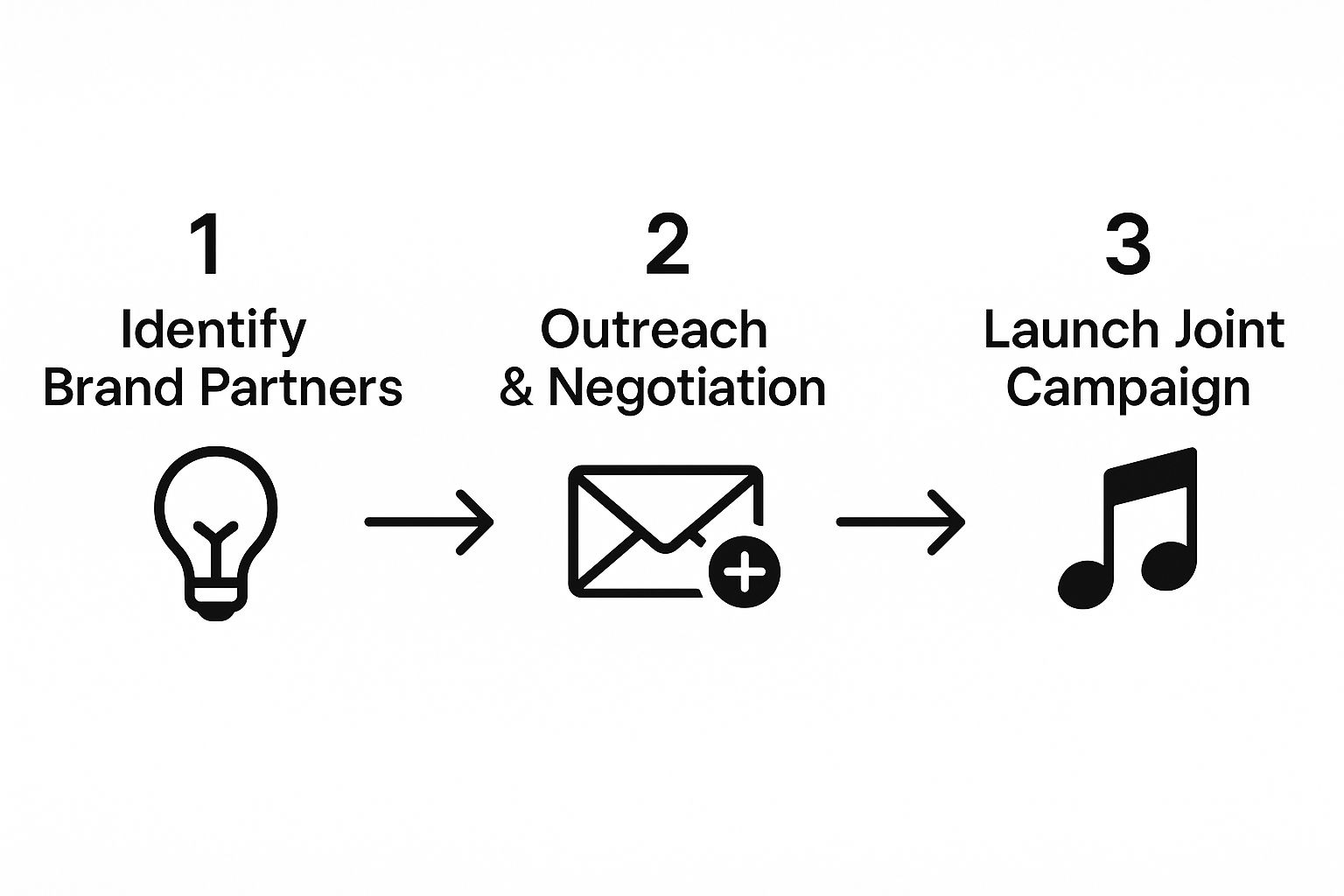
As you can see, identifying the right partners and launching a joint campaign can reignite interest and push your music to a whole new audience.
Here are a few other ways to keep the momentum going:
- Drop a Music Video: Releasing a music video two to four weeks after the song comes out is a pro move. It creates a whole new event and a second wave of press and fan excitement.
- Share Different Versions: Film a stripped-back acoustic version or a live performance. This gives you fresh content for social media and shows off your artistry in a completely different light.
- Become a Data Nerd: Seriously. Dive into your Spotify for Artists and social media analytics. Find out which playlists drove the most streams, where your listeners live, and which posts popped off. This information is pure gold for making your next release even bigger.
Using PR and Playlists to Amplify Your Reach
Sure, social media and streaming give artists a direct line to fans, but let's be real—it's incredibly noisy out there. To truly cut through, you need a boost from trusted voices. This is exactly where public relations (PR) and playlisting come into play. Think of them as the ultimate co-sign, taking your music from your inner circle and putting it in front of fresh ears that are ready to listen.
Great music marketing isn't just about what you can control on your own channels. It's about earning validation from others. When your track gets featured on a respected blog or lands on a popular playlist, it’s a powerful signal to potential fans that your music is worth their time. These moments can be the spark that turns a quiet release into a genuine breakthrough.
Crafting Your Pitch for Music Blogs and Press
The first rule of PR? It’s about building relationships, not just sending out mass emails. Journalists and bloggers are drowning in pitches every single day. If you want to stand out, you need to be professional and, most importantly, have a compelling story.
It all starts with a solid Electronic Press Kit (EPK). This is your artist resume, and it needs to be sharp.
- A Killer Bio: Keep it short, but make it memorable. Tell your story.
- High-Res Photos: Professional shots that capture your brand's vibe are non-negotiable.
- Your Music: Private streaming links to your new release (never attach MP3s!).
- Key Links: Make it easy for them to find your socials and streaming profiles.
With your EPK ready, it’s time to research. Don't just spray and pray by targeting the biggest names. Find the writers and blogs that actually cover artists like you. A personalized, thoughtful pitch to a niche blog that gets your sound is a hundred times more effective than a generic email to a publication that doesn't. Keep your pitch short, be respectful, and tell them exactly why your music is a perfect fit for their readers.
The Art and Science of Playlist Pitching
Playlists are now one of the biggest ways people discover new music. Getting on a major editorial playlist can mean hundreds of thousands of new streams, but you're up against some stiff competition. Your strategy needs to be two-pronged: target the official editorial playlists curated by platforms like Spotify and hunt down influential user-generated playlists.
For the official playlists, use the submission tool in your Spotify for Artists dashboard at least two weeks before your release date. The more detail you give them about the track's genre, mood, and style, the better chance you have of catching an editor's attention.
For independent curators, you have to do some digging. Find playlists that fit your vibe, then look for the curator's contact info (it’s often right in the playlist description). When you reach out, keep it brief, polite, and to the point.
A single great playlist placement can set off a chain reaction. More streams tell the platform's algorithm that your track has momentum, which can get you added to algorithmic playlists like Discover Weekly and open the floodgates to even more listeners.
This approach works across all genres, especially in booming markets. The electronic music industry, for example, soared to a global market value of $12.9 billion, driven largely by independent artists and digital discovery. You can get more details on the growth of the electronic music sector. This explosion shows the incredible opportunity that a few strategic digital placements can offer. A single well-placed track can tap right into that energy and find a global audience.
Building a Sustainable Music Career
The strategies we've walked through aren't just for a single successful launch—they're the foundation for a career with real staying power. Effective marketing for the music industry isn't a one-and-done campaign that wraps up after release week. It’s a continuous conversation with your audience, an ongoing effort. Think of it as a marathon, not a sprint.
Lasting success comes from consistently putting these core principles to work. It's about taking care of the entire world you've built around your music, from your email list to your most-played Spotify track.
The Pillars of a Lasting Career
Imagine your career is a structure held up by four critical pillars. If one gets wobbly, the entire thing is at risk. To build something that lasts, you have to tend to all four at once.
- An Authentic Brand: Your story, your identity—this is the unwavering heart of everything you create and share.
- A Multi-Channel Presence: You have to meet fans where they already are, whether that's on streaming platforms, social media, or a niche forum.
- Strategic Releases: Every single song or album deserves a thoughtful, phased rollout designed to make the biggest possible splash.
- Proactive Outreach: Don't wait for people to find you. Actively chase new listeners through PR, playlist pitching, and collaborations.
Sustainability is born from the direct, authentic relationships you build with your audience. Algorithms will change and platforms will fade, but a loyal community that believes in your journey is an asset that lasts a lifetime.
From Listeners to Lifelong Supporters
The real goal here is to turn someone who stumbles upon your song into a dedicated fan—the kind who not only streams your music but buys your merch and shows up to your gigs. This transition happens when you create a community where people feel like they're part of something special.
As that loyal fanbase grows, you can start exploring more direct and sustainable ways to make a living from your art. For example, you could learn how to transform your Facebook group into a profitable membership business, offering your most dedicated supporters exclusive access and content.
This guide gives you the blueprint, but now it’s your turn to start building. Begin putting these ideas into practice, experiment to see what truly connects with your audience, and never be afraid to evolve. The artists who thrive are the ones who never stop learning and growing right alongside their fans.
Your Top Music Marketing Questions, Answered
Let's be real: figuring out how to market your music can feel overwhelming. You've poured everything into creating the songs, and now you have to be a marketer, too? It’s a common hurdle, so let’s tackle some of the biggest questions I hear from artists every day.
How Much Should I Actually Spend on Music Marketing?
This is the million-dollar question, isn't it? The honest answer is, there's no magic number. A better way to frame it is to work backward from your goals. What are you trying to accomplish with this release?
Even a small, focused budget can make a huge impact. Let's say you have a new single coming out. Here’s how you could make a few hundred dollars work hard for you:
- Social Media Ads ($100-$300): This is your direct line to potential fans. Run targeted ads on Instagram and TikTok for a couple of weeks around your release date. Don't just boost a post; get specific and target fans of artists who sound like you.
- Playlist Pitching ($50-$200): Use a reputable service to submit your track to independent playlist curators. This can be a great way to get your music in front of new ears.
- Content Creation ($0-$150): You don't need a Hollywood budget. Your phone is a powerful tool. Shoot some behind-the-scenes clips, or maybe hire a friend who's good with a camera for a simple photoshoot. Authenticity often wins here.
The secret is to be smart with your money. A $200 investment with a clear strategy will almost always outperform $2,000 thrown at random promotions. Track your spending, watch your analytics, and see what's actually connecting with people.
Think of your marketing budget as an investment in your art, not just an expense. Start with what you can realistically afford, put it where it counts, and build from there as your career grows.
Do I Have to Go Viral to Make It?
Going viral is like catching lightning in a bottle. It’s an incredible boost if it happens, but it’s not a business plan. A massive TikTok hit might bring a flood of attention, but that attention can disappear just as quickly if you haven't built anything to hold it.
Instead of chasing virality, focus on building a real community. The concept of 1,000 true fans is more relevant than ever—a core group of dedicated supporters who buy your merch, stream every song, and show up to your gigs. That's a sustainable career. A million one-time listeners from a viral clip is just a flash in the pan.
How Much Time Do I Need to Spend on Marketing Each Week?
Marketing isn't just a "release week" activity anymore; it’s a constant part of an artist's life. Finding a sustainable rhythm is key to avoiding burnout and getting real results.
Consistency is far more important than intensity. For most indie artists, committing 5-10 hours per week to focused marketing is a solid, achievable goal.
What does that look like in practice? Here's a simple breakdown:
- Making Content (3-4 hours): This is your creative outlet for marketing. Shoot and edit short videos, draft your social media posts for the week, and maybe write a quick email to your mailing list.
- Engaging with Your Community (2-3 hours): This is where the connection happens. Reply to comments and DMs, interact with other artists you admire, and show your fans you see them.
- Strategy & Learning (1-2 hours): Step back and look at the big picture. Check your streaming numbers, see which posts performed best, and plan what you’ll do next week.
Treat marketing like practicing your instrument. A little bit of consistent effort every week adds up to serious progress over time.
Ready to take control of your music career? OohYeah provides the tools you need to market your music, sell directly to fans, and build a sustainable business on your own terms. Get started on OohYeah today!