Selling Instrumental and Backing Tracks on Your Own Platform: The 2026 Guide
Master selling instrumental and backing tracks on your own platform. Keep 100% of sales, automate stem delivery, and build a lasting music business in 2026.

September 24, 2026
FRANKLY with Frank Lee
Aggregator platforms want you to believe you need their marketplaces to survive, but handing over up to 50% of your hard-earned sales just to reach your own audience is a broken model. Relying on middlemen surrenders your buyer relationships and strips away your margins. If you produce high-quality audio, selling instrumental and backing tracks on your own platform is the most reliable way to take full control of your catalog, build direct customer connections, and secure long-term creative independence.
You already know the sting of third-party storefronts hiding buyer emails, taking massive commission cuts, and introducing technical headaches that trigger checkout abandonment. You shouldn't have to sacrifice your customer data or revenue to build a sustainable music production business. In this guide, you'll learn how to package, license, and sell backing tracks directly to buyers while keeping 100% of your sales revenue. We'll break down how to structure clear licensing tiers, automate secure instant downloads for audio files and stems, and transform content creators and vocalists into a dependable, recurring client base.
Key Takeaways
- Discover why selling instrumental and backing tracks on your own platform eliminates middleman fees and protects your direct customer relationships.
- Structure tiered licensing agreements and multi-format asset packages to dramatically increase average order values.
- Set up secure storefront workflows that protect preview audio from unauthorized ripping while automating delivery for stems and master files.
- Pinpoint high-intent buyers like vocalists, content creators, and game developers through targeted video demonstrations.
- Keep every dollar of your sales by replacing commission-heavy marketplaces with dedicated commission-free storefront hosting.
Why Sell Instrumental and Backing Tracks Directly Instead of on Marketplaces?
Third-party marketplaces promise instant exposure, but they extract a heavy toll for that access. Most aggregator platforms take anywhere from 15% to 50% commission on every transaction you generate. Even worse, freelance portals treat your original production work like temporary gig labor, while generic music databases strip away your identity entirely. While understanding what a backing track is and how performers rely on pre-recorded audio helps define your market, building an independent catalog requires actual business ownership. By choosing the direct route, selling instrumental and backing tracks on your own platform allows you to keep every cent you earn, protect your brand equity, and eliminate algorithm volatility.
When you rely on open marketplaces, you pay to market someone else's website. A visitor lands on your product page, only to see competing tracks displayed directly beneath your waveform player. One algorithm shift can bury your releases without warning or recourse. Direct storefronts remove these distractions. Every visitor belongs exclusively to you, and no algorithmic filter stands between your production studio and your buyers.
The True Cost of Third-Party Music Broker Fees
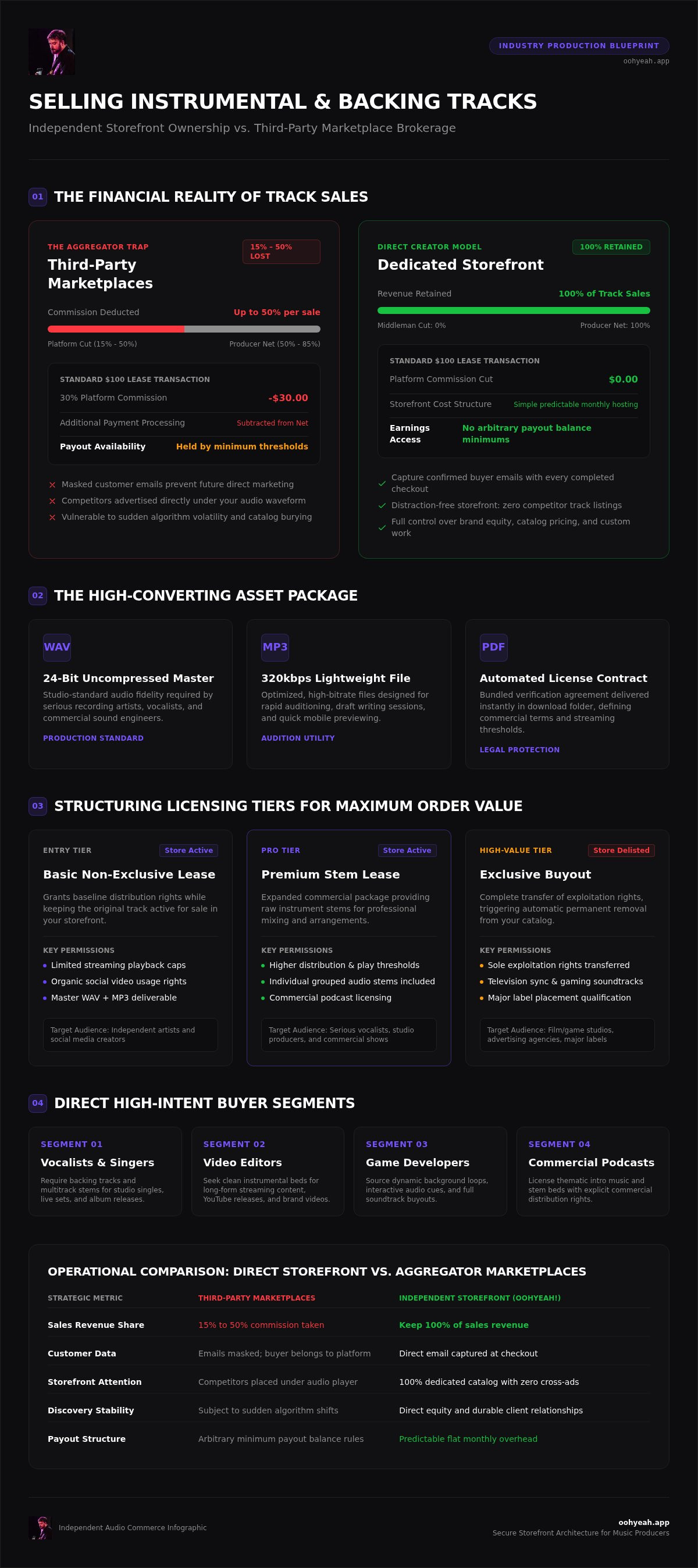
Cumulative cuts drain your working capital fast. If you sell a premium instrumental lease for $100 on a platform taking a 30% cut, you lose $30 instantly before payment processing fees even hit. Scale that across dozens of monthly sales, and you bleed thousands of dollars every year. Many marketplaces also impose arbitrary payout thresholds, holding your funds hostage until you hit minimum balances. Switching to a commission-free storefront powered by a simple monthly hosting fee flips this dynamic. Your production overhead stays predictable, and your profit margins remain completely intact as your sales volume climbs.
Owning Your Audience Data and Repeat Customers
Marketplace transactions keep you anonymous. Third-party brokers intentionally mask customer emails, blocking you from contacting the vocalists, game designers, and video editors who license your audio. Selling directly changes the playing field:
- Direct communication channels: You capture confirmed email addresses with every checkout, enabling instant announcements for your latest release drops.
- Higher lifetime value: Returning media buyers purchase new licenses without requiring fresh ad spend or discovery platform luck.
- Custom client relationships: You cultivate repeat commercial buyers who contract you for custom arrangement work, additional stems, and exclusive rights.
When you master selling instrumental and backing tracks on your own platform, you stop renting access to your audience and start building a resilient, equity-driven production business.
Packaging Your Audio Assets and Structuring Licensing Tiers
Delivering a single audio file limits your earning potential. Professional vocalists, video creators, and indie developers need different assets and legal permissions for their projects. By organizing your catalog into clearly defined packages, you raise your average transaction value and eliminate customer support friction. High-converting digital packages always combine uncompressed 24-bit WAV masters for production with 320kbps MP3 files for quick auditioning. Every deliverable should also bundle an automated PDF license agreement directly in the download folder so buyers have immediate legal verification for their releases.
Defining Non-Exclusive Leases vs. Exclusive Buyouts
Clear licensing terms protect your intellectual property while giving buyers confidence. While federal legislation like The Music Modernization Act establishes legal benchmarks for digital licensing and mechanical rights in the United States, your storefront agreements define commercial usage limits up front:
- Basic Non-Exclusive Lease: Grants independent artists limited streaming caps and organic social video usage while keeping the track active in your store.
- Premium Stem Lease: Includes grouped audio stems alongside higher distribution thresholds for serious vocalists and commercial podcasts.
- Exclusive Buyout: Transfers sole exploitation rights to a single buyer for television sync, major label placement, or gaming soundtracks, which triggers the permanent removal of that asset from your platform.
Organizing Stems and Performance Mixes for Buyers
Vocalists looking for backing tracks rarely want a static stereo bounce. They need minus-one mixes, which mute lead instruments or vocal guides, giving them clean sonic room to perform or record. Media editors require grouped stems to duck rhythm elements beneath dialogue or re-time arrangements to fit scene transitions.
Organize your delivered zip files using clean, uniform folder structures and standardized naming conventions, such as TrackName_120BPM_KeyAm_Drums.wav. When you focus on selling instrumental and backing tracks on your own platform, choosing modern artist profile hosting that supports digital music downloads makes delivering multi-gigabyte stem archives seamless. Structured packaging proves your technical professionalism, prevents buyer confusion, and encourages creators to return whenever their next production kicks off.
Step-by-Step Setup: Building Your Dedicated Track Storefront
Setting up your own audio store doesn't require advanced coding or expensive custom web development. You need a fast, reliable environment where creators can audition sound clips without buffering and check out within seconds. When you focus on selling instrumental and backing tracks on your own platform, execution speed and technical simplicity are what prevent abandoned carts. Follow these four foundational steps to build an independent storefront that works around the clock:
- Step 1: Choose dedicated artist profile hosting. Select infrastructure built specifically for digital music downloads with native continuous audio players, automated fulfillment, and zero sales commissions.
- Step 2: Upload watermarked preview audio. Embed rhythmic voice tags across streaming previews to deter unauthorized stream-ripping software while letting potential buyers assess the mix clarity.
- Step 3: Configure instant file delivery. Link high-resolution WAV masters, stem archives, and automated license agreements to secure, expiring download links delivered immediately post-purchase.
- Step 4: Streamline checkout. Activate global credit card processing and friction-free digital wallets so international creators can complete purchases in one click.
Selecting Between Generic E-Commerce and Music-First Platforms
Generic shopping cart plugins often fall flat for musicians. They lack continuous waveform players, forcing track previews to cut out the moment a visitor browses to another page. Many also require bloated third-party add-ons just to deliver large multi-gigabyte zip files, which slows site speed and drives monthly software costs up. Dedicated music storefront solutions integrate audio streaming directly with digital asset delivery. Choosing an artist-first platform operating on a predictable monthly subscription keeps your operational costs stable and ensures you retain 100% of your earnings.
Protecting Previews and Delivering Instant Downloads
Clean delivery begins with proactive catalog protection. A core piece of understanding music copyright is recognizing that your sound recording deserves active safeguards the moment it goes public. Drop an unobtrusive producer tag every thirty seconds across your low-bitrate preview stream. Keep the volume balanced so the tag protects the composition without distracting serious vocalists who are testing melodic ideas.
Once payment clears, automate delivery via timed, single-use download links. Expiring links protect your uncompressed masters from unauthorized public sharing. Always test your download pipelines on mobile devices. Vocalists frequently browse catalogs on their phones before saving stems to their studio desktops. Frictionless cross-device reliability establishes professional credibility, ensuring that selling instrumental and backing tracks on your own platform turns first-time listeners into permanent clients.
Marketing and Driving Targeted Buyers to Your Independent Platform
Launching a direct storefront solves your ownership and profit margin challenges, but driving steady traffic requires proactive distribution. Passive marketplace search bars trap you in endless bidding wars with other producers. In contrast, selling instrumental and backing tracks on your own platform allows you to target specific creator communities directly and retain complete control over how your music is introduced.
High-converting traffic flows from showing buyers practical use cases rather than pitching dry audio files. By breaking down your production process and offering real-world audio examples, you turn passive listeners into paying clients.
Targeting Niches: Content Creators, Performers, and Media Producers
Different buyer groups buy backing tracks for distinct reasons. Tailor your marketing assets to answer their exact creative needs:
- Independent Vocalists: Create dedicated previews that showcase how vocal top-lines fit over your arrangements. Emphasize ready-to-record minus-one mixes.
- Corporate Video Editors: Highlight cinematic, non-intrusive instrumental sections that elevate brand storytelling and leave sonic space for voiceovers.
- Indie Game Developers: Package looping ambient cues, tension builders, and stems that integrate directly into interactive gameplay scenes.
Leveraging Social Proof and Audio Demonstrations
Showcase real-world execution to remove doubt before buyers visit your checkout page. Post split-screen video clips displaying your digital audio workstation timeline alongside a live vocalist singing over the arrangement. Seeing an instrumental transform into a completed song sparks immediate creative inspiration. Highlight finished tracks released by artists who licensed your production, and pin customer reviews prominently across your social feeds.
Deploy strategic email lead magnets to build your owned client roster quickly. Offer a free non-exclusive practice track in exchange for an email address. Once vocalists and producers join your mailing list, you can notify them about new catalog drops and bundle discounts without spending money on ads. Build your storefront and keep every penny you make by choosing artist profile hosting designed for zero-commission audio sales. Driving direct traffic takes focused effort, but selling instrumental and backing tracks on your own platform turns every new listener into a long-term asset you control.
Maximizing Track Revenue with OohYeah! Commission-Free Hosting
Trading percentage cuts for an independent storefront transforms your production business, but running disjointed tools for hosting, file delivery, and streaming quickly turns into an administrative chore. OohYeah! eliminates that complexity by providing dedicated artist profile hosting with built-in digital music downloads, streaming discovery, and zero commission fees. Instead of treating your catalog as static data files, the platform combines a modern listening experience with immediate purchasing power. You maintain absolute control over pricing, licensing tiers, and audio preview controls while keeping 100% of your sales revenue.
The Commission-Free Advantage for High-Volume Audio Producers
Commission models penalize your success. When you sell 100 track licenses at $50 each through a broker taking 20% to 30%, you surrender $1,000 to $1,500 of your hard-earned income. High-tier exclusive buyout licenses hurt even more when a middleman claims hundreds of dollars on a single checkout. Flat monthly artist subscription hosting removes this penalty entirely. By keeping all transaction proceeds, you retain the working capital needed to invest in better studio monitoring, premium virtual instruments, and targeted outreach.
Expanding Beyond One-Off Sales into Recurring Fan Subscriptions
Relying solely on one-off track transactions leaves your monthly earnings vulnerable to seasonal production slowdowns. A direct platform allows you to create predictable stability by pairing single digital track sales with recurring income streams:
- Monthly Creator Passes: Offer subscription tiers that give working vocalists, podcasters, or video creators access to a set number of new backing tracks or stems every month.
- Exclusive Content Access: Reward dedicated fans and collaborator networks with unreleased demo arrangements, sample packs, and behind-the-scenes production walkthroughs.
- Unified Merchandise Marketplace: Sell branded studio apparel, physical gear, or physical media alongside your digital downloads without managing separate third-party storefronts.
Centralizing your creative output simplifies business operations for you and your buyers. Clients can stream your entire catalog, evaluate arrangements, and secure commercial licensing in a single seamless session. By mastering selling instrumental and backing tracks on your own platform through OohYeah!, you cut out extractive middleman fees, secure dependable recurring revenue, and take full ownership of your creative career.
Build Your Independent Audio Business on Your Own Terms
Relying on aggregator middlemen is no longer the price of admission for serious producers. By structuring transparent licensing tiers, delivering pristine stem archives, and capturing customer emails, you create a sustainable studio business with genuine equity. Direct ownership ensures you never have to compete against third-party recommendations on your own sales pages or wonder who licensed your latest release.
Mastering selling instrumental and backing tracks on your own platform lets you operate with absolute clarity and commercial freedom. You deserve tools that champion your craft rather than tax it. With integrated digital music download delivery and professional artist profile hosting without marketplace cuts, OohYeah! guarantees 100% sales revenue retention for artists on every track, stem package, and membership you sell. Ready to take charge of your creative career? Launch your commission-free music storefront on OohYeah! and start building direct, lasting connections with the creators who value your sound.
Frequently Asked Questions
Can I legally sell backing tracks of famous cover songs on my own platform?
No, you cannot legally sell backing tracks of copyrighted cover songs without securing a mechanical license or direct permission from the original copyright holder. While you own your specific sound recording, the underlying composition belongs to the original songwriters and publishers. Selling covers without proper statutory licensing exposes your business to copyright infringement claims. Focus instead on selling original instrumentals where you retain 100% of the underlying composition.
What is the difference between leasing an instrumental and selling exclusive rights?
Leasing grants non-exclusive rights, allowing you to resell the same instrumental to multiple vocalists, podcasters, or media creators simultaneously with specific streaming or broadcast caps. Selling exclusive rights transfers sole commercial ownership of the track to one buyer. When you sell an exclusive license, you agree to remove that instrumental from your store and cannot sell leases to anyone else in the future.
Do I need to register my instrumentals with a PRO before selling them online?
You don't have to register your tracks with a Performing Rights Organization (like ASCAP or BMI) just to sell them, but doing so protects your performance royalties. When you focus on selling instrumental and backing tracks on your own platform, your buyers license sync or recording rights directly from you. If their finished song airs on television, radio, or streaming networks, your PRO ensures you collect the secondary performance royalties you earned.
How do I prevent people from stealing preview tracks from my website?
Protect your catalog by uploading low-bitrate audio clips embedded with a spoken producer tag repeating every 20 to 30 seconds. This makes ripped audio unusable for commercial releases while still letting genuine buyers evaluate your mix quality. Additionally, host your master files behind secure servers that deliver expiring, single-use download links only after customer payment clears through your checkout system.
What audio file formats should I include in a backing track download bundle?
Always deliver uncompressed 24-bit WAV master files alongside high-quality 320kbps MP3 reference copies for quick mobile playback. If your licensing tier includes stems, package isolated instrument groups as dry and wet WAV tracks inside a structured zip archive. Don't forget to include an automated PDF licensing agreement that explicitly details the buyer's permitted distribution limits and commercial rights.
How do commission-free platforms make money if they don't take a cut of my sales?
Commission-free platforms like OohYeah! operate on flat monthly artist subscription fees rather than taking a percentage of your track transactions. This software-as-a-service model covers hosting infrastructure, storage, and platform maintenance while letting creators keep 100% of their earnings from digital music downloads and merchandise. Artists enjoy predictable operating expenses, while the platform maintains a sustainable business without taxing creator success.
Is it better to sell tracks individually or bundle them into full production packs?
Using both strategies together produces the best financial return when selling instrumental and backing tracks on your own platform. Single track sales lower the purchase barrier for budget vocalists and short-form video editors seeking quick solutions. At the same time, bundling thematic tracks into curated genre packs or sound design suites raises your average order value and delivers immense value to commercial game developers and long-term collaborators.