Selling Digital Singles Directly to Fans: A Practical Artist Guide
Learn how selling digital singles directly to fans maximizes revenue. Compare platforms, build fan-friendly offers, and set up your download flow today.

September 29, 2026
FRANKLY with Frank Lee
A digital single is easier to sell when fans know what they’re supporting, what they’ll receive, and how to get it. Selling digital singles directly to fans can make a release feel like a personal exchange, not just another link competing for attention. Streaming, distribution, and selling a download each serve a different purpose, so make it obvious where fans can listen and where they can buy.
If you’ve wondered whether a direct sale is worth the setup, you’re not alone. Distribution makes music available on streaming services; streaming lets fans listen there; a direct sale gives them a downloadable copy through a sales platform. Each route involves different levels of control, effort, and fees.
This guide will help you shape a clear, fan-friendly offer and choose a sales setup that fits your audience and goals. You’ll learn what to compare when weighing commissions against recurring platform fees, how to explain the purchase, and how to invite fans to support your release. For example, OohYeah! offers artist profiles and digital downloads, and says artists retain 100% of sales revenue while paying a recurring subscription fee. Check current terms, including any payment-processing conditions, before choosing.
Key Takeaways
- Make the purchase clear: tell fans what they’ll receive, where to buy it, and how to access the download.
- Map the buyer journey from discovery to download, then test the page and delivery flow before sharing it widely.
- Selling digital singles directly to fans can complement streaming and distribution, giving each route a distinct role in your release plan.
- Build a simple offer around why the single matters and what a purchase supports. Don’t make extra content or merchandise feel required.
- Compare platform effort, fan experience, commissions, and recurring fees using your own sales assumptions to find a setup that fits.
Selling a Digital Single Directly to Fans: What the Offer Really Means
A direct digital single sale is a fan’s purchase of a downloadable track through a sales page presented by the artist. It provides a music file, not streaming access or ownership of the song’s rights.
That distinction helps both sides. Fans get a straightforward way to support an artist and receive a copy to listen to under the seller’s stated terms. Artists can explain the offer clearly, so supporters know whether a link leads to a stream, a store, or something related to music rights. This is the practical meaning of the Direct-to-fan business model: artists market and sell to their audience through a direct relationship.
What does a fan receive when buying a digital single?
The buyer receives a personal music file for the track, subject to the terms stated by the seller. The file format and access method depend on the sales platform, so don’t assume every platform handles downloads the same way.
Before checkout, spell out what the purchase includes. Name the track, identify it as a digital single, and explain how the buyer will access the file. Make any specific use terms easy to find, too. Clear details help fans understand what they’re purchasing and avoid mistaking a download for a stream or a broader rights deal.
How direct sales differ from streaming and music rights
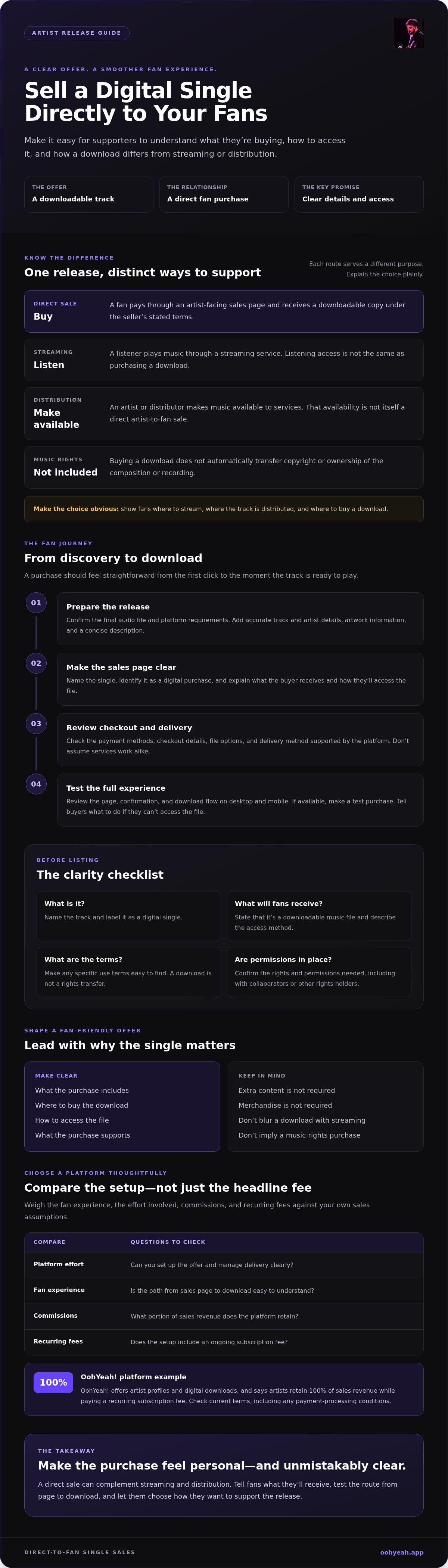
These routes can work together, but they offer different things:
- Direct sale: A fan pays through an artist-facing sales page for a downloadable copy of a track.
- Streaming: A listener plays music through a streaming service. Listening access isn’t the same as purchasing a downloadable file.
- Distribution: An artist or distributor makes music available to services. That availability isn’t itself a direct sale from the artist to a fan.
- Music rights: Buying a download doesn’t automatically transfer copyright or ownership of the composition or recording. The sale is for the download under the seller’s terms.
For artists selling digital singles directly to fans, the goal isn’t to blur these categories. It’s to give supporters a clear choice: stream the track, find it on services where it’s distributed, or buy a download as a direct way to show support. State what each option provides, then let the fan decide which fits.
Direct-to-Fan Sales: From Release Page to Download
A smooth purchase should feel simple from the fan’s first click to the moment the track is ready to play. The core steps are to prepare the recording and release details, publish a clear sales page, let the fan review and purchase the offer, and provide access to the download.
What to prepare before listing a single
Start with the final audio file, but check the sales platform’s current supported formats and upload requirements before preparing it. Add an accurate track title, artist name, and artwork details. Then write a concise description that tells fans what the single is and what they’ll receive. Don’t promise a particular file type or delivery method until you’ve confirmed the platform supports it.
Before listing the track, confirm you have the rights and permissions needed to offer that recording. If collaborators, producers, or other rights holders are involved, clarify the necessary permissions with them. The U.S. Copyright Office offers guidance to help musicians control your rights as a creator.
Make the purchase and download experience clear
Keep the sales page focused. Identify the single, say plainly that it’s a digital purchase, and make the next step obvious. Payment methods, checkout details, download delivery, and available file options vary by platform. Review the current terms and features instead of assuming every service works alike.
Test the entire journey before promoting the release. Review the page as a fan would: find the offer, check its details, complete a test purchase if the platform allows one, and make sure the download instructions are understandable. Check the page, confirmation message, and download flow on desktop and mobile. A fan shouldn’t have to hunt for the track after paying.
Plan for a hiccup, too. Tell buyers what to do if they can’t access the file, and provide a contact route you can reliably monitor. Don’t promise a response time unless you can consistently meet it. This preparation helps protect the fan experience and lets you promote with confidence.
If you’re considering a platform with artist profiles and digital music downloads, explore artist profiles and downloads on OohYeah! and verify the current setup steps, supported formats, and terms before choosing it for your release.
Direct Sales, Streaming, or Distribution: Which Route Fits Your Single?
Choose a release route based on what you want fans to do. A direct download gives supporters a purchase option. Streaming services let listeners play the track. Distribution is the process of making music available through those services. These routes can work together, so you don’t have to choose just one.
| Route | Main purpose | Fan action | Artist control |
|---|---|---|---|
| Direct download | Offer a track for purchase through an artist-facing sales page. | Review the offer, pay, and access the download. | Shape the offer and page, subject to the platform’s features and terms. |
| Streaming | Make the track available to play on streaming services. | Listen through the service. | Depends on the service and how the release is delivered. |
| Distribution | Deliver music to selected services for availability there. | Find and play the track on those services. | Depends on the distributor’s process and terms. |
When a direct download may suit an artist
Selling digital singles directly to fans may suit artists who already have engaged listeners and a clear way to share a purchase page. A focused offer gives fans a direct way to support a release and lets the artist shape how the single is presented. It doesn’t guarantee sales, though. Consider whether you can explain the offer simply and direct fans to it through channels you already use.
Weigh the platform’s costs and conditions against your plans. Some services charge commissions, while others use recurring fees or different payment terms. Check the current details, including any payment-processing conditions, before deciding what fits your audience and expected level of activity.
When streaming or distribution should remain part of the plan
Streaming gives listeners a convenient way to play music and can help new listeners discover a release. A play is not the same as a purchase, so streaming availability isn’t a substitute for a direct-support offer. Distribution gets the release to selected services; it doesn’t create an artist-facing storefront for a paid download.
For many release plans, the routes can complement each other: make the single available to stream, then offer a direct download to fans who want to support the artist through a purchase. Match the mix to your goals, promotional capacity, and audience. Before committing, compare current platform fees, delivery features, and terms. The right setup makes the fan’s next step clear and is practical for you to maintain.
How to Prepare and Promote a Digital Single Fans Can Buy
A strong release offer makes the music easy to find and gives fans a reason to care. Keep the process practical: decide what you’re offering, write a clear sales page, check the price and purchase details, then share the page through channels you already use. Selling digital singles directly to fans works best when the offer feels personal, not complicated.
Shape a single-track offer around the fan
Describe the track accurately, then add a short artist note to give it context. Explain what inspired the single, why you chose to release it now, or what a fan’s purchase helps support. Make the purchase action easy to spot, and state clearly that buyers are purchasing a digital download. Choose a transparent price or, if the sales platform offers it, a flexible option. Review how fans respond and use that feedback to inform future releases, rather than assuming one approach will work for everyone.
Extras are optional. Consider merchandise or exclusive content only if they add genuine value and fit the release. A single-track download should feel complete on its own, without making fans sort through add-ons to understand the offer.
Promote the release without relying on one post
Plan a few timely reminders across channels you already use, such as your artist profile, email, or social accounts. Give each message a different angle: introduce the single, share a preview or the story behind it, then remind fans where they can buy the download. Use a direct call to action, such as “Buy the single” or “Get the download,” and link straight to the sales page.
After sharing the offer, review page visits and sales if your platform provides those details. If fans visit but don’t buy, check whether the description, price, or purchase instructions could be clearer. If few people reach the page, make the link easier to find or adjust how you introduce the release. Treat each single as a chance to learn, not a verdict on your music or your audience.
Ready to give fans a clear place to find your music? Create an artist profile for your releases on OohYeah! and review the current platform features and terms before publishing your offer.
Choose a Direct-Sales Platform That Supports Your Artist-Fan Relationship
The right platform should make it easy for fans to buy and easy for you to manage the offer. Compare the full experience, not just the headline fee. Selling digital singles directly to fans can involve commissions, recurring subscription charges, or payment-processing conditions, so check the current terms before committing.
Questions to ask before committing to a sales platform
- What will it cost under your sales assumptions? Compare any per-sale commission with recurring charges and applicable payment conditions. Estimate your likely sales, then compare what you’d retain under each fee model. The best fit depends on your own numbers and priorities.
- How do downloads reach buyers? Confirm supported file formats, delivery options, and what happens if a buyer can’t access a purchase. Check who handles fan questions and what support you’ll need to provide.
- How much control do you have? Review what you can customize on your artist page, what sales information you can access, and how the platform supports your relationship with fans.
- Is the fan experience straightforward? Make sure the track, purchase details, and next steps are clear on the devices your audience uses.
Use these answers to narrow your choices. If a platform looks promising, review its current features and terms before building your release around it.
How OohYeah! can fit a direct-to-fan release
OohYeah! is a music streaming and marketplace platform where artists can host profiles and offer digital downloads. Artists can also offer merchandise and exclusive content, though neither is required for a single release. OohYeah! says artists keep 100% of sales revenue without sales commissions while paying a recurring subscription fee to access platform tools. Review the current subscription terms and any payment-processing conditions to understand the full cost of using the platform.
Consider how that model fits your expected sales and how much you value a commission-free marketplace. A recurring fee may suit one artist’s plans and not another’s. Compare it with other platforms using your own assumptions, then check the latest details on download formats, delivery, and artist setup before deciding.
For a direct route to offering music through an artist profile, explore artist profiles and digital downloads on OohYeah! and review the current platform terms to see whether it fits your next release.
Make Your Next Single a Clear Invitation to Support
A direct single sale works best when fans understand exactly what they’re buying, how to access it, and why it matters to you. Keep the offer focused, test the purchase experience, and choose a platform based on its fan experience, control, and full fee model. Streaming and distribution can help listeners find and play your music, while a download gives fans another way to support a release.
Selling digital singles directly to fans is about more than putting a file online. It’s a chance to make the connection between your music and your supporters more direct, with a simple offer that reflects your goals.
OohYeah! supports artist profiles and digital music downloads. The company states that artists retain 100% of sales revenue without commissions while paying a recurring subscription for platform tools. Review current subscription terms and any payment-processing conditions before deciding whether it fits your release.
Explore OohYeah! and build a more direct connection with your fans. Your next release can start with one clear offer and a genuine invitation to be part of it.
Frequently Asked Questions
How can I sell a digital single directly to fans?
Choose a platform that lets you present the track on an artist-facing sales page and deliver a download to buyers. Prepare the audio and release details, confirm the platform’s supported formats and terms, then explain exactly what fans receive and how to access it. Selling digital singles directly to fans also means promoting the page through channels you already use and testing the purchase flow before sharing it widely.
Can I sell a single and still put it on streaming services?
Yes. You can offer a digital download for purchase and make the same single available on streaming services, provided your agreements and platform terms allow it. The two options serve different fan needs: streaming gives listeners a way to play the track, while a direct sale offers a downloadable file. Make both choices clear in your release messaging so fans can listen or purchase as they prefer.
What is the difference between selling a download and streaming a song?
Selling a download gives a fan access to a purchased music file under the seller’s stated terms. Streaming lets a listener play music through a service instead of purchasing that download from the artist. The page or service should make the difference clear before the fan acts. Neither option by itself means the listener owns the song’s copyright or receives rights to use it beyond the stated terms.
Do I keep the copyright when I sell a digital single?
Selling a download doesn’t automatically transfer copyright or ownership of the recording or composition. The fan receives the download under the terms you state, while the rights remain governed by applicable agreements and permissions. If collaborators or other rights holders contributed, check that you have permission to offer the recording. Make the purchase terms clear, and seek qualified advice if you’re unsure how your rights apply.
What file format should I use for a digital music download?
Use a format supported by your chosen sales platform and suitable for the listening experience you want to offer. There isn’t one format that every platform accepts, so verify its current upload requirements and delivery options before preparing the release. Tell buyers what file they’ll receive before checkout. If the platform offers multiple options, explain them plainly so fans can choose confidently.
How do I promote a digital single to my existing fans?
Share a direct link to the sales page through channels you already use, such as your artist profile, email, or social accounts. Give fans a reason to visit by sharing a preview or a short note about why the single matters and what their purchase supports. Plan more than one timely reminder, and review page visits or sales where available to improve future release messaging.
Can I sell music directly without paying a commission?
Yes, some platforms state that they don’t charge a sales commission, but check for recurring artist fees and payment-processing conditions before deciding. OohYeah! says artists retain 100% of sales revenue without commissions while paying a recurring subscription fee for access to platform tools. Review the current subscription terms and any payment conditions to understand the full cost. A commission-free model isn’t necessarily a free service for artists.