Selling Band Enamel Pins and Patches: A Guide
Master selling enamel pins and embroidered patches for bands. Learn how to design artwork, plan production, and launch profitable music merch fans love.
October 14, 2026
FRANKLY with Frank Lee
The best band merch does more than display a logo. It gives fans a piece of the music and identity they can carry into everyday life. Selling enamel pins and embroidered patches for bands can make that connection tangible, but the right choice depends on your artwork, audience, and where fans will buy.
Both formats can make memorable merch, but a design that looks striking on a screen may not work as well at its intended size. Committing to production before your artwork and launch plan are ready can also leave you with stock that misses the mark. Aim for merch fans are excited to wear, trade, or collect, and a straightforward way for them to buy it alongside your music.
This guide compares pins and patches, explains how to prepare artwork for each format, and shows how to plan a launch around your audience. It also covers ways to connect merchandise with your music and artist content through direct-to-fan channels. OohYeah!’s commission-free marketplace lets artists bring merchandise, digital downloads, profiles, and exclusive content together while retaining 100% of sales revenue.
Key Takeaways
- Choose pins or patches based on your artwork, audience, and sales context, rather than assuming one format fits every band.
- Turn one strong visual idea into production-ready artwork with clear shapes and lettering that remain legible at a small size.
- Plan selling enamel pins and embroidered patches for bands around audience interest, a manageable first quantity, and a reveal connected to a release, tour, or milestone.
- Use clear product visuals and a focused announcement to help fans understand what makes the merch worth collecting.
- Bring merchandise together with music and artist content on OohYeah!, where artists keep 100% of music and merch sales revenue without sales commissions.
Why enamel pins and embroidered patches make memorable band merch
Band merch can generate income and give fans a physical reminder of the music, a show, or the people they experienced it with. Pins and patches are compact enough to leave the venue and become part of a fan’s everyday world. A pin on a jacket or a patch on a bag keeps a band’s visual identity in view long after the final song.
Band merch turns a band’s identity into something fans can express and a band can sell. The idea behind the item matters more than the format. Start with a symbol, image, or reference connected to your music and community, then choose the format that communicates it clearly. That gives selling enamel pins and embroidered patches for bands a stronger foundation than choosing a product first and trying to make any design fit.
What makes a small merch item meaningful to fans?
A fan might buy a piece to remember a first show, support a band they love, or feel connected to a community that shares their taste. A recurring moon motif from an album’s artwork, for example, may carry more character than a wordmark alone. A short lyric reference might evoke a favorite song, while a distinctive shape could become a visual shorthand fans recognize. These are starting points, not formulas. The strongest idea feels true to your band and gives fans a reason to make it their own.
Decide what story the item should carry. Is it tied to a release, a memorable live moment, or an image that appears across your artwork? A clear connection gives the merch context and makes it easier to introduce. Keep the idea focused: if the design needs a long explanation to make sense, simplify the visual or add a short description when you present it.
Where pins and patches fit in a band’s merch mix
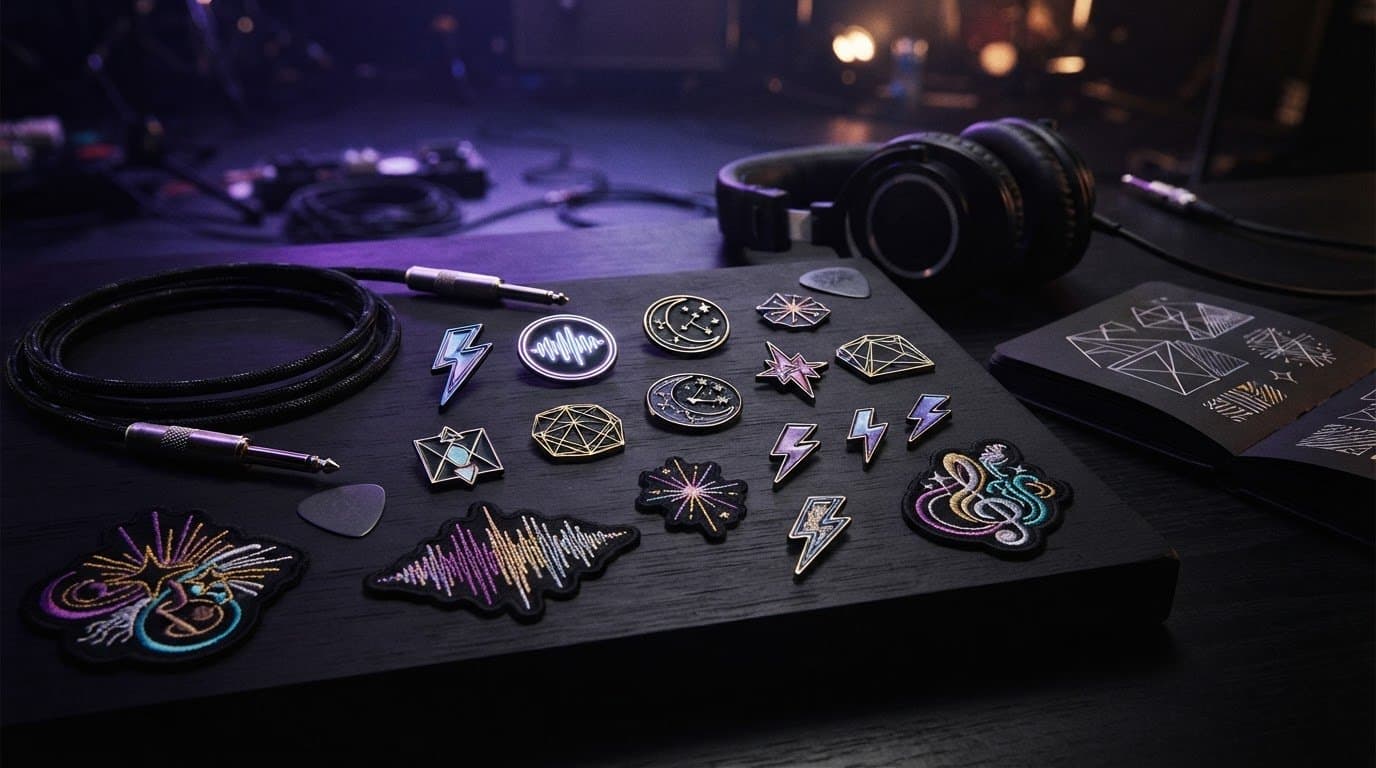
Enamel pins work as compact accessories fans can wear on a jacket, hat, or bag. Embroidered patches can be attached to clothing or bags, giving fans a way to personalize items they already own. Neither format replaces music, T-shirts, or other apparel. Instead, they add variety to a merch range and give fans another way to show support, whether they discover the band at a show or through its music and artist content.
Keep the creative source clear. Band-owned artwork gives you a direct way to build a recognizable visual identity. Enamelling and embroidery describe how an item is made; they don’t make someone else’s imagery yours. If you want to use a third-party logo, character, or other recognizable brand image, secure permission rather than assuming it belongs in your design. Original motifs keep the focus on your music and give fans something distinctly tied to your band.
Before choosing a format, ask what the artwork needs to communicate and how fans might use the item. A bold emblem could suit either option. A design built around a thread-like texture may feel more at home as a patch, while a crisp, compact symbol may translate naturally to a pin. Let the visual idea guide the product choice. That’s how a small object becomes part of the band’s story.
How to turn a band’s visual identity into production-ready merch
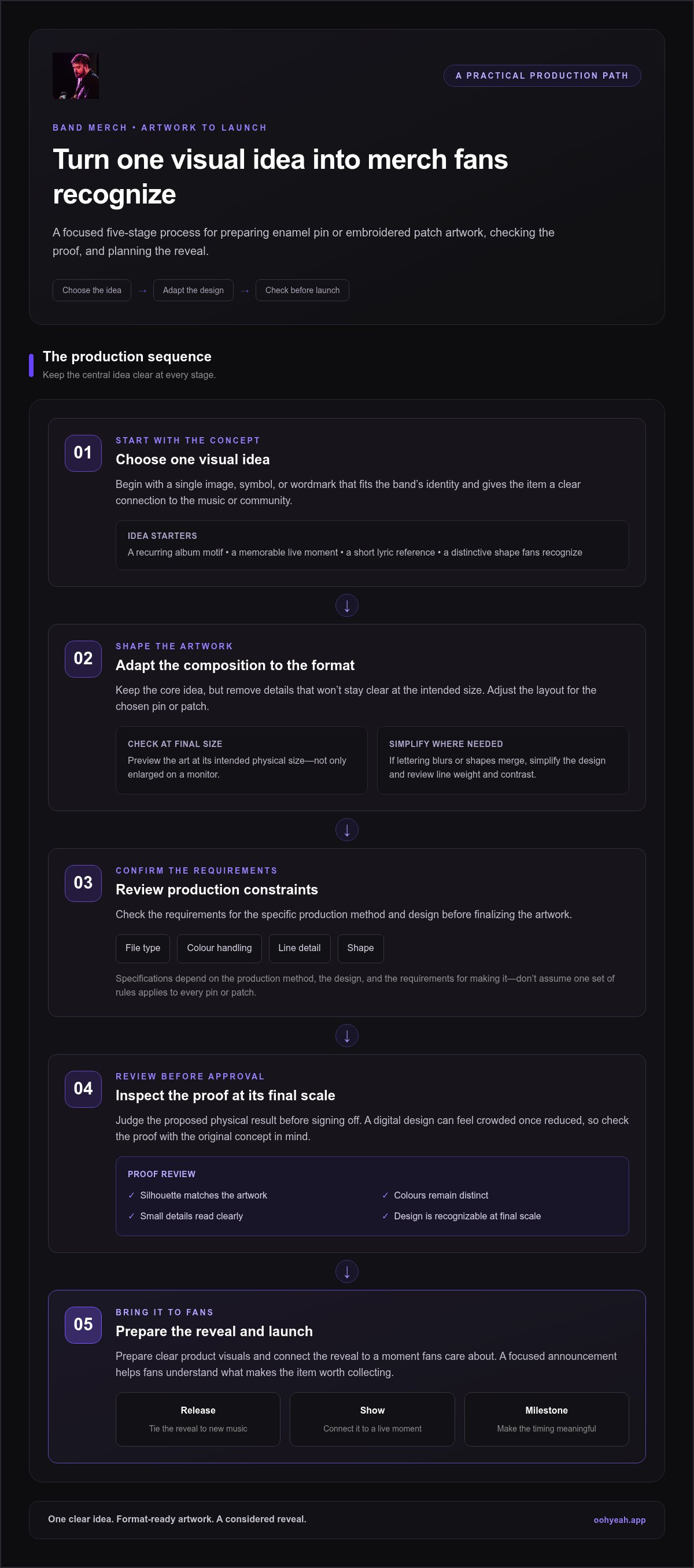
A strong design needs to work as a physical object, not just on a screen. Keep the process focused: choose one idea, adapt it to the pin or patch format, review the relevant production requirements, approve a proof, then plan the launch. This sequence helps preserve the central idea while catching issues before you commit to a finished design.
- Choose one visual idea. Start with a single image, symbol, or wordmark that fits the band’s identity.
- Adapt the composition. Remove details that won’t stay clear at the intended size, and adjust the layout for the chosen format.
- Review production constraints. Check the requirements for the specific method and design, including file type, colour handling, line detail, and shape.
- Approve a proof. Inspect how the design looks at its intended physical size before signing off.
- Plan the launch. Prepare product visuals and connect the reveal to a release, show, or other moment fans care about.
Prepare artwork that stays recognizable at a small size
Pick a motif fans can recognize without zooming in. A bold, angular emblem may hold its shape more clearly than a detailed illustration with several tiny elements. Preview the art at the intended size, not only enlarged on a monitor. Look at line weight, contrast, and lettering. If words blur together or shapes merge, simplify them. Keep familiar colours and forms where they support your band’s identity, while adjusting the composition to suit a pin or patch.
Check production-ready artwork at its intended physical size. File formats, colour limits, and technical specifications aren’t universal rules. They depend on the production method, the design, and the requirements for making it. Treat those details as part of the production brief, not as assumptions that apply to every pin or patch.
Use proofs and audience feedback to reduce design risk
A proof gives you a chance to judge the proposed result before approval. Check whether the silhouette matches the artwork, colours remain distinct, small details read clearly, and the whole design is recognizable at its final scale. A design can look balanced in a digital file but feel crowded when reduced. Review the proof with the same care you gave the original concept.
Before final approval, share a clear mockup with a small group of trusted fans. Ask focused questions: Can they identify the main image? Does the design feel connected to the band? Separate feedback about the concept from technical edits. Fans can help you assess the idea, while production requirements guide changes to detail or file setup. For broader context on why musicians protect the identity behind their merch, see WIPO’s discussion of the growing market for band merchandise and intellectual property considerations.
Once the design is ready, consider bringing its story together with your music and merch in a direct-to-fan space. OohYeah!’s music and merchandise marketplace gives artists a place to connect those parts of their identity.
Enamel pins vs. embroidered patches: which fits your band best?
Choose the format that serves the artwork and the way your fans are likely to use it. A pin’s compact accessory feel suits some designs; a patch’s textile surface gives others more room to breathe. Neither is automatically the better seller. For bands selling enamel pins and embroidered patches, the useful question is whether the design reads clearly and feels right where fans will wear or display it.
Decision rule: choose the format that communicates the design clearly in its intended use. Compare the options across four practical dimensions:
| Consideration | Enamel pin | Embroidered patch |
|---|---|---|
| Visual feel | Compact accessory, often suited to a defined, graphic look. | Textile appearance where visible stitching can contribute to the design. |
| Artwork suitability | Consider bold outlines, clear shapes, and a focused symbol. | Consider graphics that benefit from a fabric-like surface or more room. |
| Fan use | Fans may wear or display one on an accessory or bag. | Fans may add one to clothing, a bag, or another personal item. |
| Merch context | A small add-on alongside music, apparel, or other merch. | A wearable graphic that can complement a broader merch range. |
When an enamel pin may suit the design
Consider a pin when the main idea is a compact symbol, a strong silhouette, or lettering that remains legible at a small scale. A bold icon from cover artwork, for example, could work as a focused accessory without requiring the full album image. Think about where fans might wear or display it, such as on a jacket or bag. The pin format describes the object, not the sales strategy: it can be offered on its own or alongside a music release, depending on your plan.
When an embroidered patch may suit the design
A patch may fit artwork that benefits from a textile look, visible stitching, or a larger graphic area. A sweeping illustration or a broad emblem might have room to feel intentional rather than cramped. Fans could imagine adding it to a jacket or bag, but attachment method and garment compatibility depend on the chosen patch specifications. Treat those details as part of the product decision, not as features to assume from the word “patch.”
Separate production technique from fan use. “Embroidered” describes how the design is made; it doesn’t dictate whether the patch belongs in a tour drop, a release promotion, or a wider merch lineup. Likewise, choosing a pin format doesn’t determine how you present or sell it. Consider design, audience, and context together. Berklee’s overview of the role of a music merchandiser in design and sales reflects how creative choices connect with the work of bringing merchandise to fans. Match the artwork to the format, then shape the offer around how fans connect with your band.
How bands can launch and sell pins and patches without guessing
A thoughtful launch uses useful signals instead of guesswork. Start by gauging interest through conversations at shows, replies to a design preview, or engagement with a merch announcement. Then set a manageable initial quantity based on what you know about your audience, not an imagined sales target. Treat a first release as a way to learn, not a promise of demand.
Use this sequence to connect the merch to a moment fans already care about:
- Estimate interest. Share a clear preview and note genuine responses across your existing band channels and live performances.
- Set an initial quantity. Consider audience response and past merch experience, while keeping the first release manageable.
- Prepare product visuals. Use consistent images and a concise description so fans can understand the design wherever they see it.
- Choose the reveal moment. Coordinate the announcement with a music release, tour news, or meaningful band milestone.
- Review the results. Record interest, sales, and remaining stock, then use what you learn to shape the next release.
Build a simple launch plan for shows and online fans
Give the design a clear story: what inspired it, how it connects to the band, and why you’re releasing it now. Keep images and wording consistent across online listings, social announcements, and show-table displays. Tell fans directly where the merch is available, then repeat that message through the channels they already follow. If the reveal ties to a new release or tour announcement, explain the connection so the item feels like part of the moment, not a disconnected sales pitch.
Manage stock and learn from the first release
Use previous merch sales and current audience response to guide the quantity, but treat them as clues rather than guarantees. Track each design separately. Note when and where sales happen, how much stock remains, and what questions fans ask. A pin that gets attention online may draw a different response at a show; recording the context helps you spot patterns without assuming one result predicts the next.
After the release, compare the signals. Did fans respond to the design story, the announcement timing, or the chance to buy alongside music? Did interest come from showgoers or online followers? Keep the answers simple and factual. This record can help you adjust the next quantity, refine product visuals, or choose a better moment to launch. The goal isn’t a perfect forecast. It’s to make each release more informed than the last.
For bands selling enamel pins and embroidered patches, a direct-to-fan marketplace can bring merch closer to the music and artist profile. OohYeah! gives artists a place to offer merchandise alongside digital music downloads and artist content. Artists keep 100% of music and merchandise sales revenue without sales commissions; the platform is funded through recurring artist subscription fees. Read more about OohYeah!’s direct-to-fan marketplace for bands.
Sell band merch alongside your music through OohYeah!
A pin or patch can start a conversation. A fan who discovers it may also want to hear the track, explore the band’s story, or follow what comes next. OohYeah! brings these connections together in a direct-to-fan platform where artists can host a profile, offer digital music downloads and merchandise, and share exclusive content.
That shared space helps connect merch with the music rather than presenting it as a separate transaction. Use the same visual identity and release story across your artist profile, music, and merchandise listing. For example, a patch designed around a new release can sit alongside the digital download and content that gives fans more context. Each part supports a clearer picture of who you are as an artist.
Connect merch discovery with the music fans already love
Fans can explore your music and artist identity alongside the merchandise that expresses it. Keep the story consistent: describe what inspired a pin or patch, connect it to the relevant release or milestone, and use language that sounds like your band. This turns product discovery into another way to engage with your work. Existing listeners have a natural path to explore merch, while merch buyers can find more of the music and content behind the design.
This matters for selling enamel pins and embroidered patches for bands because the item is only one part of the relationship. A direct-to-fan presence gives your audience a place to connect with more than a product. Your artist profile, downloads, exclusive content, and merchandise can each reinforce the same identity without making fans piece together the story across unrelated touchpoints.
Keep more sales revenue with a commission-free marketplace
OohYeah!’s model separates sales commissions from platform access. Artists keep 100% of music and merchandise sales revenue without sales commissions. The platform is funded through recurring artist subscription fees, so commission-free does not mean there are no costs. It means the platform doesn’t take a sales commission from those purchases.
That distinction helps you understand the revenue model and consider how the marketplace fits your plans. You can bring your artist presence and merchandise together while building a direct connection with fans who want to support your work. Keep the conversation going through the music, the merch, and the stories behind both.
Explore OohYeah! as your direct-to-fan marketplace to bring your band’s music, identity, and merchandise closer to fans.
Make your next merch idea part of the band’s story
Your next pin or patch doesn’t have to be a one-off. Let it open a creative thread you can carry into future releases, artwork, and conversations with fans. As you plan selling enamel pins and embroidered patches for bands, think beyond the item itself: what part of your band’s world could fans take with them, and what might that idea grow into next?
Choose one upcoming moment as your starting point. Shape a merch idea around its mood, invite fans into the story, and use their response to inspire what comes after. The goal isn’t to chase every trend. It’s to build a visual identity that feels true to your music and gives supporters a meaningful way to show they’re part of the journey.
Bring your artist presence and merch closer together with OohYeah!.
Frequently Asked Questions
Are enamel pins good merch for bands?
Yes, enamel pins can be a useful merch option when your design reads clearly at a compact size and suits an accessory fans might wear or collect. For bands selling enamel pins and embroidered patches, pins offer a way to share a visual motif beyond a show. Present the pin with a short note about its connection to a song, release, or band identity so fans understand the story behind the image.
Are embroidered patches better than enamel pins for band merch?
No format is automatically better. A patch may suit artwork that benefits from a textile appearance or a broader graphic area, while a pin may work well for a focused symbol or bold outline. Consider how your audience might use each item and whether the design stays recognizable in that format. If you’re choosing between two mockups, show them to fans and ask which one they can picture using.
Can band patches be ironed on or sewn on?
Some patches are designed for iron-on application, while others are intended to be sewn on. The method depends on the patch’s specifications, so don’t assume every patch attaches the same way. Before announcing yours, make the attachment method clear in the product description and follow the instructions for that specific patch. If you’re unsure how it will work on a garment, test it on a similar fabric first.
How should a band prepare artwork for enamel pins or embroidered patches?
Start with original artwork you have permission to use, then prepare a clean master file so you can make revisions without rebuilding the design. Keep a separate mockup for promotion, and label the production artwork with the intended product and version. Before approval, compare the proof with your original so you can spot unintended changes to wording, proportions, or colours. Follow the production method’s specific file and colour requirements.
How can a band estimate how many pins or patches to make?
Use relevant past sales as a reference, especially for similar merch sold to a comparable audience or at a similar kind of show. Separate firm purchase commitments from likes, comments, and informal expressions of interest; they’re different signals. Set a quantity that fits the amount of unsold stock you can comfortably manage. After the release, record what sold and what remains before planning another run.
How can bands sell merch at shows and online?
Use your existing band channels to announce where fans can find the item, and make the same design and product description recognizable online and at shows. A simple QR code on a show display can point fans to your online merch page, while a direct announcement can tell them where to find it at the venue. Track sales by channel so you can see how show audiences and online followers respond.
Can bands sell physical merch alongside music downloads on OohYeah!?
Yes. OohYeah! lets artists offer merchandise alongside digital music downloads through an artist profile, with exclusive content access also available. Artists keep 100% of music and merchandise sales revenue without sales commissions. The platform is funded through recurring artist subscription fees, so commission-free sales don’t mean there are no platform costs. Fans can discover the music and merch together in one place.