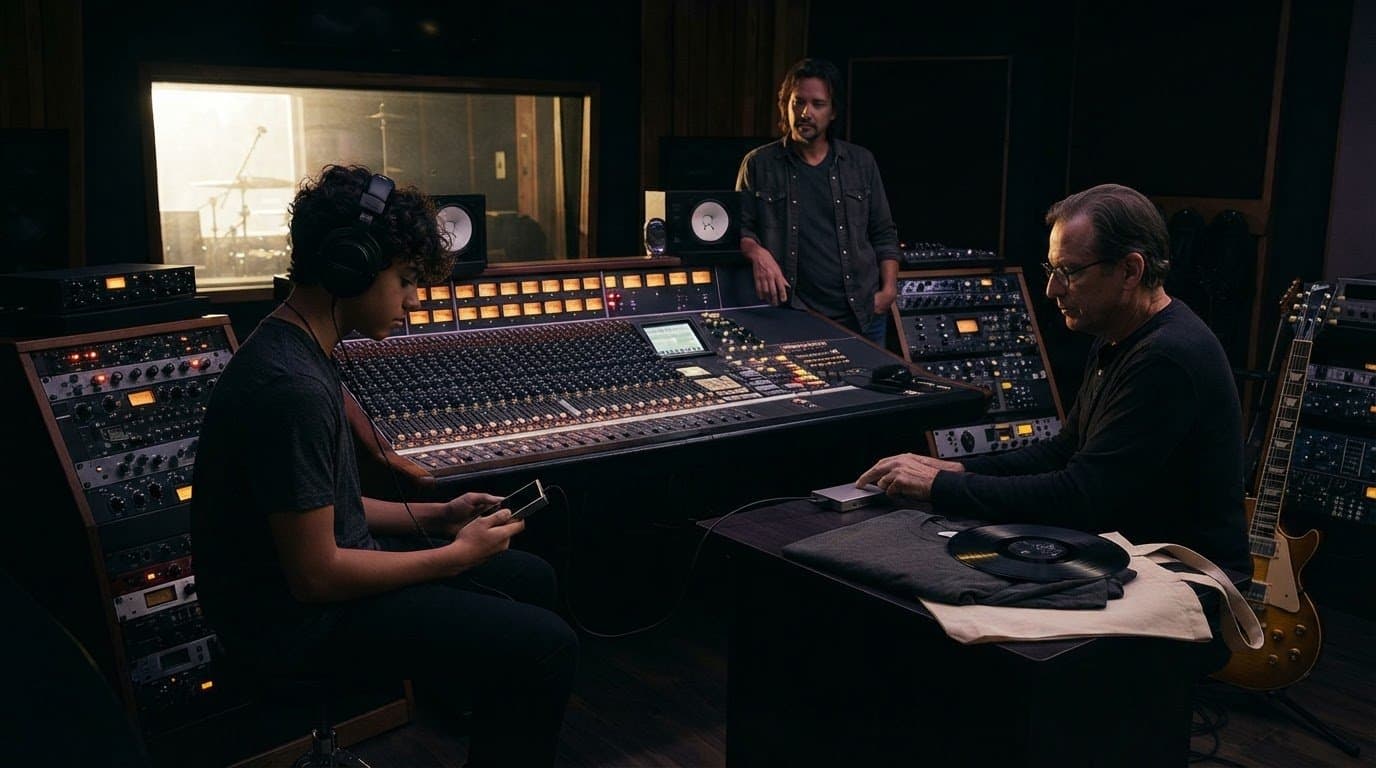
OohYeah vs SoundBetter: hiring a mixing engineer in 2026
oohyeah vs soundbetter: choose broad music commerce or focused production hiring. Compare engineer fit, project scope, revisions, and file handoff.
November 11, 2026
FRANKLY with Frank Lee
Choose OohYeah if hiring a mixing engineer sits alongside finding collaborators, selling gear, and building artist support; choose SoundBetter if you want a dedicated music-production marketplace for a finished recording. This 2026 comparison separates platform fit from the decision that matters most: who can mix your song well.
- OohYeah vs SoundBetter: choose the broader music marketplace for connected needs, or the production-focused marketplace for a focused search.
- SoundBetter is the better starting point when your only task is hiring a mixing engineer.
- OohYeah suits musicians combining Music Pros hiring, gear sales, and artist support.
- Compare relevant mixes, written scope, revision terms, and delivery files before choosing an engineer.
Why this matters
A mixing engineer balances recorded tracks into a finished mix. That does not automatically include producing the song, replacing a weak vocal, recording live drums, or mastering the release.
Hire for the work your recording actually needs. A marketplace comparison helps you choose where to look; a clear brief helps you choose whom to hire.
For your 2026 shortlist, separate platform features from engineer commitments. If you're still deciding whether your recording needs outside help, start with whether hiring a mixing engineer for one song is worth it.
At a glance
| Dimension | OohYeah | SoundBetter |
|---|---|---|
| Best for | Musicians combining hiring, gear, and artist commerce | Artists concentrating on production-service hiring |
| Hiring focus | Music Pros within a broader music marketplace | Dedicated music-production marketplace |
| Broader tasks | Buying and selling gear, hiring professionals, supporting artists | Finding music-production professionals |
| Standout feature | Connected music-commerce scope | Production-focused marketplace scope |
| Judging sound | Assess the individual engineer's relevant work | Assess the individual engineer's relevant work |
| Project scope | Agree on editing, mixing, revisions, and deliverables | Agree on editing, mixing, revisions, and deliverables |
| Pricing model | Compare the project quote and current platform terms | Compare the project quote and current platform terms |
| Offering services | Fits musicians offering services alongside other music activity | Fits professionals concentrating on production-service work |
The table compares purpose, not promised results. Neither marketplace name tells you whether an engineer understands your vocal sound, arrangement, or release brief.
SoundBetter is the better fit for a mixing-only search
Start with the dedicated production marketplace when mixing is your only job to solve. SoundBetter centers on music-production professionals, making that focus a clear match for an artist with recorded tracks ready to hand over.
Best for: the self-recording artist who has chosen the performances, finished the arrangement, and needs an engineer to shape the mix. Keep the search narrow. Listen for vocal placement, low-end control, depth, and how the chorus opens up.
The limitation is scope. A production-services marketplace is not the same proposition as a platform spanning instruments, services, and artist commerce. If those other activities matter to your project, evaluate them separately rather than treating mixing as your whole workflow.
SoundBetter wins on production-focused positioning
A focused marketplace gives you a straightforward starting question: which professional fits this recording? That is different from entering a broader music marketplace with several unrelated tasks.
For hiring in 2026, keep your shortlist focused too. Pick 2 reference tracks and describe what you like about each: the dry lead vocal, the restrained bass, or the roomy drums. References explain taste; they are not instructions to copy another recording.
Do not mistake specialization for a quality guarantee. A relevant portfolio still matters more than marketplace positioning. Ask what the engineer did on each example, especially when a credit could refer to production, recording, mixing, or mastering.
OohYeah is the better fit for a wider music workflow
OohYeah is best for musicians who want music-professional hiring alongside gear trading and artist support. Its marketplace connects those activities without making production services the whole proposition.
Best for: the songwriter who needs a singer now, a mixing engineer after recording, and a place to sell unused studio gear. That is a broader set of needs than a mix-ready artist shopping for one service.
The tradeoff is attention. More categories do not make a mix sound better, and you still need to judge each professional separately. Use the Music Pros section for collaboration and hiring; do not let an unrelated gear purchase distract you from checking the engineer's actual work.
Connected commerce wins for breadth, not mix quality
The broader platform's standout feature is its combination of music activities. You can approach it as a musician hiring talent, a professional offering services, a gear seller, or a fan supporting independent artists.
For sellers, the brand emphasizes zero seller commissions. That seller proposition is not a substitute for checking the current terms of a professional-services agreement. Keep gear-sale terms and engineering scope separate.
SoundBetter's standout is its production focus. That is useful when you want to concentrate on finding a professional rather than handling adjacent commerce. Neither standout establishes a better-sounding mix; the engineer's skill and your source recordings decide that part.
Both require you to judge the engineer, not the logo
Neither platform wins the listening test automatically. Compare work that resembles your song, not simply the loudest or most polished sample you hear.
Listen to a 30-second chorus excerpt from each relevant example at a similar playback level. This is a practical comparison exercise, not a performance benchmark. Notice whether you can follow the lyric, whether the kick and bass remain distinct, and whether the arrangement feels crowded.
Ask direct questions:
- Which parts of this example did you record, produce, mix, or master?
- Can you describe how you would approach my lead vocal?
- Does my recording need editing or replacement parts before mixing?
- What would you want changed before accepting the files?
A clear answer shows you how the professional thinks. A famous credit alone does not explain how your song will be handled.
Both need a written scope before work starts
Mixing and production overlap in conversation, but they should not blur in your agreement. Define the work before sending the full session.
Ask whether vocal tuning, timing edits, noise cleanup, alternate versions, and mastering belong in the proposed job. Define a revision as a change to the agreed mix, then ask how replacement performances or arrangement changes are handled.
For a 2026 release, specify the deliverables you actually need. A stereo mix, instrumental version, vocal-up version, and separate stems are different deliverables; do not assume one request includes all of them. Stems are grouped audio exports, such as drums or backing vocals, rather than necessarily every individual track.
Agree on file format and resolution with the engineer. Requesting 24-bit WAV files is a concrete discussion point, not a reason to convert or upsample source files without instructions.
Pricing: compare complete project quotes, not headline promises
Treat the quote as a description of work. A project-based agreement makes the scope easier to compare; an open-ended agreement needs a clear approval process for additional work. Ask which structure applies before committing.
For both marketplaces, check current platform terms and the professional's written proposal in 2026. Do not assume seller policies, payment arrangements, or revision rules transfer from one kind of transaction to another.
Use the same brief when requesting quotes. Include the song's track count, editing needs, reference tracks, requested versions, and delivery deadline. Otherwise, you are comparing different jobs under the same word: mixing.
Predictability comes from defined scope. Flexibility comes from agreeing how changes get approved. Choose the structure that matches how settled your recording is, then confirm payment milestones and cancellation terms before work begins.
A broader marketplace suits multi-role musicians; specialization suits specialists
If you offer mixing services, choose your positioning as carefully as a buyer chooses an engineer. A service description should say what you do, who your sound suits, and what the client receives.
A broad music marketplace fits a musician combining services, gear sales, and artist activity. A production-focused marketplace fits an engineer whose main goal is presenting production work. Neither position promises inquiries, available jobs, or guaranteed bookings.
Make your offer easy to understand:
- Name the genres and recording types you work on.
- Explain what clients must supply before you begin.
- Separate mixing from editing, production, and mastering.
- State the deliverables and revision boundaries.
- Use examples with your role clearly identified.
If you also sell unused gear, create an account and list it separately from your service offer. Keep each listing focused on one buyer's need.
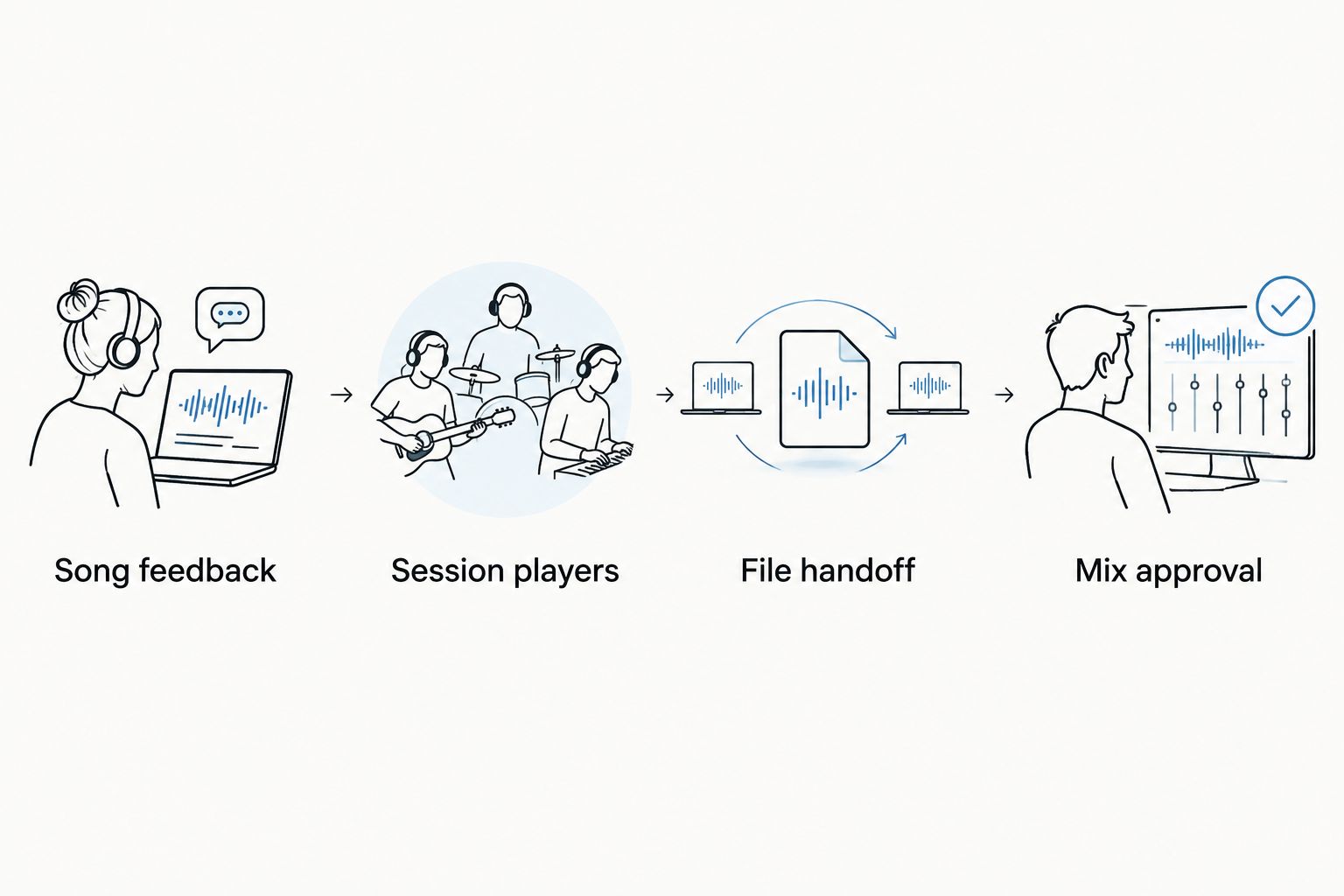
Wrote some songs, now what?
Do not book mixing before you know what is missing. Work through this sequence first.
- Song feedback. Ask an industry professional to assess the writing and arrangement. Specify whether you want feedback on melody, lyric, structure, or production direction.
- Session players. Hire the singer or instrumentalists the recording needs. If you want Nashville studio musicians, make location or scene experience an explicit selection criterion.
- File handoff. Confirm tempo, song structure, file naming, and export requirements with everyone involved. Send a rough mix so collaborators hear the intended direction.
- Mix approval. Give consolidated, specific notes against the agreed brief. Describe the problem before prescribing a plugin or processing chain.
This sequence also fits a Suno demo you want to remake with real musicians. Treat the demo as a reference for arrangement and feel; decide which parts humans will perform before hiring someone to mix the resulting recordings. Confirm that you have permission to use the material you supply.
A mixing engineer cannot resolve an undecided arrangement simply by balancing faders. Finish the musical decisions first, or explicitly hire a producer to help make them.
Final verdict: choose the platform that matches your next job
Choose OohYeah if you're a multi-role independent musician
You write songs, hire collaborators, buy or sell gear, and build support around your releases. The broader marketplace fits that combination. Start with Music Pros for the hiring task, then assess the individual engineer against your references and scope.
Choose SoundBetter if you're a mix-ready recording artist
Your performances are finished, your files are organized, and your next task is finding a production professional. The dedicated marketplace is the more focused starting point. Choose the engineer only after checking relevant work and agreeing on deliverables.
For your 2026 decision, use this scorecard rather than assuming either platform wins everything.
| Dimension | Winner |
|---|---|
| Best for | Broader marketplace for multi-role musicians; SoundBetter for mix-ready artists |
| Hiring focus | SoundBetter |
| Broader tasks | Broader music marketplace |
| Standout feature | Connected commerce for breadth; SoundBetter for production focus |
| Judging sound | Tie: evaluate the engineer |
| Project scope | Tie: require a written agreement |
| Pricing model | No blanket winner: compare complete quotes and terms |
| Offering services | Broad platform for multi-role musicians; SoundBetter for production specialists |
FAQ
Is OohYeah or SoundBetter better for hiring a mixing engineer?
SoundBetter is the more focused starting point for a mixing-only search; OohYeah fits musicians who also want gear trading and artist commerce. In either case, choose the individual engineer through relevant work samples and a written scope.
Should I hire a producer or a mixing engineer first?
Hire a producer first if the arrangement, performances, or sound direction still need development. Hire a mixing engineer when the recorded parts are ready to be balanced and shaped into a mix.
What should I send a mixing engineer before asking for a quote?
Send a rough mix, track count, reference tracks, editing requirements, requested deliverables, and deadline. Ask how the engineer wants the final audio files prepared before exporting everything.
Does hiring a mixing engineer include mastering?
Do not assume mastering is included in a mixing agreement. Ask for it explicitly and confirm whether it is a separate service, deliverable, or professional's responsibility.
Can real musicians remake my Suno demo before mixing?
You can hire musicians to record parts using a demo as a creative reference. Agree on the arrangement, performances, rights, and recording deliverables before handing the new tracks to a mixing engineer.
Can I offer mixing services while looking for collaborators?
You can present your services while seeking collaborators, but keep each request clear. Explain whether you are offering paid engineering, hiring a performer, or proposing a collaboration; none guarantees work or bookings.
How do I compare mixing quotes fairly?
Give each engineer the same project brief and compare the included work. Check editing, revision boundaries, alternate versions, delivery files, payment milestones, and how scope changes are approved.
One last thing
Ask a prospective engineer what they would fix before mixing your song. The answer gives you a useful hiring conversation: a clipped vocal, unfinished arrangement, or missing performance needs a different solution from a balance adjustment. Pick the person who can explain that distinction clearly.