Monetizing Music Superfans With Exclusive Subscriptions
Start monetizing music superfans with exclusive subscriptions. Build sustainable recurring revenue without burnout while offering fans meaningful access.

October 13, 2026
FRANKLY with Frank Lee
What if your most devoted fans could support your music without requiring you to release something new every week? Monetizing music superfans with exclusive subscriptions can create recurring income, but the offer needs to fit both your audience and your creative life. The pressure to keep subscribers happy is real, especially when you don’t yet know how many listeners are ready to pay.
You don’t have to make the decision blindly. Strong offers give fans meaningful access and a closer connection without turning every month into a deadline. Learn how to spot signs of genuine fan commitment, decide whether recurring support makes sense for your audience, and shape an offer around value rather than constant output.
Exclusive access can complement streaming, digital downloads, and merchandise instead of replacing them. On OohYeah!, artists can share exclusive content alongside music and merchandise sales, and retain all revenue from those music and merchandise sales. The goal is a practical mix of income and connection, built on terms that work for you and your fans.
Key Takeaways
- Recognize superfans by their meaningful support and participation, not listening frequency alone.
- Make monetizing music superfans with exclusive subscriptions sustainable by matching fan value with the time and creative capacity you can offer.
- Choose between subscriptions, downloads, merchandise, and free discovery based on the value each format provides and the commitment it asks of fans.
- Test a clear subscription promise with audience feedback and existing engagement, then review and adjust without assuming how many fans will join.
- See how artist profiles, exclusive content, and optional fan subscriptions on OohYeah! can sit alongside direct music and merchandise sales.
What Does Monetizing Music Superfans With Subscriptions Really Mean?
Monetizing music superfans with exclusive subscriptions means giving committed listeners a clear, ongoing reason to support you directly. A subscription can strengthen a fan relationship and create recurring income, but it isn’t a universal fix or a guaranteed replacement for other revenue. It’s a good fit when your audience values the offer and you can deliver it without straining your creative practice.
This is one form of the Direct-to-fan model: artists build direct relationships with listeners and offer ways to support their work. A subscription adds a recurring exchange to that relationship. Fans understand what their support provides, and artists can shape an offer around their community.
Who counts as a music superfan?
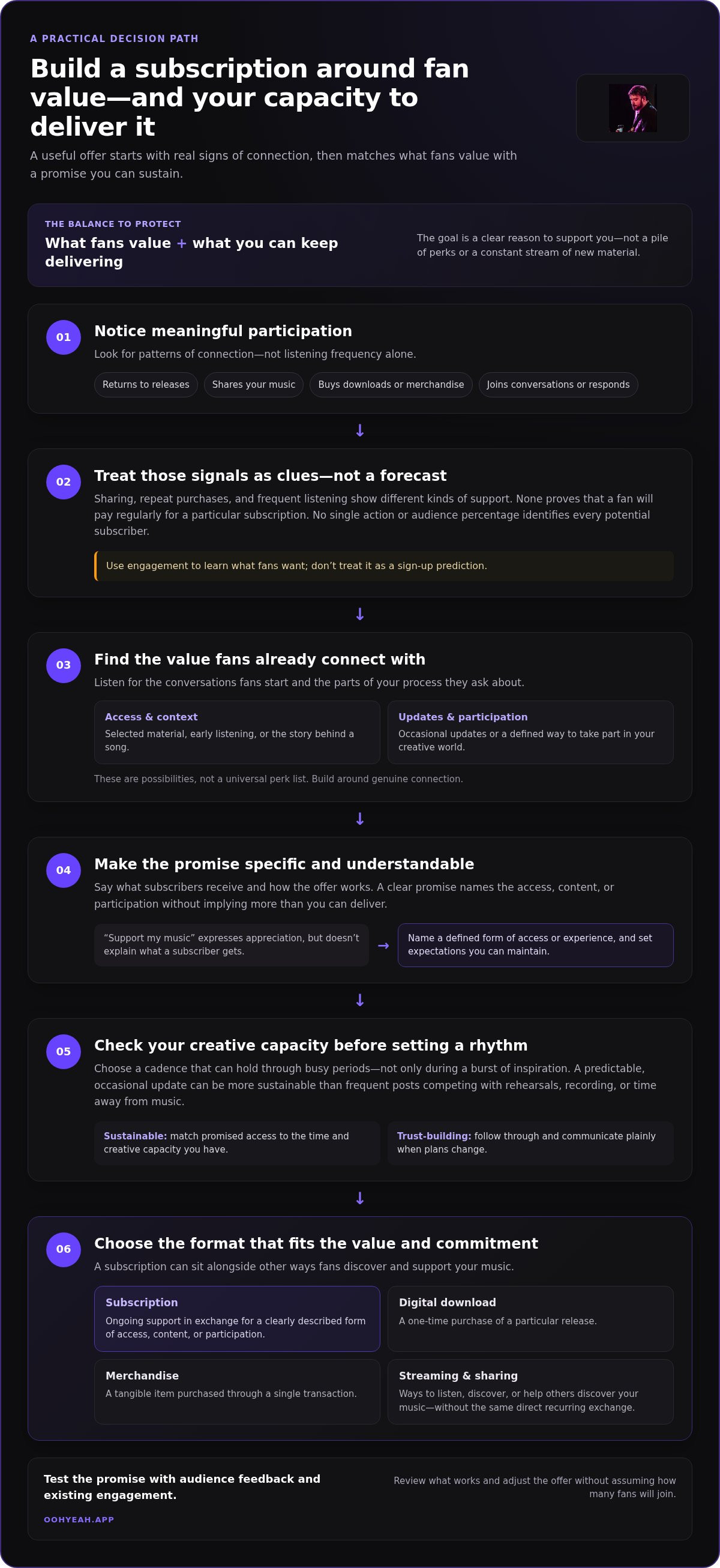
Look for patterns of participation, not a single metric. A superfan might return to new releases, share your music, buy a download or merchandise, join conversations, or respond directly to your updates. These actions signal interest and connection, but they don’t prove that someone will pay regularly for a particular subscription. Enthusiasm and willingness to pay are related, but they aren’t the same thing.
Consider what each signal tells you. A listener who shares your songs may be helping new people discover your work; someone who repeatedly buys releases has shown a different kind of support. Neither behavior guarantees subscription interest. No single action, listening frequency, or audience percentage identifies every potential subscriber. Treat these clues as reasons to learn what fans want, not as a forecast of sign-ups.
What does an exclusive subscription promise?
A subscription is a recurring exchange: fans provide ongoing support in return for a clearly described form of access, content, or participation. Exclusivity doesn’t have to mean a steady stream of new recordings. It could focus on access to selected material or a defined way to take part in your creative world. The important thing is to explain what subscribers receive and how the offer works.
Be specific enough for a fan to make an informed choice. “Support my music” expresses appreciation, but it doesn’t explain what a subscriber gets. A clearer promise names the access or experience without implying more than you can deliver. Set expectations you can maintain and communicate changes plainly. Trust grows when the offer matches the experience.
Subscriptions also differ from other ways fans support music. A digital download is a one-time purchase of a particular release. Merchandise gives a fan a tangible item through a single transaction. Streaming makes music available through a listening service, but it isn’t the same direct, recurring exchange between a fan and an artist. Informal support, such as sharing a track or sending encouragement, can deepen a relationship without a defined payment or access arrangement.
Each format serves a different purpose. A subscription may suit fans who want an ongoing connection and value the access you can realistically provide. One-time sales let fans choose a specific purchase without a recurring commitment. Free listening and sharing can help people discover your music. Treat subscriptions as one possible part of a broader fan relationship, not a test of loyalty or the only route to sustainable artist income.
Why Fan Value and Creator Capacity Determine Subscription Success
A subscription works when fans value what it offers and you can deliver that value without putting your music-making under constant pressure. A compelling offer isn’t a pile of perks. It’s a clear reason to support you, rooted in what your audience cares about and what you can sustain. That balance matters more than promising a high volume of exclusive material.
Fans may value relevance, access, trust, and a recurring promise they can understand. An update about the story behind a song may mean more to listeners who connect with your writing than a stream of unrelated extras. Trust grows when you explain what’s included, follow through, and communicate honestly when plans change.
What do superfans value beyond unreleased tracks?
Unreleased music can be meaningful, but it’s not the only way to deepen a fan relationship. Some listeners may value hearing a track early because they enjoy following its journey. Others may want context about how a lyric or arrangement came together, or occasional updates that bring them closer to the work. Participation can matter too, such as inviting fans to share reactions to a creative choice.
These are possibilities, not a universal perk list. A private community or frequent demos may suit one artist’s audience and feel like extra work to another. Pay attention to the conversations fans already start and the parts of your process they ask about. Build around a genuine connection rather than adding access that feels awkward or difficult to maintain.
A sustainable subscription aligns promised access with the artist’s capacity. That principle keeps the offer fair to fans and protects the time you need to create.
How can artists avoid the subscription content treadmill?
Set the rhythm before inviting fans to join. Look at your existing creative routine and choose a cadence you can maintain through busy periods, not just during a burst of inspiration. A predictable, occasional update can be more valuable than frequent posts that compete with rehearsals, recording, or time away from music. Consistency means keeping fans informed, not producing something new every day.
Write down the offer’s boundaries in plain language. Separate what subscribers can expect from what you might share occasionally, and be clear about what you aren’t promising. For example, you might commit to sharing selected studio reflections on a stated schedule while explaining that unreleased tracks are occasional, not guaranteed. Avoid vague phrases that could lead fans to expect constant access or personal replies.
- Included: Name the access or updates subscribers can count on.
- Occasional: Describe extras as possible, not automatic benefits.
- Not promised: Set limits around release frequency, availability, or personal interaction.
These boundaries aren’t a lack of generosity. They help fans decide whether the offer suits them and give you room to keep creating. If you’re shaping an offer around exclusive access, OohYeah! artist profiles and exclusive content give you a place to present it alongside your wider music presence.
Exclusive Subscriptions vs. One-Time Sales: Choosing the Right Fan Offer
Fans support artists in different ways, and each offer asks for a different kind of commitment. A subscription invites ongoing support in exchange for recurring access or experiences. A download or merchandise purchase lets someone choose a single item. Free discovery gives new listeners a way to find your music without paying directly. These options can work together rather than competing for every fan.
Use this comparison to match the offer to the value you can provide and the choice a fan wants to make:
When does a recurring fan subscription make sense?
A subscription may fit when fans show ongoing interest and you can offer something valuable on a repeatable basis. Listeners who follow the development of your work, for example, may appreciate regular context or defined access to selected material. But enthusiasm alone doesn’t prove demand for a paid offer. Fans may love your music and still prefer occasional purchases, free listening, or sharing.
Ask whether the recurring element matters to the fan. Is there a reason to return, take part, or receive access over time? If the value only makes sense as a one-off, a subscription may add friction instead of strengthening the relationship. Monetizing music superfans with exclusive subscriptions works best when the recurring promise is clear to fans and manageable for you.
When are downloads or merchandise a better fit?
One-time purchases give fans a direct way to support a particular release or artist product without signing up for an ongoing payment. A listener might buy a digital album after discovering a song, while another fan chooses merchandise as a tangible expression of support. Keep these options alongside a subscription so people can choose what fits their interest and spending habits. A separate guide to selling digital music downloads and merchandise can cover practical sales details.
Think of a connected pathway, not an either-or decision: free discovery can introduce your music, a download can deepen support for a release, merchandise can offer another direct purchase, and a subscription can serve fans who want an ongoing connection. Each option meets a different need. A strong mix gives fans room to choose and helps you build direct income without treating every listener as a prospective subscriber.
How to Test a Superfan Subscription Without Overpromising
You don’t need to predict subscriber numbers to find out whether an offer fits. Run a small, clearly explained test. Use fans’ existing actions and feedback as evidence, then judge the idea by both audience response and your ability to deliver. This makes monetizing music superfans with exclusive subscriptions a learning process, not a promise of guaranteed income.
Which audience signals are worth watching?
Look beyond follower counts. Notice who returns to your updates, asks thoughtful questions, buys releases, or responds to exclusive previews. These behaviors can point to interest in a closer relationship. But attention isn’t the same as purchase intent. A like or follow alone doesn’t show that someone wants to pay for ongoing access.
Invite specific feedback. Ask which of a few possible benefits feels most valuable, or whether fans would prefer occasional behind-the-scenes context, early listening, or another clearly described form of access. Treat responses as clues, not commitments. Don’t use another artist’s audience percentages or earnings estimates as a forecast for your own community. Your fans, offer, and circumstances are your own.
How should artists set expectations and assess the test?
Use a simple sequence to explore the idea before you build a bigger offer:
- Listen for signals. Review repeat engagement, direct questions, previous purchases, and reactions to exclusive previews.
- Define the promise. State exactly what the recurring support provides, including the access or content fans can expect.
- Test interest. Describe the offer to your audience and invite honest reactions. Make clear whether you’re gathering feedback or opening subscriptions.
- Review the experience. Compare fan questions and participation with the time and effort delivery requires.
- Adjust the offer. Refine its format or expectations based on what you learned, or decide that a subscription isn’t the right fit yet.
Before a launch, explain the offer, its delivery rhythm, and its boundaries in plain language. A limited test can mean keeping the scope manageable, not implying that access will disappear unless that’s genuinely part of the offer. Avoid vague claims such as “exclusive updates” without explaining what fans will actually receive. Clear expectations help supporters choose with confidence and protect you from accidentally promising constant output.
Assess the whole picture. Did fans understand the offer? Did their feedback point to a benefit they value? Could you deliver it alongside your regular creative work? If subscriptions begin, consider ongoing participation and retention as well as initial interest. A change in engagement is a signal to investigate, not proof that fans don’t care. The format, timing, or promise may need adjustment.
Use the test to make a grounded choice, not to pressure yourself into scaling. Explore direct-to-fan options with OohYeah! as you consider how exclusive content and recurring fan support might fit alongside your music and sales.
How OohYeah! Supports Direct Fan Subscriptions and Sales
Once you’ve considered whether a subscription fits your fans and your creative capacity, choose how to bring the offer together with your other sales. OohYeah! gives artists a place to host a profile, share exclusive content, offer digital music downloads and merchandise, and receive optional recurring support from fans. Subscriptions are one part of that mix, not a guaranteed replacement for streaming income or direct sales.
This gives fans distinct ways to connect with your work. One listener may support you through a subscription for exclusive access. Another may prefer to buy a particular release or piece of merchandise. Your profile can bring those options together while letting each fan choose what suits them.
How can exclusive access sit alongside direct music sales?
Exclusive content and music sales serve different purposes. You could make selected content available to subscribers while offering a digital download for fans who want a particular release. Merchandise provides another direct way to support your work. These options can complement one another: an interested listener can choose a one-time purchase, while a fan seeking an ongoing connection can opt for recurring support. Shape the offer around your audience and your creative practice.
What does commission-free sales mean for artists?
OohYeah! takes no commission on artists’ music and merchandise sales. Artists retain 100% of the revenue from those sales. This applies to music and merchandise sales, not artist subscription fees. Artists pay a recurring platform subscription fee for access to the platform. Keeping the two payment arrangements distinct makes it clear what commission-free sales means and what the platform access fee covers.
The distinction also helps with planning. Sales revenue comes from fans choosing downloads or merchandise; optional fan subscriptions provide recurring support for exclusive artist content or premium platform features. These are separate parts of the platform’s offering. Don’t assume that commission-free sales mean there are no other costs, taxes, or payment-related deductions. The specific point is that OohYeah! doesn’t take a sales commission on artists’ music and merchandise.
For artists exploring monetizing music superfans with exclusive subscriptions, OohYeah! brings artist profile hosting and exclusive content access together with direct music and merchandise sales. Consider how each option fits your audience, then give fans a clear way to support your work. Explore OohYeah! for artist-led music and fan support.
Build a Fan Offer That Grows With Your Music
Your next move doesn’t have to be a major launch. Start by choosing one fan relationship you want to deepen, then shape an offer that feels natural to your music and manageable in your working life. A clear, modest promise gives you room to learn from real responses and evolve the experience without letting subscription demands dictate your creativity.
That’s the opportunity in monetizing music superfans with exclusive subscriptions: create a direct way for committed listeners to support your work while leaving space for fans who prefer to buy music or merchandise. OohYeah! supports optional fan subscriptions for recurring artist support, and artists retain 100% of music and merchandise sales revenue because the platform takes no commission on those sales.
Take the next step on your terms. Explore OohYeah! and build a more direct relationship with your fans. Your creative practice leads; the right fan offer should support it.
Frequently Asked Questions
How many superfans do you need before launching a subscription?
There’s no universal minimum. Look for several kinds of active support, such as fans who return to your posts, ask about your process, or have bought a release. Share a plain-language description of a possible offer with this engaged group and ask what feels useful or unclear. Their feedback can help refine the idea, but positive reactions don’t guarantee anyone will subscribe or keep paying.
What exclusive content can musicians offer subscribers?
Choose content that connects naturally to your music and fits the time you have. For example, a songwriter might share notes about how a particular lyric changed, while an instrumental artist might offer context about the sounds behind a recording. These are ideas to adapt, not obligations. Explain what subscribers can expect, and don’t present occasional extras as regular benefits unless you intend to provide them consistently.
Do music fans have to pay for a subscription to support an artist?
No. Fans can support your work without subscribing. Someone who shares a track with a friend, listens to a release, buys a download, or chooses merchandise is showing support in a different way. Make those options visible without implying that payment is the only meaningful response. A welcoming approach respects casual listeners too and lets each person decide how they want to take part in your music’s journey.
Can exclusive subscriptions replace streaming income for independent artists?
No subscription should be treated as a guaranteed replacement for streaming income. Its performance depends on whether fans value the offer and whether you can sustain it. Consider it alongside streaming, downloads, and merchandise rather than making it carry your whole income plan. For monetizing music superfans with exclusive subscriptions, track what each channel contributes over time and revisit the mix as your audience and creative priorities change.
How often should artists publish subscriber-only content?
Choose a publishing rhythm you can maintain alongside recording, rehearsing, and other work. If you can reliably share a short studio note after each completed project, that may be a more realistic promise than frequent updates. Describe the expected rhythm before fans join, and distinguish planned posts from occasional extras. If a release or personal schedule disrupts that rhythm, tell subscribers what’s changing rather than leaving them guessing.
What happens if subscribers stop paying or cancel?
Fans may cancel for reasons that have little to do with their appreciation of your music. Their budgets, interests, or available time can change. Look for patterns in feedback and participation before revising the offer. For example, if fans regularly ask what’s included, clarify the description; if a benefit takes more time than it adds value, reconsider its place. Treat cancellations as useful information, not a judgment of loyalty.
Are exclusive subscriptions better than selling music downloads?
Neither is automatically better. A download may suit a fan who wants one album or release and prefers a single purchase. A subscription may suit someone seeking ongoing access. You can offer both with distinct descriptions so fans understand the difference. For instance, present a download as support for a particular release and describe subscription access separately. Then use fan choices and your own workload to assess which options make sense to continue.