10 Digital Music Download Sites Compared for 2026
Compare the 10 best digital music download sites in 2026 — pricing, audio quality, and artist payouts, plus how OohYeah lets creators keep more.
October 23, 2026
Music Marketplace Advisor
Buying & SellingWhy do most roundups of digital music download sites ask only what a song costs, and never ask what the artist keeps? That gap matters more than catalog size. Streaming pays fractions of a cent per play, while a single download sale can put real money in an artist's pocket in one transaction. For fans, that same purchase delivers a file you control, not access that disappears when a license changes or a subscription ends.
This guide serves both sides of that transaction. If you're a listener, you'll see which stores give you lossless files, clear redownload rights, and permanent ownership. If you're an artist, you'll see which platforms let you set prices, reach fans directly, and keep a fair share of each sale. The distinction is now strategic, because downloads fell from 43% of U.S. recorded-music revenue in 2012 to 2% in 2024, according to RIAA 2024 year-end revenue figures showing the format's long-term contraction.
That contraction doesn't make downloads irrelevant. It makes them a high-intent purchase for collectors, DJs, audiophiles, and supporters who want to fund artists directly. I assessed these ten platforms on catalog depth, format options, pricing control, and creator terms. Buy where the file quality suits your listening, and sell where the economics respect your work.
1. OohYeah
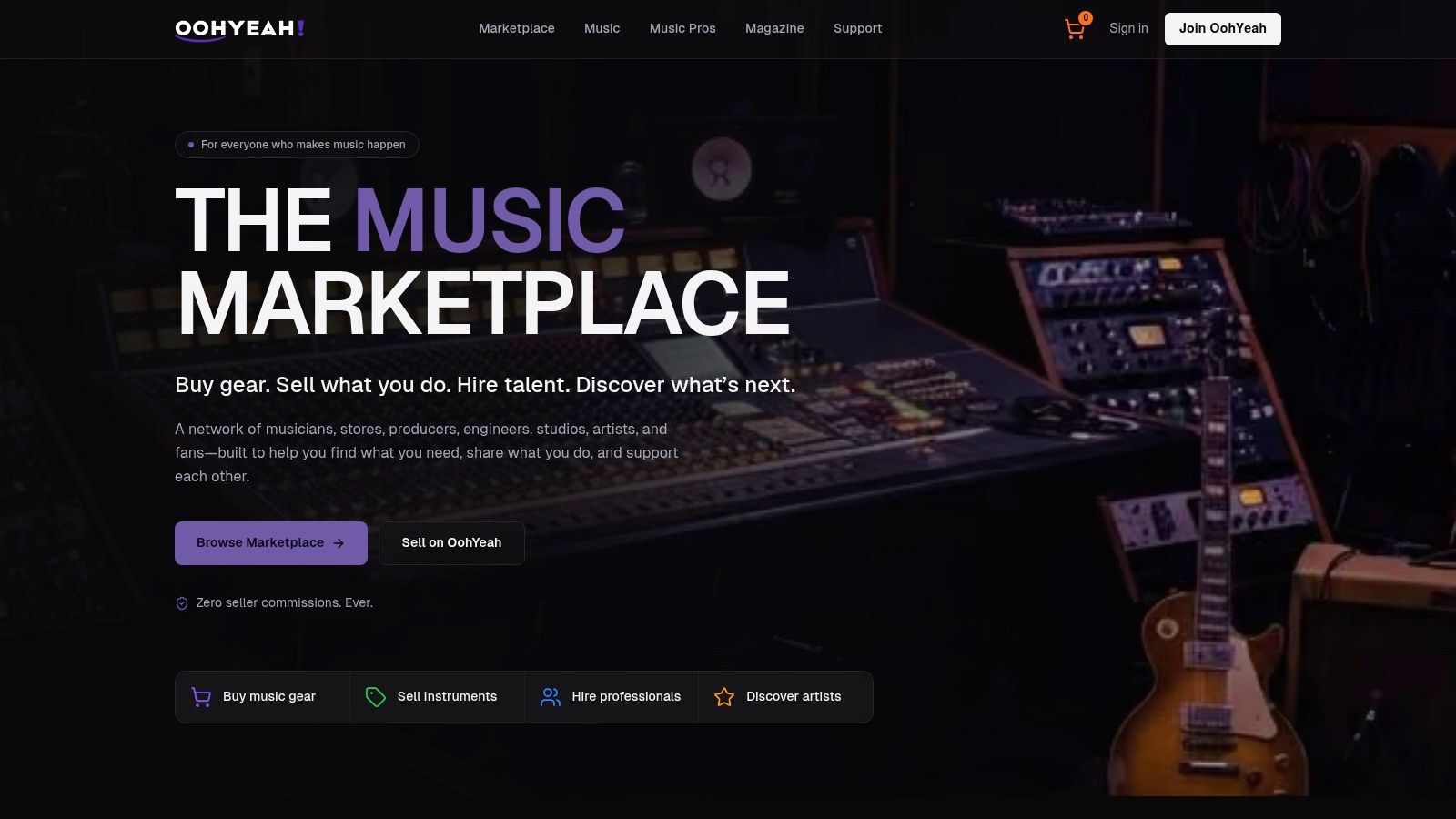
Start here if you're selling, not just buying. OohYeah is a music-focused marketplace where artists, fans, music businesses, and industry professionals buy, sell, hire, and discover in one place. Artists list music, merchandise, and subscriptions while keeping control of pricing and distribution, backed by direct fan interaction, exclusive content, analytics, and promotional tools.
The headline term is simple: zero seller commission on marketplace sales. Commission-based stores take a percentage of every transaction, so this model changes the math for independent artists and gear sellers alike, especially on bundled offers combining downloads with merch or memberships. Browse the OohYeah marketplace for music, gear, and creator services to see how the model works in practice.
What Listeners and Sellers Get
Fans join free across web, iOS, and Android, with trending artists, curated listings, and a music-industry magazine built in. Buyers can shop categories from guitars and drums to DJ equipment and pro audio, and musicians can hire professionals for production, session work, live events, marketing, education, and repair. That breadth makes this closer to a direct-to-fan business hub than a download-only storefront.
The trade-off is variability.
Marketplace inventory and service availability vary by location and category, and listing prices are set by individual sellers. Commission isn't the only possible cost either, so confirm processing fees and payout terms before you list.
Verdict: Choose OohYeah if what reaches the seller matters most to you. It sets the creator-side benchmark in this list, and it suits artists who want downloads as one revenue line inside a wider direct-to-fan operation rather than an isolated file sale.
2. Bandcamp
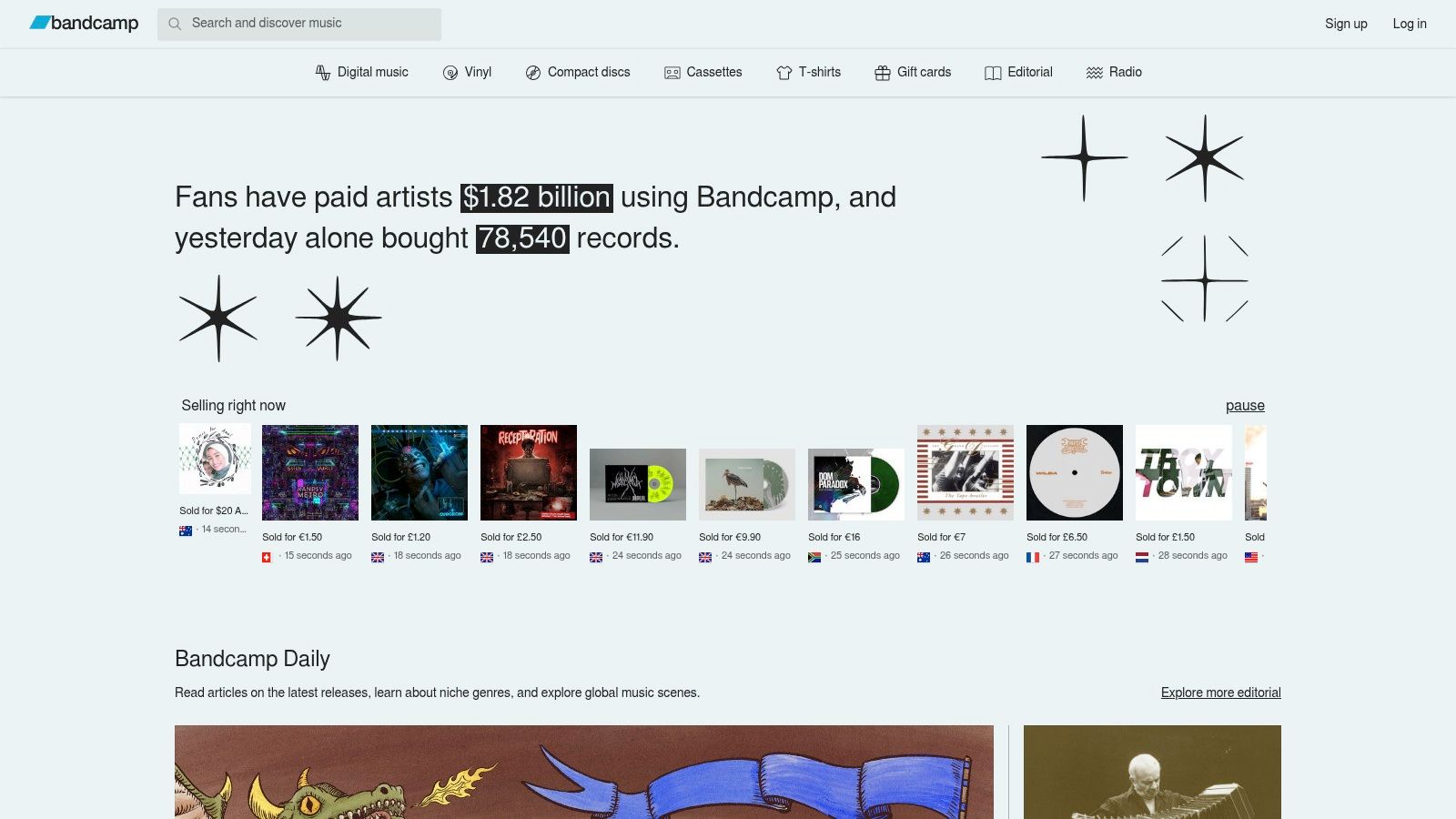
No store on this list gives independent artists more control over the sale itself. On Bandcamp, artists and labels build their own pages, write their own copy, and set their own prices, including name-your-price and free downloads. Fans stream purchases in the app, build public collections, and follow artists directly, so every purchase reads as visible support for the person who made the record.
Format choice is the standout listener benefit. Downloads come in MP3, FLAC, ALAC, WAV, and AIFF, which covers casual phone listening and lossless archiving in a single checkout. Discovery runs on tags, fan collections, recommendations, and Bandcamp Daily editorial, so small releases can surface without playlist gatekeepers deciding who gets heard. The trade-off is catalog depth: some major-label releases aren't stocked here.
Where the Money Goes
Bandcamp takes a revenue share on digital sales, and payment processing fees come out on top. That commission is the main reason to compare it against creator storefront options built for direct fan sales before committing to one home base, since the commission-free model covered earlier keeps more of each transaction with the seller. Margins also improve when downloads sell alongside physical goods, so plan bundles around fresh band merchandise ideas instead of relying on file sales alone.
Buy the download where the artist set the price and wrote the page. That context tells you more about who benefits than any chart position does.
Verdict: Buy on Bandcamp if you want lossless choice and your money visibly reaching independent artists. Sell there for the established fan base and pricing control, but weigh the revenue share against commission-free selling before you make it your only store.
3. Qobuz Download Store
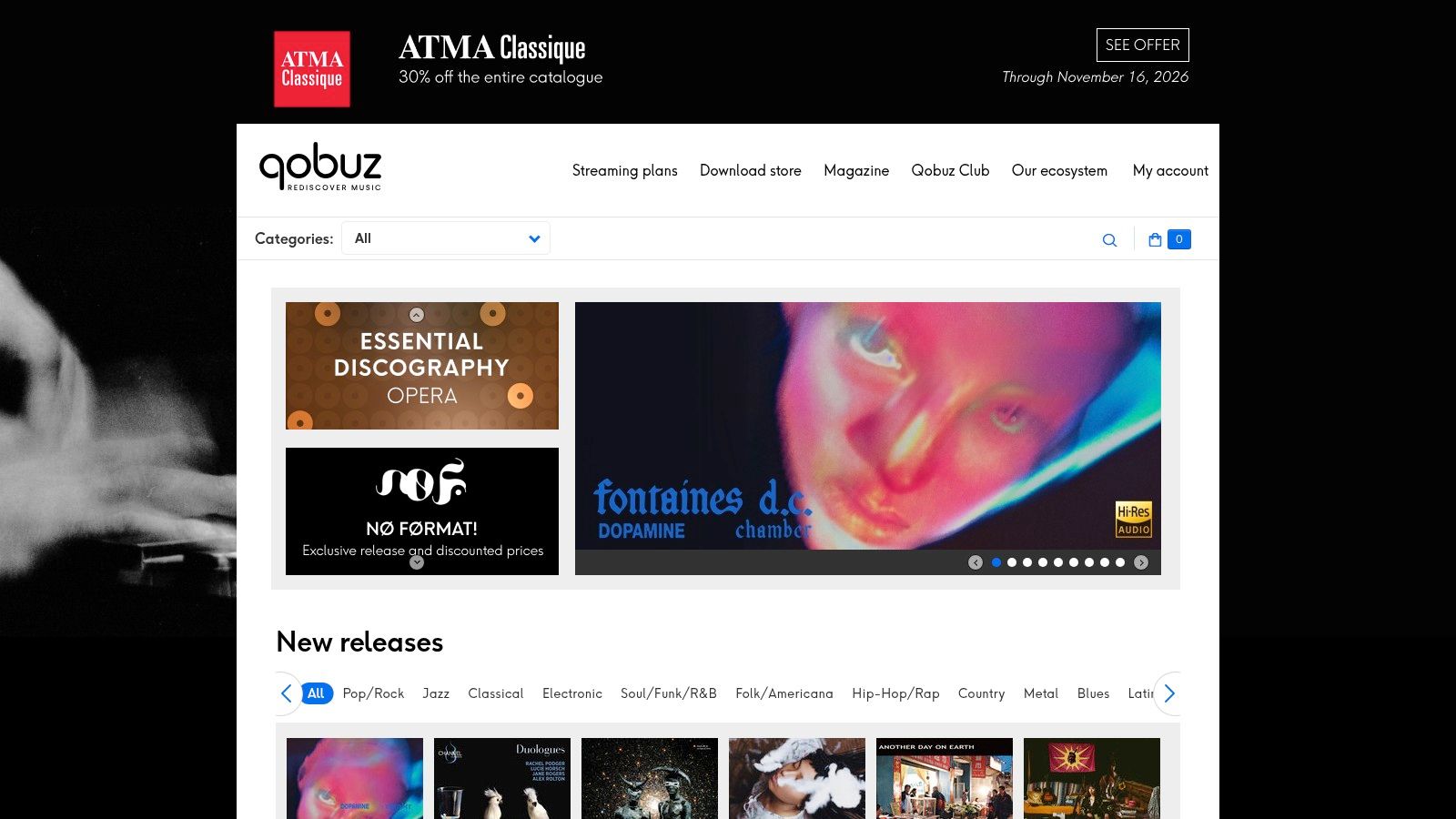
Audio quality is the entire reason to use the Qobuz Download Store. It sells individual tracks and albums with an emphasis on CD-quality and high-resolution audio, and you don't need a streaming subscription to buy. That's a clean proposition for listeners who want owned files that match a good pair of headphones or a proper home system.
Qobuz pairs the store with streaming and editorial content, so you can discover first and purchase selectively. Its optional Sublime membership gives discounts on eligible purchases, which rewards frequent buyers who also stream. If you only buy a few albums a year, pay the standard price and skip the membership math.
Who Should Buy Here
- Audiophiles building a library: Prioritize titles where high-resolution files are available, since availability varies by release.
- Hybrid listeners: Stream for discovery, then download the records you want permanently.
- Selective collectors: Pay per album instead of renting everything indefinitely.
Artists don't get a direct storefront here in the way they do on Bandcamp or OohYeah. This is a retail channel reached through normal label and distributor routes, so pricing control and fan data stay limited. That's the trade-off for reaching quality-focused buyers.
Verdict: Choose Qobuz if sound quality outranks everything else. Don't choose it as your primary creator platform, because it's built for retail distribution, not direct fan relationships.
4. Apple iTunes Store
The Apple iTunes Store built the mainstream download market. It launched in the United States on April 28, 2003 with roughly 200,000 songs at 99 cents each, sold more than 1 million tracks in its first week, and crossed 1 billion downloads in February 2006, according to this retrospective on a decade of iTunes milestones. The per-track pricing model proved people would pay for legal downloads, and the industry organized itself around that assumption for years.
Two decades on, the store's real advantage is convenience inside Apple's ecosystem. You buy songs and albums without an Apple Music subscription, download to Apple devices and Windows PCs, and redownload anything tied to your Apple Account. If your music life runs through an iPhone and a Mac, the friction is close to zero.
Listeners get owned files here, not just access. What they don't get is any line to the artist. Purchases flow through Apple's retail layer, so creators see a royalty statement and nothing else. No fan data, no pricing control, no relationship. If you buy music partly to support the people who made it, compare that setup with a platform designed around direct artist and fan connection, where the commission structure works differently.
For artists releasing through iTunes, packaging matters because discovery is mostly search and charts. Follow Striped Circle's guide to iTunes artwork before your distributor submits the release. A weak cover reads even weaker in a thumbnail grid.
Verdict: Buy from iTunes if you're inside Apple's ecosystem and want a huge catalog with zero learning curve. Skip it if you care about your money reaching the artist or your listening habits reaching anyone but Apple.
5. HDtracks
HDtracks is a specialist store, and it doesn't pretend otherwise. It focuses on audiophile and high-resolution downloads, from classic catalog titles to newer releases, with formats varying by title. Purchases require an account, and HDtracks provides a downloader to deliver your files, which keeps the process controlled but adds a step casual buyers may dislike.
Collectors are the audience. If you're building a local library on a hard drive, a network player, or a dedicated listening system, this is the place to check first for a better master. Some releases include additional artwork or album materials, which strengthens the ownership package beyond the audio file alone.
Practical Trade-Offs
- Storage and bandwidth: High-resolution files demand more of both, so budget space before you buy in bulk.
- Variable pricing: Prices and formats differ by release, so compare editions carefully.
- Try before you commit: A free sampler lets you test delivery and playback on your system.
Practical rule: Confirm your player handles the exact format and resolution before paying a premium for it. A flawless file you can't play properly is a bad purchase.
There's no creator storefront advantage here. Artists reach HDtracks through label and distribution channels, not direct fan sales, so you gain access to audiophile buyers without gaining their contact details.
Verdict: Buy from HDtracks for high-resolution collecting. Skip it if you want mainstream breadth, low prices, or a direct connection with the artist.
6. Beatport
DJs don't shop like casual listeners, and Beatport is built for that difference. Its catalog emphasizes electronic and dance music, organized through genre browsing, DJ charts, genre charts, and label pages. You buy individual tracks and releases to build a local collection you can rely on in a club, at a festival, or in the studio.
That specialization is its strength. Current electronic releases surface quickly, and chart context helps working DJs judge what peers are playing. File-format and price options are shown for eligible releases, so check whether you're paying extra for a higher-quality file before you complete checkout. Don't buy a lossy file by habit if you're playing on a large system.
Check Before You Buy
- Downloads versus subscriptions: Beatport's subscription services are separate from download purchases.
- Format cost: Higher-quality options may cost more than MP3 depending on the release.
- Genre fit: Outside electronic music, this catalog won't serve you.
For electronic artists and labels, Beatport offers genre-specific visibility that general stores can't match. The trade-off is dependence on a retailer's charts and terms rather than a direct fan channel you control. Treat it as a professional marketplace, not your only storefront.
Verdict: Choose Beatport if you DJ or buy current electronic music seriously. Choose a general or direct-to-fan store if your taste, or your audience, sits outside dance music.
7. Traxsource
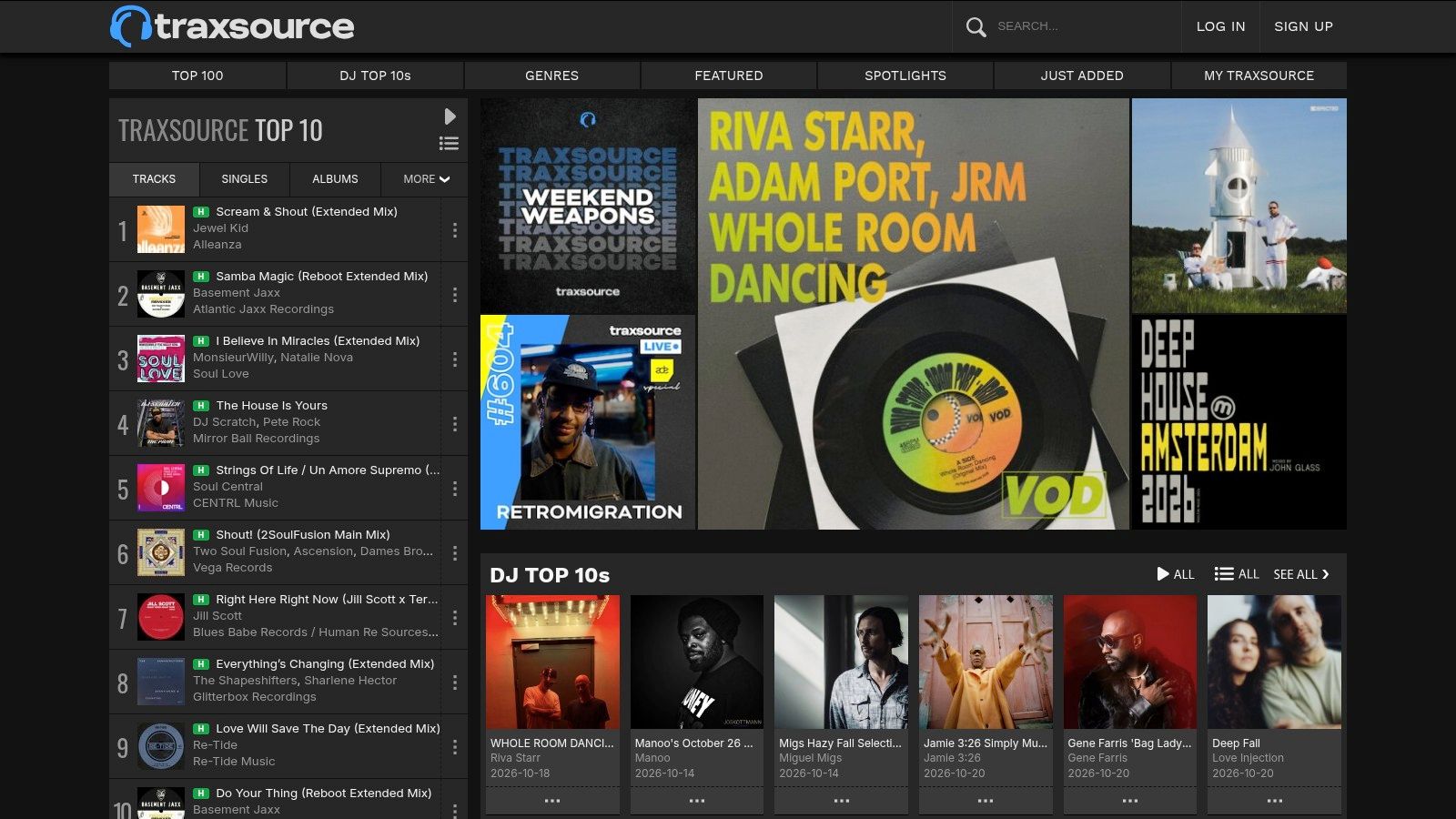
Traxsource serves a narrower room than Beatport, and house DJs prefer it for exactly that reason. The catalog focuses on house, deep house, soulful house, techno, disco, and Afro house, with DJ charts, pre-orders, label pages, and curated rankings that reflect underground dance culture rather than mainstream pop metrics.
Download options may include 320 kbps MP3, WAV, or AIFF, depending on the purchase, and a desktop downloader helps manage orders. That format choice matters in performance settings where uncompressed files are worth the extra storage. Track prices vary by release and format, so the cheapest option isn't always the right working file.
Discovery is the reason to stay. Label pages and genre rankings help you follow trusted curators in a scene where one reliable label can fill a set. Pre-orders also suit DJs who plan purchases around release schedules instead of buying reactively.
For artists and independent labels in these genres, Traxsource offers concentrated, qualified buyers. You won't get broad mainstream reach, and you won't own the customer relationship the way a direct storefront allows. You're trading scale for scene credibility and intent.
Verdict: Buy from Traxsource if house and underground dance music are your core repertoire. Don't use it as a general music store, and don't expect it to replace a direct channel for fan data.
8. Juno Download
Juno Download gives electronic buyers breadth with a workmanlike, product-focused layout. It covers releases, mixes, compilations, and some production-related material, with strong genre browsing for DJs who dig beyond headline charts. Product pages provide track and release details, and many listings let you buy a single track instead of the full release.
Format flexibility is its clearest advantage. Many listings offer MP3, WAV, FLAC, ALAC, and AIFF, though availability differs by release. That lets a casual listener buy a compact file and a DJ buy an uncompressed version from the same listing page. Check the format selector carefully, because storage requirements rise quickly with lossless and uncompressed files.
Best Uses for Juno Download
- Digging by genre: Specialist electronic browsing rewards patient buyers.
- One-track purchases: Fill a specific gap in a set without buying a whole package.
- Format matching: Pick the file that suits your player, software, and storage.
Mainstream pop and rock buyers will find better value elsewhere. Electronic labels gain a respected retail outlet and genre-literate shoppers, but not direct pricing control or fan contact details. Like Beatport and Traxsource, Juno is a distribution channel, not a relationship platform.
Verdict: Choose Juno Download for electronic digging and format choice. Pair it with a direct-to-fan store if you're an artist who needs audience ownership as well as retail presence.
9. eMusic
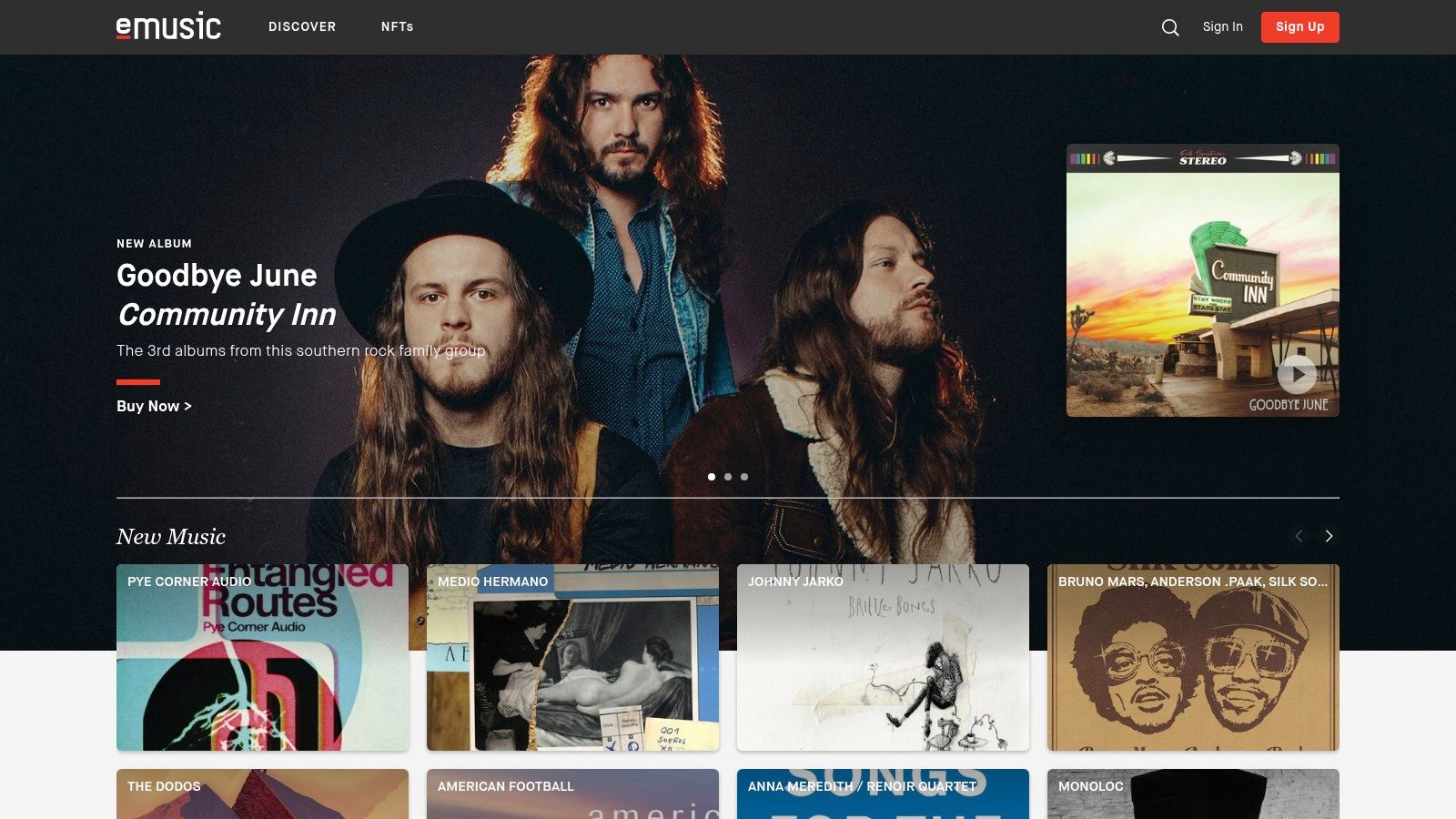
eMusic is worth checking when a release isn't in your usual store. It sells individual albums and tracks, provides catalog browsing and discovery pages for new and featured music, and lets you access purchases through a web-based My Music library. That download-first model still appeals to listeners who don't want another streaming subscription.
Approach it with clear eyes. The service advertises account or credit-based options, so read the current checkout terms before you commit money. Catalog availability and purchase eligibility can vary, and some users report availability or download reliability issues. A simple per-item checkout elsewhere may suit you better if you dislike credit systems.
Use eMusic Carefully
- Availability check: Confirm the exact album or track is eligible before adding funds.
- Library access: Verify how you'll retrieve purchases through My Music after checkout.
- Backup habit: Download and back up files promptly instead of relying only on account access.
That last point applies to every store in this list. Owning a file is not the same as owning copyright, and account access alone isn't a preservation plan. Keep your own backup on a separate drive or device.
Verdict: Use eMusic as a secondary source for downloads you can't find conveniently elsewhere. Don't make it your main library unless its current terms, catalog, and delivery work cleanly for the specific releases you want.
10. Warner Music Store Digital Downloads
The Warner Music Store digital downloads section is the narrowest option here, and that's fine if a participating Warner artist is exactly who you want. It's a label-run store selling official MP3 downloads from artists featured in the Warner store. You buy individual digital albums and tracks where offered, with no streaming subscription required.
Simplicity is the benefit. The à-la-carte model is easy to understand, the source is official, and artist-specific releases or editions may appear here as part of a wider store campaign. For a fan who wants the authorized file without joining another platform, that direct label route can be enough.
The limits are equally clear. The catalog covers only participating artists and releases, so it isn't a broad multi-label marketplace. Download formats are more limited than those at specialist lossless stores such as Qobuz or HDtracks. Artists also don't gain storefront control here, because the store is operated by the label for its own roster and campaigns.
Verdict: Buy from the Warner Music Store when it carries the specific official release you want in MP3. Use a multi-label or direct-to-fan platform when you need format choice, broader discovery, or a clearer line between your money and the artist.
Top 10 Digital Music Download Sites Compared
Read this table on two axes at once. The middle columns show what you get as a listener: catalog depth, formats, and how you find new music. The pricing column shows what the store takes, and that is where the biggest gap sits. On OohYeah, sellers pay zero commission, so more of each payment reaches the artist. On every other store listed here, a platform share or payment fees stand between you and the creator.
| Platform | Core strengths | Quality & discovery | Best for | Pricing & value |
|---|---|---|---|---|
| 🏆 OohYeah | Music, merch, subscriptions, services, and gear marketplace | ★ Direct fan interaction, creator tools, analytics, and curated listings | 👥 Artists, fans, music professionals, and gear buyers | 💰 Free fan access; zero seller commission; listing prices vary; other fees unspecified |
| Bandcamp | Direct-to-fan music, merch, and downloads | ★ Flexible formats, tags, recommendations, and editorial content | 👥 Independent artists, labels, and fans | 💰 Artist-set prices; platform share and payment fees apply |
| Qobuz Download Store | Individual track and album downloads | ★ CD-quality and high-resolution options vary by release | 👥 Listeners prioritizing audio quality | 💰 Pay per purchase; no streaming subscription required |
| Apple iTunes Store | À-la-carte song and album purchases | ★ Broad mainstream catalog and Apple library integration | 👥 Apple users seeking owned downloads | 💰 Pay per purchase; no subscription required |
| HDtracks | Audiophile and high-resolution downloads | ★ Specialist catalog; formats vary by title | 👥 Collectors building high-quality local libraries | 💰 Prices vary by release and format |
| Beatport | Electronic music and DJ-focused downloads | ★ Genre charts, DJ charts, and label discovery | 👥 DJs and electronic music fans | 💰 Pay per release; format options and prices vary |
| Traxsource | House and underground dance music | ★ Curated charts; MP3, WAV, or AIFF options on some releases | 👥 House DJs and niche dance-music fans | 💰 Track prices vary by release and format |
| Juno Download | Electronic music, mixes, and DJ releases | ★ Broad format choices on many listings | 👥 DJs and electronic music collectors | 💰 Pay per track or release; prices vary |
| eMusic | Track and album download store | ★ Web library and artist discovery; availability varies | 👥 Buyers seeking downloadable music | 💰 Purchases and credit options; check current terms |
| Warner Music Store | Official downloads from participating Warner artists | ★ Artist-specific releases; MP3 format | 👥 Fans of artists featured in the store | 💰 Pay per purchase; no streaming subscription required |
Choosing the Right Download Site for Your Needs
Which store deserves the sale? Pick by use case first, then by rights. Audiophiles should start with Qobuz or HDtracks, where file quality is the product. DJs should use Beatport, Traxsource, or Juno Download, because charts, label pages, and working formats matter more than a mainstream catalog. Apple users will move fastest through iTunes. Independent-music supporters should check Bandcamp before anywhere else.
Then ask what the purchase guarantees. U.S. download revenue fell 1.4% year over year in the first half of 2025, with download albums down 13.7% and download singles down 0.3%, according to RIAA mid-year 2025 revenue data on the continuing download decline. In a shrinking format, a vague product page is a warning. Confirm that files are DRM-free, how redownloads work, what happens if an artist swaps a release, and whether you can move files between devices. Back up every purchase yourself.
The global context argues for the same discipline. Downloaded music and other non-streaming digital formats generated roughly $829 million in 2024, while streaming exceeded $20 billion with approximately 752 million paid subscription accounts, as summarized in an analysis of the persistence of downloads alongside global streaming scale. Downloads now serve high-intent fans who want permanent access, offline control, collector editions, or direct support. A serious store states format, bitrate, sample rate, codec, metadata, and usage rights before checkout. Delivery should be resumable and authenticated.
The Creator Decision Is Different
Artists should judge reach and margin together. The earlier U.S. decline from peak share to $434 million in 2023, about 3% of recorded-music revenue, is detailed in RIAA reporting on download revenue through the 2021 to 2023 contraction. That market still pays, but it rewards precision. Measure download attach rate, average order value, repeat purchase rate, and premium-format uptake. Stop chasing mass reach that files alone will not deliver.
- Fans: Buy lossless where your system justifies it, buy direct where the artist offers it, and keep your own backup library.
- Artists: Use specialist retailers for qualified reach, and run a direct storefront for pricing control, bundles, subscriptions, and fan data.
- Labels and managers: Treat downloads as a premium ownership layer with exclusives, liner notes, stems, or merch.
Decision rule: If a store won't clearly tell the buyer what file they're getting and won't clearly tell the artist what they'll keep, don't make it your primary channel.
Fans should consolidate around one store for each job: quality, genre depth, or direct artist support. Artists have the bigger decision. Put downloads where the commission structure, pricing control, and customer relationship favor you on every sale. A commission-free storefront such as OohYeah sets the creator-side benchmark because the artist keeps the sale economics and the audience relationship, while retail partners remain useful for discovery. Choose the channel that pays the fan fairly and pays the maker clearly.