How to Budget the Cost of Self-Releasing an Indie EP in 2026
Explore the complete cost breakdown of self-releasing an indie EP in 2026, from distribution and artwork to promotion, plus budgeting tips to plan ahead.
November 14, 2026
FRANKLY with Frank Lee
An EP isn’t automatically the budget-friendly choice. This complete cost breakdown of self-releasing an indie EP in 2026 helps you plan around those choices.
It’s easy to focus on recording and overlook the costs that come later. Distribution, artwork, advertising, playlist pitching, and public relations can all shape your budget. Planning for them early helps you decide where your money goes.
Learn how to choose a release format, map out your spending, and build a realistic timeline. You’ll also see where promotion fits, so you can make informed choices without treating every expense as essential.
Key Takeaways
- Choose a release format that fits your goals, then build your budget around the costs it brings with it.
- Compare per-release distribution fees with subscription models to see which payment structure suits your release plans.
- Start planning at least 8 weeks ahead so you have time to prepare your release and schedule promotion.
- Set a clear promotion budget, and plan playlist pitching and press outreach early rather than leaving them until release week.
Section 1: Choosing Your Release Format: Single, EP or Album?
- Choose the format that matches your recording plan and release goals. An EP contains 3 to 5 tracks, while singles let artists release tracks separately. Use a complete cost breakdown of self-releasing an indie EP in 2026 to compare one EP with releasing its songs individually. Streaming supports either approach, but an algorithm isn’t a release plan.
- Compare distributor payment models before uploading. If several artists share a project, agree on who pays and how costs are divided. The total depends on the distributor’s pricing model and your release setup.
- Budget physical production separately from digital distribution. Before committing funds, decide whether physical copies make sense for your audience and sales plan.
- Include rights and recording expenses in your budget. Studio time, home recording gear, session musicians, and producers all vary in cost depending on the project, recording time, and collaborators’ fees. Agree on payment and credits before recording.
- Plan for taxes and royalty reporting as you manage release revenue. Track income and business expenses, and keep distributor royalty statements with your records. Tax treatment depends on your income and business structure. Spotify, Apple Music, and other platforms don’t pay one fixed rate per stream. Revenue and royalty splits depend on platform income, rights, and agreements among artists and other rights holders.
- Protect future releases by documenting agreements, rights, credits, and fees before anyone signs. Avoid paying for guaranteed playlist placement or stream counts, and review service terms before sharing account access. For a complete cost breakdown of self-releasing an indie EP in 2026, use your first release’s actual expenses to shape the next budget.
Per-release digital distribution fees
Budget distribution separately from recording and promotion. Then set a direct-to-fan price that suits your release format and audience.
-
Calculate Per-Release Distribution Fees
List the distributor’s charge for each upload before scheduling your release. These figures describe different release budgets, so use the applicable fee model rather than adding every range together. Check whether the fee covers the release or renews later.
-
Check Digital Distribution and ISRC Codes
Prepare each track’s metadata before submitting it for distribution. Keep its ISRC code with the matching recording, and enter it consistently wherever the track appears. This helps distinguish recordings during an official launch or later campaigns. Check the distributor’s upload requirements and avoid duplicate entries for the same master. If a track already has an ISRC, keep its details with the release files.
-
Set a Direct-to-Fan Price
Choose a price that reflects your music’s format and value. Treat these as separate pricing choices, not a required bundle.
-
Align Pricing With Your Launch
Decide whether your independent release will earn through streaming, direct sales, or both. Keep the digital price and distributor charge in separate budget lines, then use your release plan to set each amount. For direct-to-fan sales, digital music downloads give fans a way to buy music. Keep pricing consistent across campaigns and explain what buyers receive.
Release-date planning and lead time
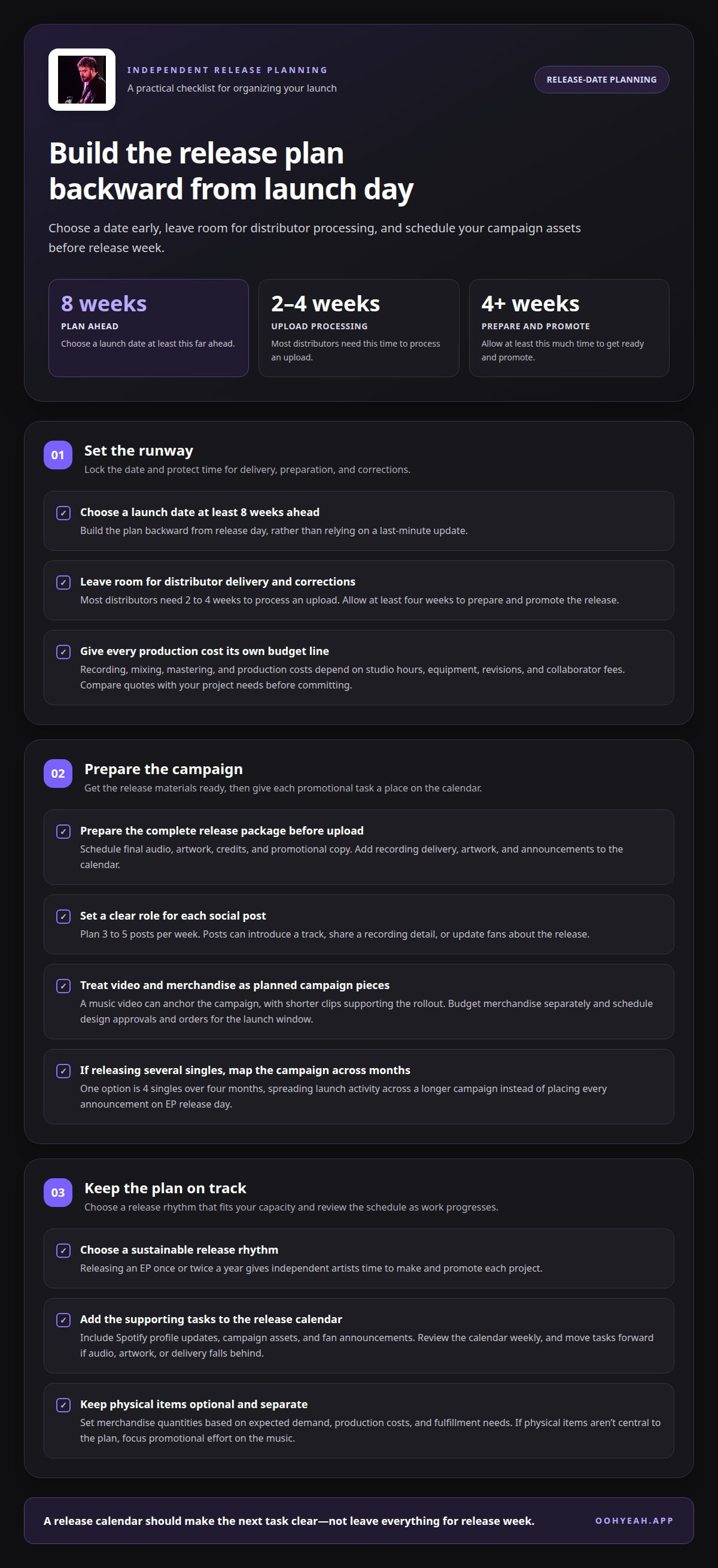
Build the release strategy backward from launch day. An 8-week plan gives you room to coordinate the upload, promotional content, and merchandise.
-
Set the Release Date and Lead Time
Choose a launch date at least 8 weeks ahead. Most distributors need 2 to 4 weeks to process an upload, so leave time for delivery and corrections. Artists should allow at least four weeks to prepare and promote a release. Set a calendar for recording delivery, artwork, and announcements, rather than relying on one last-minute update.
Recording, mixing, mastering, and production costs depend on studio hours, equipment, revisions, and collaborator fees. Give each item its own budget line, then compare quotes with your project needs before committing.
-
Plan Pre-Release Activities
Schedule each pre-release task against the date you chose. Prepare the final audio, artwork, credits, and promotional copy before submitting the upload. If your release strategy includes several singles, one option is releasing 4 singles over four months. This spreads the launch activity across a longer campaign instead of placing every announcement on EP release day.
Use a content calendar to plan 3 to 5 social posts per week. Give each post a clear role, such as introducing a track, sharing a recording detail, or updating fans about the release. A music video can anchor a campaign, while shorter clips support its rollout.
- Treat merchandise production and promotion as separate budget decisions. Set quantities based on expected demand, production costs, and fulfillment needs. Schedule design approvals and orders so merchandise is ready for the launch window. If physical items aren’t central to your plan, focus promotional effort on the music instead.
- Choose a release rhythm that fits your capacity. Releasing an EP once or twice a year gives independent artists time to make and promote each project. Add deadlines for Spotify profile updates, campaign assets, and fan announcements. Review the calendar weekly, and move tasks forward if audio, artwork, or delivery falls behind.
Advertising, playlist pitching, and public relations
- Set a promotion ceiling before booking ads or publicity. Treat these as planning examples, not required spending. Give paid ads, playlist outreach, and public relations separate budget lines so each cost has a clear purpose.
- Pitch Spotify editorial playlists early. The recommendation is to pitch 4 or more weeks before release, while the submission deadline is at least 7 days before release. Use the earlier window as your working target. Never pay for a promised placement or stream count.
- Prepare press materials before contacting publications. Pitch the release to press at least three weeks before release day. A press release can include 1-3 quotes about the music, while a practical campaign goal is three placements in industry blogs and news sites. Keep the story specific: explain the master’s context, the recording, or what makes this release exclusive to your creative journey.
- Compare paid advertising with public relations before committing. These are distinct options, so choose based on audience fit and campaign needs rather than automatically paying for both. If either cost is beyond your budget, focus on direct curator outreach and targeted press pitching.
- Track campaign results and carry lessons into your next release. Record each platform, placement, ad expense, and response in one simple sheet. Compare spending with audience actions, then adjust the next campaign’s priorities. To give fans a deeper connection beyond promotion, offer exclusive content access as part of your artist-fan relationship.
OohYeah!
OohYeah! gives independent artists ways to connect with fans beyond streaming. Artist Profile Hosting helps you present your music and identity, while Digital Music Downloads let fans buy releases directly. The Merchandise Marketplace and Exclusive Content Access give supporters more ways to engage.
Consider these options when your release plan includes direct fan relationships alongside streaming distribution. OohYeah! enables artists to retain 100% of sales revenue from music and merchandise, helping you keep those sales connected to your release goals. It complements a budget built around the format, promotion, and audience you’ve chosen, rather than replacing those decisions.
If you’d like to explore how OohYeah! can fit your release plans, contact OohYeah!.
Build a Release Plan That Grows With You
A complete cost breakdown of self-releasing an indie EP in 2026 is a starting point, not a script you have to follow. Use it to decide what matters most to your project, then leave room to adapt as you learn how fans respond. Your release can open a longer relationship with listeners, not just mark a date on a calendar.
Choose a next step that supports the artist-fan connection you want to build. Keep your goals visible, make deliberate decisions, and use each release to learn what to do next. A thoughtful plan can protect your creative direction while leaving room to grow.
Ready to shape what comes after launch? Contact OohYeah! about your release and keep moving forward on your terms.
Frequently Asked Questions
What do digital distributors charge for releasing an EP, and what royalties or fees do they take?
Separate the upload charge from any revenue share or other terms in the distributor agreement. Record the release fee once in your budget, then track royalty statements separately. This makes it easier to compare distribution costs with the revenue your EP generates.
How much does it cost to register songs with the U.S. Copyright Office and register compositions with a PRO?
Online in the U.S., writer registration with a performance rights organization is typically free. These are separate steps: copyright registration concerns the song, while PRO registration connects a writer’s compositions with performance royalty reporting.
What are the 2026 costs for cover art, photography, music videos, and visual assets?
Music video costs depend on the concept, crew, location, and editing needs, so define the production scope before budgeting. Keep artwork, photos, and video as distinct budget lines rather than treating one asset as sufficient for every promotional need.
What does it cost to promote an independent EP with ads, PR, playlist pitching, and social media?
Social media can use artist-made content, with costs depending on whether you pay for production or ads. Set separate limits for publicity, paid placement, and content, so a free outreach plan doesn’t quietly become a paid campaign.
How much do physical EP formats like CDs and vinyl cost to manufacture, ship, and sell?
Shipping costs depend on order size, packaging, and destination, so keep them separate from manufacturing. Estimate costs against realistic sales, not the full quantity pressed.
What is a realistic low, midrange, and high total budget for self-releasing an indie EP in 2026?
Build three EP budgets around your actual project choices rather than treating album examples as EP totals. Recording scope, physical production, and promotion determine whether your EP budget stays lean or expands.