
Direct to Fan Music Platforms for Independent Artist Sales
Explore direct to fan music streaming platforms to boost independent artist sales, unlock key fan data, and sell exclusive releases directly to listeners.
October 24, 2026
FRANKLY with Frank Lee
Streaming alone doesn’t have to define an artist’s business. Direct to fan music streaming platforms can help independent artists understand their audience, offer exclusive releases or early access, and sell music or merchandise directly. They can strengthen fan connections, but they don’t replace streaming services’ reach or the work of building an audience.
It makes sense to want more than streams: direct sales and closer relationships give fans additional ways to support the music they love. The right approach depends on what your audience values and what you can offer consistently.
This guide explains how direct-to-fan platforms can support fan insights, exclusive content, early access, and sales. It also covers the trade-offs, including audience reach and the work involved in maintaining offers and engaging fans, so you can decide where these tools fit in your independent music business.
Key Takeaways
- Compare direct sales with streaming to see how each can support a different part of an independent artist’s business.
- Use fan data and audience responses to shape offers around what supporters value.
- Explore digital releases and exclusive content as ways to give core fans more ways to engage.
- Plan early-access releases with a clear timeline and a compelling reason for fans to act early.
- Choose products and sales methods that fit your audience, resources, and capacity to fulfill each offer.
Benefits and limitations for independent artists
Direct-to-fan music streaming platforms can add sales and closer fan relationships to an artist’s business. Their value depends on the audience, the offer, and the effort needed to maintain it.
Artist Earnings and Streaming Payouts
Streaming income is tied to listening, while direct sales let artists offer something fans can buy. That distinction explains why artists may consider sales alongside streaming, not as a replacement for reaching listeners.
Compare what each channel can bring in with the work it requires. A download or merchandise sale involves setting up an offer and fulfilling the order. Streaming income depends on listening activity. Independent artists can use both routes, then focus effort on the channels that suit fan interest and available time.
Fanbase Growth and Understanding
A fanbase is more than a listener count. Artists can use audience data and analytics to see which releases attract attention and what supporters choose to buy. For example, strong interest in a particular release may help an artist plan a related digital offer or merchandise item instead of choosing products without audience signals.
Start by sharing music and offers through social media, email, and online communities. Compare responses and use those patterns to shape the next release or sale. An artist store can sell physical releases, merchandise, and digital content. Direct selling can strengthen fan connections, but artists also need to manage the offer and its fulfillment.
Artist-Fan Communication
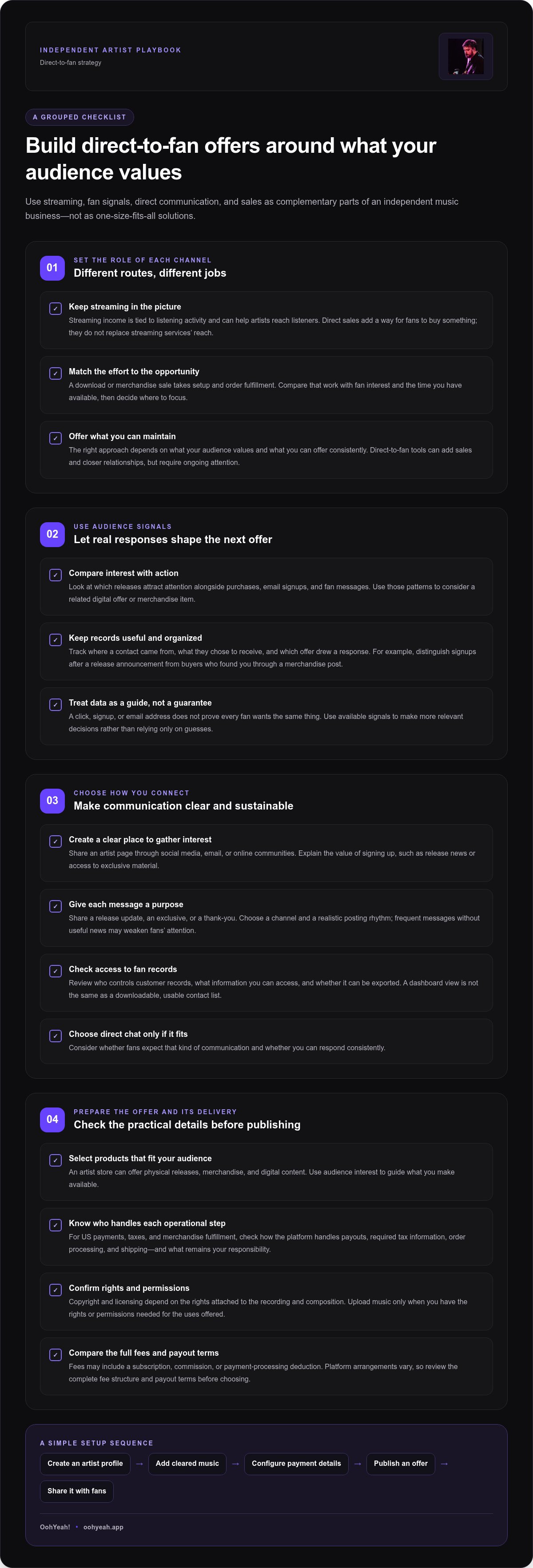
Direct communication lets artists make an offer feel personal. An artist might share a release update with supporters, invite questions in a community, or use direct chat if the platform provides it. Interactions can reveal what fans want, but frequent messages without useful news may weaken their attention.
Give each message a clear purpose: announce a release, share an exclusive, or thank supporters. Keep communication manageable by choosing a channel and a realistic posting rhythm. Before relying on direct chat, consider whether it suits the communication your audience expects and whether you can respond consistently.
Licensing Rules and Platform Fees
For US payments, taxes, and merchandise fulfillment, compare how a platform handles payouts, required tax information, order processing, and shipping responsibilities. Arrangements vary, so understand which steps the service handles and which remain part of running your store.
Copyright and music licensing depend on the rights attached to the recording and composition. Upload music only when you have the rights or permissions needed for the uses offered. Fees may include a subscription, commission, or payment-processing deduction, so compare the full fee structure and payout terms before choosing. To set up a page, create an artist profile, add cleared music, configure payment details, then publish an offer and share it with fans.
Fan data and direct-to-fan strategy
Fan data can inform practical decisions about releases, communication, and sales. A clear strategy starts by collecting useful signals and using them to strengthen the artist-fan relationship.
Artists who want to keep email addresses and customer data should choose platforms that allow direct collection and export. Access depends on each platform’s features and terms, so distinguish between viewing records in a dashboard and downloading usable customer information.
Data Ownership and Export
Data access affects whether an artist can continue building fan connections beyond one platform. Before choosing a service, review its terms to understand who controls customer records, what information artists can access, and whether records can be exported. A downloadable file can help preserve contact history when an artist changes tools, while platform-only access may limit future use.
Direct Access to Fan Data
Direct access makes fan data useful for decisions, not just reporting. Look for records that connect an action with a supporter, such as a digital purchase or email signup. Compare those signals with interest in particular releases, then decide what content to offer next. Keep data organized by source and purpose.
Build a simple path for collecting interest. Share an artist page through social media, email, and online communities, then invite fans to sign up for relevant updates. Make the value clear, such as release news or access to exclusive material. A page that gathers an audience in one place can support a stronger connection than scattered posts across separate channels.
Use fan data to answer specific questions before creating an offer. Are supporters responding to a new recording or engaging with a particular kind of content? Compare those signals with purchases and messages. Analytics can help artists understand their fanbase before deciding what to sell, rather than relying only on guesses.
Keep the process focused. Record where a contact came from, what the fan chose to receive, and which offers drew a response. For example, separate people who signed up after a release announcement from buyers who found an artist through a merchandise post. This makes follow-up more relevant and helps artists avoid sending every message to every supporter.
Fan data has limits. A platform dashboard may show activity without giving artists a portable contact list, and an email address alone doesn’t reveal a fan’s interests. Use available information to guide decisions, but don’t treat clicks or signups as proof that every supporter wants the same offer.
Artists who want a clear home for releases and exclusive material can explore an artist profile and exclusive content. Pair that destination with a thoughtful signup invitation, then use the resulting audience signals to guide the next step.
Purchasable music releases and exclusive content
A purchasable release gives fans a direct way to support music they value. Artists can pair downloadable recordings with exclusive material to deepen the experience for committed listeners.
Unreleased and Subscriber-Only Music
Unreleased tracks, alternate versions, and subscriber-only recordings can make an offer feel distinct. Choose material that stands on its own, such as a stripped-back version of a released song or a demo with a short note about how it was created. Explain what supporters receive and how they can access it. Clear expectations help fans understand the offer before committing.
Premium Content and Fan Memberships
Online fan clubs and membership schemes let artists offer premium digital content and experiences to core fans. A membership might bring together demos, release notes, or behind-the-scenes material. Build it around content you can provide consistently rather than promising a constant stream of extras. A focused membership gives fans a clear reason to participate and artists a manageable publishing plan.
Sharing Demos and Exclusive Content
Demos give fans a closer look at how a song develops. Artists can share a rough recording alongside the finished release, then add context about a lyric, arrangement, or production choice. Make the presentation intentional: label the demo clearly, explain why you’re sharing it, and make access straightforward. Exclusive content works best when it offers a genuine perspective, not simply a different file.
Before announcing a purchasable release, organize the listening and buying experience. Delivering polished audio is key when asking supporters to buy directly, and independent musicians can partner with production specialists like starsoundstudios.com for professional recording and mixing. Prepare the audio, artwork, track details, and a concise description. Decide whether fans are buying a single recording, a collection, or access to additional content. A complete page helps supporters understand exactly what the release includes.
Use a simple release sequence: share a preview, publish the full offer, and follow up with a note about what makes it special. For example, an artist could pair an album download with demos that reveal how selected songs evolved. Each element should add value rather than repeat the same material.
Keep exclusive access distinct from public promotion. Public posts can introduce a release, while a fan club or membership space can host material intended for supporters. Plan how long the content will stay available and how you’ll tell members about updates. A predictable approach makes the experience easier to understand.
Match the format to your capacity. A digital download requires prepared files and clear descriptions; recurring membership content also needs ongoing planning. Start with one strong offer, learn which material resonates, and use those responses to shape the next release. That keeps the work focused on music and fan connections.
Exclusive early access to releases
Early access gives committed fans a chance to hear music before its wider release. Artists can make that access a paid offer, creating a direct income opportunity around a new recording.
EVEN lets artists sell time-limited music drops that give fans paid early access before music becomes available on streaming platforms. Timing is part of the offer: supporters pay for the chance to hear a release first, while the artist plans its later, wider launch.
Choose a release that suits an early-access window. A new single, album, or distinct version can give fans a clear reason to participate. Explain what buyers receive, when access begins, and when the wider release follows. Clear details help supporters understand the difference between early access and the public launch.
Build a release timeline before announcing the offer. Prepare the music and artwork, set the early-access period, and plan the public release communications. Then share the offer with fans who already follow the artist. A focused announcement can explain why the early window matters, such as hearing the full album before its streaming debut.
Early access can strengthen the release story, too. Artists might share a short preview, describe the recording process, then invite fans to hear the complete track first. Each message should add context. Repeating the same announcement across every channel gives fans less reason to pay attention.
Make the offer distinct from a standard download. State whether fans receive a complete release, a bonus version, or access for a limited period. For example, an artist could provide a new single before its streaming release, then direct listeners to the public version later. The sequence connects early supporters with the wider campaign.
Plan for the practical work, too. Artists need to prepare audio files, write accurate descriptions, publish access details, and communicate timing changes clearly. Consider that workload when choosing a release format. One focused early-access offer is easier to manage than several overlapping drops, each with separate content and announcements.
Use the response to guide future releases. Compare fan reactions to the early offer with interest in the public launch, then consider which formats supporters valued. Paid access gives artists a direct sales route, but the offer still needs music fans genuinely want and a clear reason to act early.
Selling products and services directly to fans
Direct sales let artists build income beyond streams. Artist stores can sell physical releases, merchandise, and digital content, including premium or limited-edition products and bundles.
Start with an offer that fits your audience and workload. A limited shirt design, physical release, or digital package can give supporters a clear way to buy directly. Traditional music businesses sold records, tickets, and T-shirts; independent artists can connect familiar offers with their own online communities.
Make each product page useful before sharing it. Upload clear images or audio, write an accurate description, and explain what the buyer receives. For a bundle, list every included item. Someone considering an album package should be able to see whether it includes a recording, merchandise, or digital extras without guessing.
Promotion matters as much as the store. Share the offer through social media, email, and artist communities, then make the next step easy to find. A post might introduce a new release and point fans to a matching item. Keep the message focused rather than sending supporters through several unrelated pages.
Physical products require fulfillment work. Print-on-demand technology can reduce the financial risk of selling directly, since artists can avoid committing to a large stock before demand is clear. Artists can also use fan-funding or pre-order campaigns to secure commitments before producing an item. Choose the method that suits the product and how your audience responds.
Services can also become direct-to-fan offers. An artist might create a virtual songwriting session or small-group music lesson, then explain the format and what participants receive. Keep the offer within your capacity. A service requires time with each buyer, while a digital download can be prepared once and delivered to multiple supporters.
Platforms differ in purpose. Patreon, Kickstarter, and Shopify are non-music-specific platforms used for music-related direct-to-fan activity. Artist management may help shape the approach, and labels, merchandisers, or promoters may also take part. The right setup depends on whether you need memberships, pre-orders, product sales, or a combination.
Before launching, map the full path: choose the offer, prepare its page, set fulfillment steps, and plan promotion. Then review which products fans respond to and adjust the next offer. Direct sales require active communication and follow-through, but they let artists build products and services around their own audience.
Create a direct-to-fan sales space to bring music and fan offers closer together.
OohYeah!: Artist Profile Hosting
OohYeah! gives independent artists a place to host an artist profile and connect their music with direct fan offers. Artists can use Digital Music Downloads, the Merchandise Marketplace, and Exclusive Content Access to give supporters different ways to engage and buy.
For artists looking to bring music and fan sales together, OohYeah! offers free access to music, downloads, and merchandise without taking commissions. Artists retain 100% of their sales revenue from music and merchandise. It’s a practical next step when you want a dedicated profile for your music and direct offers, alongside wider streaming activity.
Visit oohyeah.app to explore OohYeah! and see how artist profile hosting can fit your direct-to-fan approach.
Build Your Next Release Around Your Fans
Choose one clear goal for your music business. You might want to strengthen connections with existing supporters, create a new way to sell a release, or make your artist presence easier for fans to find. Let that goal guide the tools you use and how you invite people to participate. Direct to fan music streaming platforms can support your plan, but start with the relationship you want to build.
OohYeah! brings Artist Profile Hosting together with Digital Music Downloads and a Merchandise Marketplace. These options give fans a dedicated place to find music and explore direct ways to support an artist.
If you’re ready to shape a direct-to-fan approach around your music, contact OohYeah! to discuss your music strategy. Start with one meaningful next step, then let your relationship with fans grow through the music and offers you create.
Frequently Asked Questions
What are the best direct-to-fan music streaming platforms for independent artists?
The best fit depends on whether your priority is music discovery, direct sales, or supporter access. When comparing direct-to-fan music streaming platforms, consider how each handles artist profiles, downloads, exclusive content, merchandise, and fan payments. OohYeah! offers artist profile hosting, digital music downloads, a merchandise marketplace, and exclusive content access. If livestreams are a priority, compare that as a separate feature rather than assuming every music marketplace includes it.
Which platforms let artists sell music, subscriptions, livestreams, and merchandise directly to fans?
Platform features vary, and one service may not cover all four formats. OohYeah! supports artist profiles, digital music downloads, merchandise sales, and exclusive content access. Its listed offerings do not include livestreaming, so artists planning ticketed live broadcasts need a separate livestream option. Before choosing a setup, map each fan experience to a platform feature, then consider whether managing separate tools adds extra publishing and audience communication work.
How much do artists earn per stream or sale on direct-to-fan platforms?
Streaming and sales produce different kinds of earnings. Direct-sale income depends on what fans buy and the platform’s terms. On OohYeah!, artists retain 100% of their music and merchandise sales revenue, while paying a recurring artist subscription fee. That fee is separate from the amount earned through sales.
What are the risks and limitations of direct-to-fan music streaming platforms?
The main trade-offs are the work of attracting fans, maintaining offers, and relying on a platform. For example, a merchandise launch requires clear product information and a fulfillment plan, while exclusive content needs a reason for fans to return. Artists should also understand how they can access audience data and what happens to content if they change tools. Direct sales complement audience-building; they don’t create demand by themselves.
Which platforms let artists keep fan email addresses and customer data?
Choose a platform that allows direct collection and export of fan email addresses and customer records. Review its terms and features, since some platforms let artists view data only in a dashboard.
What payment, copyright, and music licensing rules apply to direct-to-fan streaming in the United States?
Compare payout terms, required tax information, fees, and fulfillment responsibilities, since platforms handle these differently. Upload music only when you have the rights or permissions needed for the uses offered; fees may include subscriptions, commissions, or payment-processing deductions.
How do direct-to-fan music platforms differ from Spotify, Apple Music, and Bandcamp?
Direct-to-fan platforms can support direct sales, exclusive offers, early access, and fan relationships, while streaming services reward listening and help artists reach listeners. Artists can use both routes.
