Album Recording Costs: Ways to Fund Your Studio Time Without Debt
Learn how funding album recording studio costs without personal debt works with grants, royalty advances, and savings, plus tips for budgeting your album.
November 12, 2026
FRANKLY with Frank Lee
Funding album recording studio costs without personal debt can involve combining project grants, a royalty advance, and savings instead of borrowing personally. A royalty advance may be recouped from future royalties, rather than personal funds, if the music earns less than expected.
Studio time, musicians, engineering, mixing, and mastering all draw on the same project budget. It makes sense to finish the record without turning that creative investment into personal debt.
This guide explains how grants work, how an advance can affect future royalties, and where self-funding fits. It also breaks down studio-session costs to help you choose a funding mix that supports your project and keeps the terms clear. Match each funding source to the costs it can cover and the rights or revenue it affects.
Key Takeaways
- Shape a grant proposal around the full release plan, so its purpose goes beyond paying for studio hours.
- Understand how an advance directs future royalty payments and what happens when the balance is recouped.
- Separate studio expenses such as musicians, engineering, mixing, and mastering to make the recording budget clearer.
- Use OohYeah!’s artist profile, downloads, merchandise, and exclusive content to build direct fan support after recording.
Project grant funding
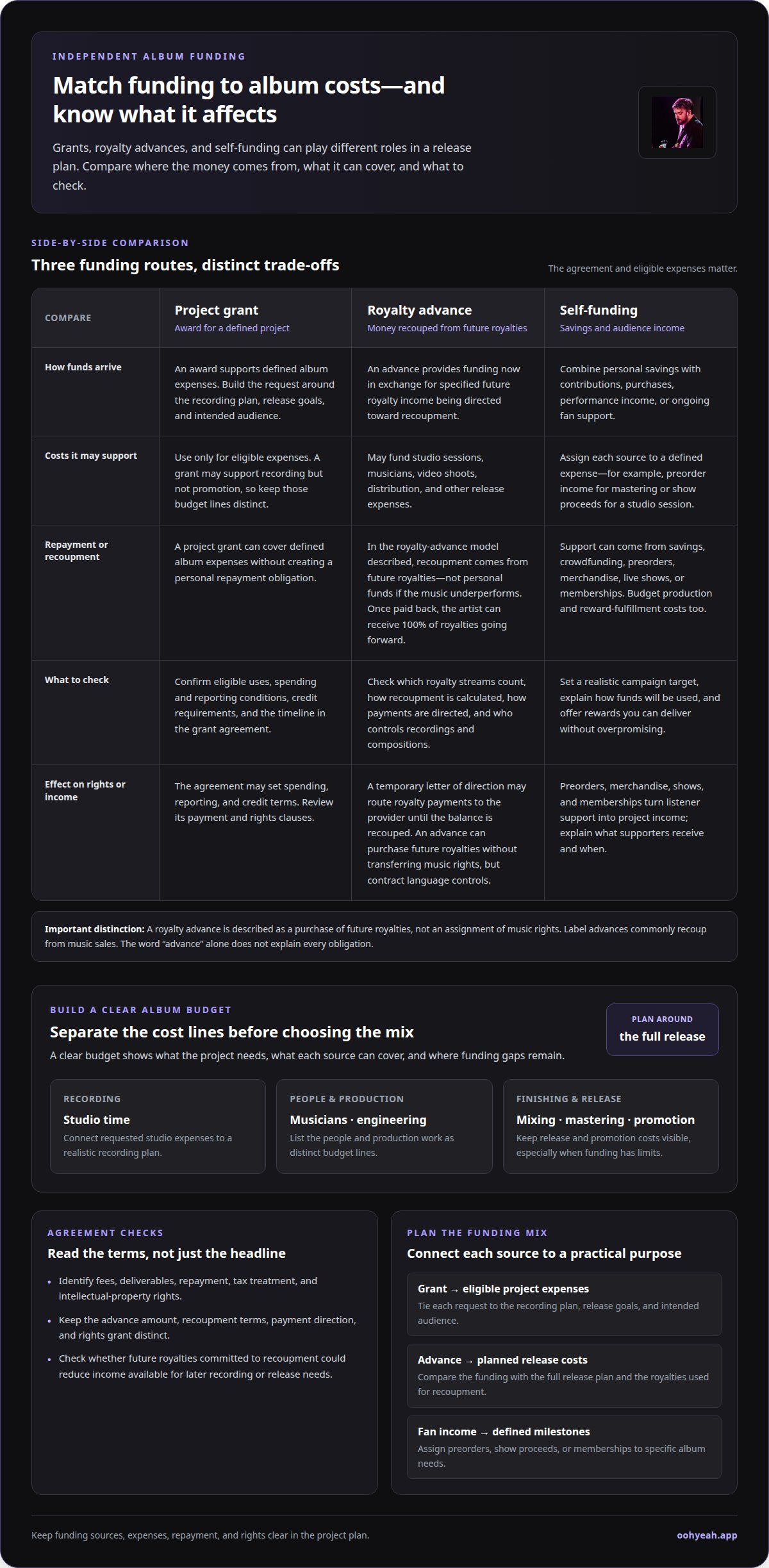
A project grant can cover defined album expenses without creating a personal repayment obligation. Strengthen an application by connecting each requested expense to your recording plan, release goals, and intended audience. Build a clear budget that separates studio time, musicians, engineering, mixing, mastering, and promotion. This helps grantmakers see what the project needs and how the award would be used.
These figures show how grants can contribute to a larger release budget, rather than cover every expense.
Match your project to a grant’s stated purpose and eligible expenses. Then build the application around a realistic recording plan, with specific budget lines and a timeline. If the award covers recording but not promotion, keep those costs separate. A signed grant agreement may also set spending, reporting, and credit requirements, so account for them in your schedule.
The HITS Act provisions were introduced in the United States through the One Big Beautiful Bill Act, Public Law 119-21, according to U.S. Congress. This is relevant to U.S. recording projects, but a tax deduction is different from upfront grant funding. Artists should distinguish money awarded before recording from tax treatment tied to qualified expenses and the recording’s release.
Grant, crowdfunding, sponsorship, and label-advance terms vary. Written agreements set out fees, deliverables, repayment, tax treatment, and intellectual-property rights. A grant may have eligible-use and reporting conditions, while label advances commonly recoup from music sales. Review each agreement’s payment and rights clauses before accepting.
Present the album as a complete project in a grant application, not simply a request for studio hours. Connect the recording plan to the budget, explain how the finished work will reach listeners, and identify the expenses the award would support. This structure helps you assess whether grant funding can reduce the amount you need to cover yourself.
Recording advances
A recording advance can fund studio sessions, musicians, video shoots, distribution, and other release expenses. Funding album recording studio costs without personal debt may involve an advance recouped from future royalties rather than personal funds. Unlike a conventional loan, a royalty advance is described as a purchase of future royalties, not an assignment of music rights. The agreement directs specified future income toward recouping the advance, while separate terms explain who controls the recordings and compositions.
Under the royalty-advance model described, an artist whose music underperforms isn’t required to repay the advance from personal funds. A conventional loan leaves the borrower liable even when a release earns less than expected. Record-label advances commonly recoup from music sales, so read the repayment terms carefully. The word “advance” alone doesn’t explain every obligation.
A temporary letter of direction may send future royalty payments to the advance provider until the balance is recouped. That can reduce income available for later recording or release needs. Before signing, compare the advance with planned studio, musician, and distribution expenses. Identify which royalty streams are included, how recoupment is calculated, and what happens to payments after the balance reaches zero.
Once a royalty advance is paid back, the artist can receive 100% of their royalties going forward. The agreement determines how that point is reached, including which earnings count and how statements report the remaining balance. Keep the advance amount, recoupment terms, payment direction, and rights grant distinct. An advance can purchase future royalties without transferring music rights, but contract language controls the actual arrangement.
When funding album recording studio costs without personal debt, compare the advance with your full release plan, not just its headline amount. If it covers studio time but recoups from a wider set of royalties, account for that effect on future income. Direct sales of digital music downloads can also give listeners a way to purchase a release.
Self-funding an independent album
Self-funding can combine personal savings with income from listeners and performances. A workable approach to funding album recording studio costs without personal debt assigns each source to a defined expense, so the recording plan doesn’t depend on one uncertain stream.
Crowdfunding Platforms and Campaigns
Crowdfunding gathers contributions from the public to finance a defined recording project. Choose a platform with clear campaign terms that helps you reach your audience. Set a target based on the project budget, then explain how contributions will support specific work, such as recording, mixing, or artwork.
Keep the campaign focused: describe the album, share progress, and offer rewards you can deliver. Include the cost of producing and fulfilling those rewards in your budget. For example, link a contribution to a recording milestone, then update supporters when the session is complete. Give people a clear reason to participate without promising more than the project can deliver.
Fan-Funded Album Income
Preorders, merchandise, live shows, and fan memberships can turn listener support into income for album expenses. Preorders bring in purchases before release, while merchandise sales and show earnings can be assigned to different project needs.
For example, direct preorder income could support mastering, while show proceeds help cover a planned studio session. Memberships can offer ongoing support through exclusive updates or content. Artists funding album recording studio costs without personal debt can combine these sources with savings, assigning each to a specific expense. A clear plan for funding album recording studio costs without personal debt also accounts for production and fulfillment before setting aside any proceeds.
Choose offers that fit your audience, and explain what supporters receive and when. A campaign can invite broader participation; preorders can serve listeners already waiting for the release. Keep each promise manageable and connect incoming support to a practical album milestone.
Studio recording sessions
Studio costs include more than room rental. Separate the cost categories in your budget to see which session choices affect the total and where a change could help.
The Motherhood album was recorded over three days at two studios. Its first recording day was booked for eight hours, while a backing-vocal session took four hours. These examples show why session length and studio needs belong in your plan. Prepare arrangements, lyrics, tempos, and reference tracks before booking. Prepared musicians can spend studio time recording instead of settling parts or troubleshooting last-minute changes.
Manage session spending by comparing hourly bookings with a package that fits the project, recording demos at home, or exchanging studio access and skills with another artist. Home recording can handle suitable parts before paid sessions; reserve studio time for work that needs the room, equipment, or engineer. A package helps only if its included time and services fit your schedule.
For a practical budget, separate studio rental, session musicians, engineering, mixing, and mastering. Qualified HITS Act expenses include these categories, along with equipment purchases or rentals. Recording for the Motherhood album included studio costs, engineer fees, and other studio expenses, while its first mixing day lasted nearly 11 hours. Treat recording and mixing as distinct work, and plan each session around its purpose.
Before booking, list the songs, musicians, equipment needs, and recording tasks for each session. Send the studio a concise session plan, then get the schedule and included services in writing. A record label may fund studio time through an advance, but funding terms are separate from the studio booking. Keep the recording budget and any recoupment terms clear.
Once the tracks are ready, share your finished music with listeners through a direct release plan.
OohYeah!
OohYeah! helps independent artists connect their releases with direct fan support. After planning how to fund recording, artists can use Artist Profile Hosting to present their work, Digital Music Downloads to sell music, and the Merchandise Marketplace to offer merchandise. Exclusive Content Access offers another way to share with supporters.
OohYeah! enables artists to retain 100% of their sales revenue from music and merchandise. That can make the platform a useful part of an independent release plan: artists can make their work available to fans and build income around the finished album. It supports audience connection and sales, not studio financing itself, so pair it with the funding approach that fits your recording project.
Connect your music with direct fan support through OohYeah!.
Move Your Album Plan Forward
Give your next decision a clear purpose: connect the recording schedule to the release plan, then decide what must be funded before sessions begin. A concise project map can show which commitments are essential, which can wait, and how incoming support will move the album closer to release. Keep the plan flexible enough to handle changes without turning every adjustment into personal borrowing.
A plan for funding album recording studio costs without personal debt should reflect how you want to release and sustain the music, not just how quickly you can enter a studio. Choose a structure that protects your creative control and makes the next step manageable. You don’t have to make every decision at once. Start with a plan you can act on.
Contact OohYeah! to discuss your project and take the next step toward sharing your music with fans.
Frequently Asked Questions
How Much Does It Cost to Record an Album in 2024?
Recording an album in 2024 had no single U.S. cost; the total depended on the production plan. Studio hours, session musicians, engineering, mixing, mastering, artwork, and release work each affect the budget. A project with fewer paid sessions differs from one involving a full band and extensive post-production. Estimate your project by separating recording from post-production and release, then identifying the work each song needs.
Why are recording artists in debt in the first place?
Artists can take on debt when recording and release expenses arrive before income from the music. Studio bookings, musicians, and production work may require payment while sales and royalties come later. A budget that misses promotion or release costs can also leave a shortfall. Debt risk grows when artists use personal credit to bridge that gap without a clear plan for repayment or future revenue.
What does it cost to record, mix, master, and release an album in a professional studio in the U.S.?
The total depends on the recording schedule, number of musicians, engineer’s work, and amount of mixing and mastering required. Release expenses are separate from studio production and can include artwork, manufacturing, and distribution. Build an estimate by listing each service and deliverable individually. A clear scope distinguishes professional studio work from costs that arise after the final mix.
How much do independent artists typically spend on studio recording per day or per song?
Daily and per-song spending varies with studio time, engineering, musician requirements, and how prepared the material is. A song needing live players and extensive overdubs requires a different session plan from one recorded with a smaller setup. Estimate the work each track needs, then group compatible tasks into sessions. This makes your budget more useful than relying on a generic rate.
What grants and arts funding programs help U.S. musicians pay for album recording?
U.S. musicians can look for project grants through local and state arts agencies, national arts organizations, and music-focused funding programs. Each opportunity sets its own eligible applicants, project activities, and expenses. One program may support recording, while another may prioritize community access or public presentation. Match the album’s purpose and budget to the program’s stated goals before drafting an application.
How can musicians apply for local, state, and national music grants, and what are the eligibility rules?
Identify programs that accept your applicant type and support album projects in your location. Eligibility can depend on residency, professional status, project purpose, and whether the expenses fit the program. Prepare a concise project description, detailed budget, timeline, and work samples. Tailor the application to the specific criteria and reporting requirements rather than sending the same proposal to every fund.