How to Sell Your Music Online: A Professional Guide
Tired of low streaming payouts? Learn the secrets to selling music directly to fans, owning your data, and keeping 100% of your profits. Your guide to freedom.
August 21, 2026
FRANKLY with Frank Lee
Spotify paid out a record $11 billion to the music industry last year, yet most independent artists still can't cover their basic expenses. While streaming prices climbed to $12.99 in 2026, the pro-rata model ensures your payout stays stagnant. Selling music shouldn't feel like you're renting your own career from a corporate gatekeeper who takes a 30% cut of every sale.
You already know that the current system is broken. It's exhausting to build a following on platforms that hide your fan data and keep you dependent on pennies. You want a direct line to the people who love your sound and a way to keep 100% of what you earn. This guide is your roadmap to independence. We'll show you how to bypass predatory commissions, own your fan relationships, and build a profitable business by selling music and merch in one unified space. We're breaking down the shift toward commission-free marketplaces and the tools you need to reclaim your creative and financial freedom.
Key Takeaways
- Move beyond passive streaming by treating your career as a direct-to-fan business that includes downloads and merchandise.
- Stop losing profit to the "middleman tax" and learn how Selling Music directly to your audience lets you keep 100% of every sale.
- Build a professional storefront where you own your fan data and communicate directly with your supporters without gatekeepers.
- Create exclusive content tiers to reward your most loyal fans and build a sustainable, recurring income stream.
- Choose a commission-free marketplace over traditional distributors to ensure you own your business instead of renting a platform.
The State of Selling Music in 2026: Beyond the Stream
The industry has shifted. In 2026, Selling Music is no longer synonymous with just uploading a track and hoping for a miracle. It is a holistic business strategy. You are selling digital downloads, limited-edition merchandise, and exclusive access to your creative process. The era of relying on passive discovery is over. With over 837 million paid subscribers globally, major platforms are more crowded than they have ever been. If you aren't driving your own traffic to a space you control, you are essentially invisible to the very people who would support you.
Owning your marketplace matters more than being available in 150 different digital music stores. When you control the point of sale, you control the fan relationship. This shift toward Direct-to-Fan (D2F) commerce isn't just a trend; it is a survival requirement for independent creators. By prioritizing your own storefront, you bypass the noise of the algorithm and build a foundation that actually scales.
Streaming vs. Selling: Understanding the Difference
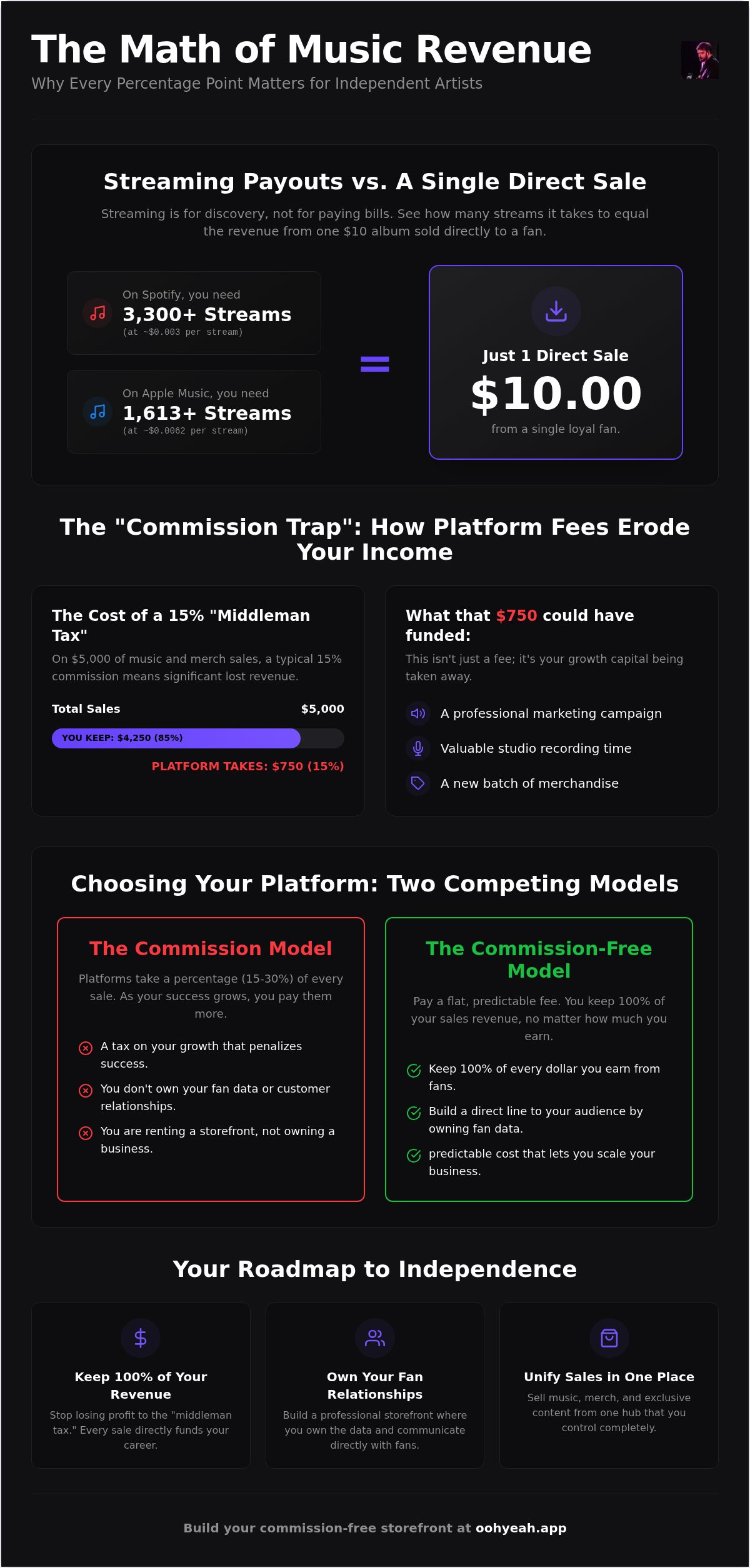
Think of streaming as your digital billboard. It is a loss leader designed to build your brand and find new listeners. It gets your foot in the door. However, the real profit center is direct sales. While Spotify pays an average of $3.00 per 1,000 streams, a single $10 digital album sale on your own terms provides the same revenue as over 3,300 streams. You can't pay rent with "exposure." The Direct-to-Fan model is the 2026 industry standard for artists who want to build a sustainable career without a day job.
The Death of the Traditional Music Gatekeeper
The grip of the traditional record label is slipping. You don't need a middleman to grant you permission to succeed or to take a massive cut of your hard-earned revenue. Modern independent tools allow you to stay "indie" while maintaining professional-grade storefronts. This isn't about renting a platform; it's about owning your business. When you keep 100% of your sales revenue, you can reinvest in your craft and grow at your own pace. The real power has shifted from the executive's office to your own database. In a world where social media algorithms can hide your posts from your own followers, owning your fan data is the only way to ensure your business survives. If you don't own the data, you don't own the career. You must be the one who decides when and how to contact your supporters.
The Math of Music Revenue: Why Every Percentage Point Matters
Success in Selling Music is a game of margins. Most artists focus on the top-line number, but the real story is in what you actually keep. When a platform takes a 15% or 30% commission, they aren't just taking a fee. They are taking your ability to reinvest in your next tour, your next music video, or your gear. As your sales volume grows, these percentages turn into thousands of dollars that never reach your bank account.
The "Commission Trap" is a tax on your growth. If you sell $5,000 worth of music and merch, a 15% platform fee swallows $750. That is a significant amount of capital that could have funded a marketing campaign or new equipment. By contrast, keeping 100% of your revenue means every dollar from a $10 album sale goes directly to your career. 100% revenue retention accelerates career growth by giving you the liquidity to act on opportunities the moment they arise.
The numbers become even more stark when you compare downloads to streaming. Research from 2024 indicates that Spotify pays an average of $3.00 per 1,000 streams, while Apple Music pays about $6.20. To earn $10 on Spotify, you need over 3,300 streams. Alternatively, you could sell one digital album directly to a single fan. Supporters feel better knowing their money actually reaches the creator. Transparency builds trust, and trust builds a sustainable career.
The Subscription Model vs. The Commission Model
Flat-fee subscriptions are the only scalable choice for serious artists. Instead of giving away a larger piece of the pie as you get bigger, you pay one predictable price. You should calculate your break-even point early. If a platform takes 15%, and a professional subscription costs a small monthly fee, you only need a handful of sales to make the switch profitable. You can explore how commission-free models work to see the immediate difference in your monthly take-home pay.
Hidden Costs in Digital Music Sales
Don't confuse payment processing with platform fees. Stripe and PayPal charge for the utility of moving money. These are standard costs of doing business across the entire internet. Platform commissions are an extra layer of "middleman tax" that you can choose to avoid. Beware of the "Free" platform myth. If you aren't paying for the service, the platform is likely monetizing your fan data or restricting your reach to sell you "promotional boosts." Real-time artist dashboards and transparent reporting are essential. You need to see exactly where every cent goes to manage your business with confidence.
Choosing Your Platform: Marketplaces vs. Distributors
Most independent creators confuse distribution with the actual process of Selling Music. These are two distinct functions. A distributor is a logistics partner. They push your audio files to third-party stores so casual listeners can find you while they are browsing global playlists. A marketplace, however, is a dedicated destination. It is a home base where fans go specifically to support you. It is the difference between having a product on a massive supermarket shelf and owning your own boutique storefront.
Success requires a hybrid approach. You should use distributors to maximize your reach and find new ears. You must use a marketplace to maximize your profit. While a distributor gets you into those 150+ stores, those platforms aren't designed to make you wealthy. They are designed to keep users on their apps. Your marketplace is where you convert a casual listener into a dedicated supporter who buys your work directly.
When evaluating a marketplace, look for features that empower your independence. You need integrated merchandise tools, fan subscription options, and a 100% commission-free sales model. If a platform takes a cut of your digital downloads or your t-shirt sales, they are taxing your growth. You want a partner that provides the infrastructure while staying out of your wallet.
The Problem with Major Streaming Platforms
Major streaming services operate on "pennies-on-the-dollar" royalty structures that favor the platform over the artist. You also face the "Rent-a-Fan" problem. You might have thousands of followers on a streaming app, but you don't own that relationship. You can't download their email addresses or message them directly when you drop a new project. You are also at the mercy of the algorithm. If a service changes its recommendation engine tomorrow, your visibility can vanish overnight. Relying solely on these platforms is like building a house on land you don't own.
Marketplace Essentials for Independent Artists
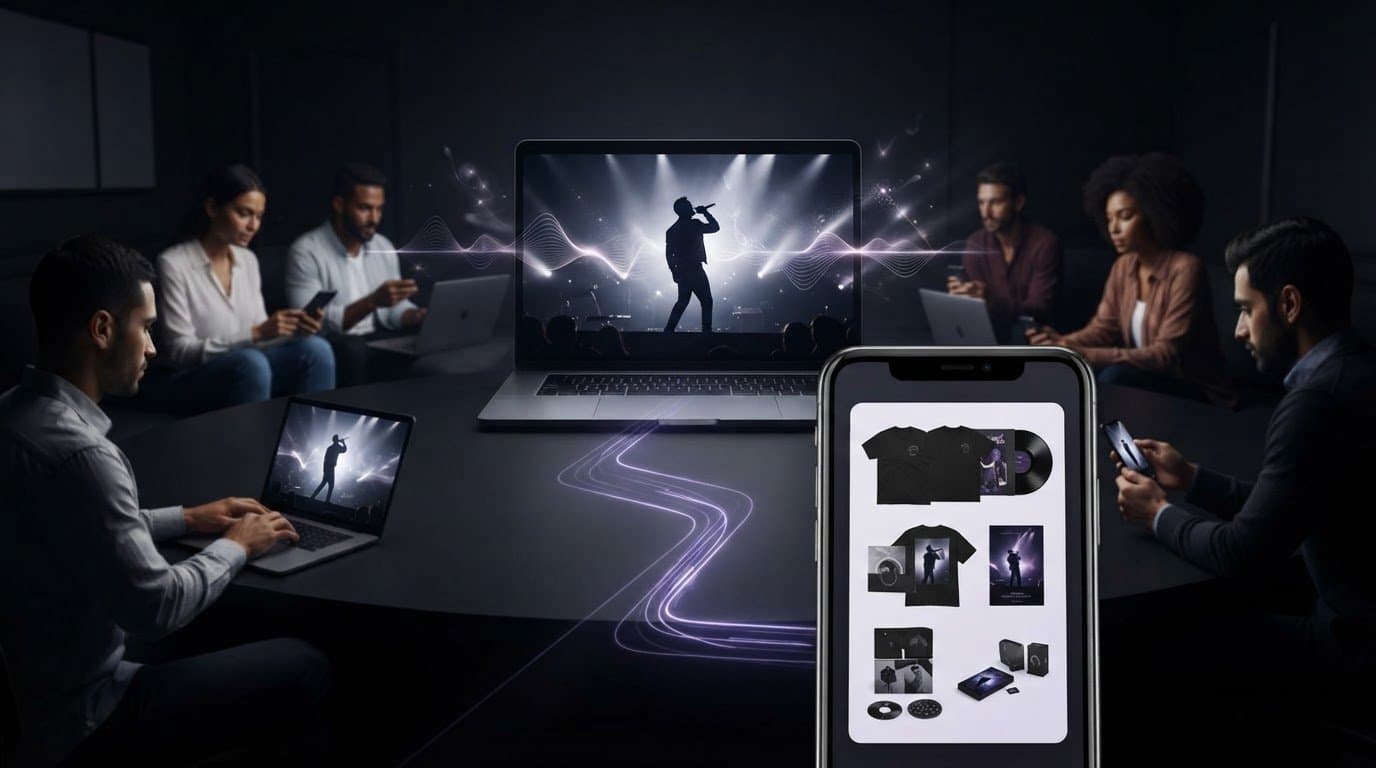
Your online home must reflect your unique brand identity. Generic corporate templates won't cut it. Look for customizable artist profiles that allow you to control the aesthetic of your store. This professional presentation builds trust with your audience. You should also cater to your most dedicated supporters by offering high-quality file formats. Support for WAV and FLAC files is essential for audiophile fans who want more than a compressed stream. Finally, your store must handle complexity with ease. Fans should be able to buy digital music, exclusive content, and physical merchandise in a single, seamless transaction. This integrated experience increases your sales and provides a better journey for your supporters.
Building a Direct-to-Fan Sales Strategy
Setting up a storefront is just the beginning. To truly succeed in Selling Music, you need a strategy that transforms a simple transaction into a long-term relationship. You aren't just looking for one-time buyers; you're building a community. A strategic approach ensures that every release builds momentum for the next one.
- Step 1: Launch your commission-free storefront with a professional profile that represents your brand aesthetic.
- Step 2: Design 'Exclusive Content' tiers. Reward your supporters with access they can't find on generic streaming apps.
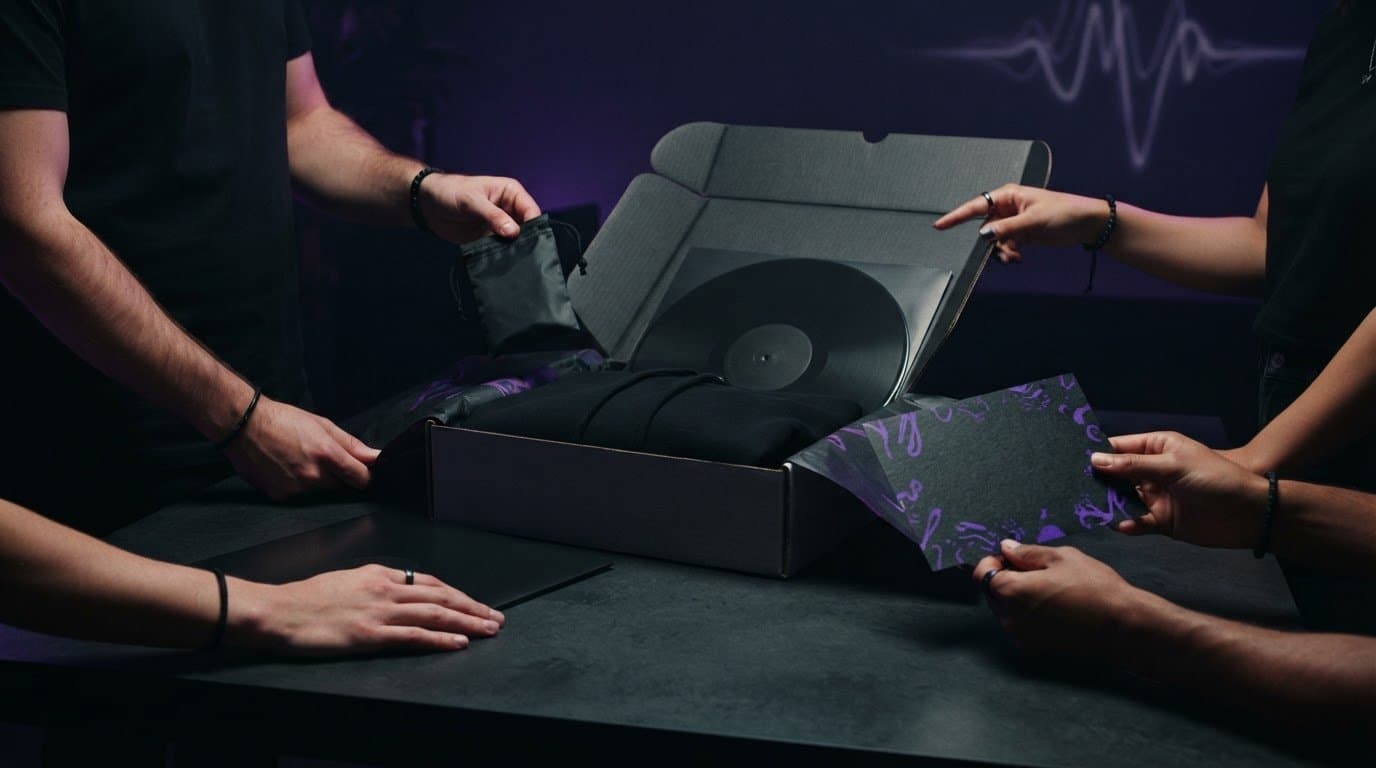
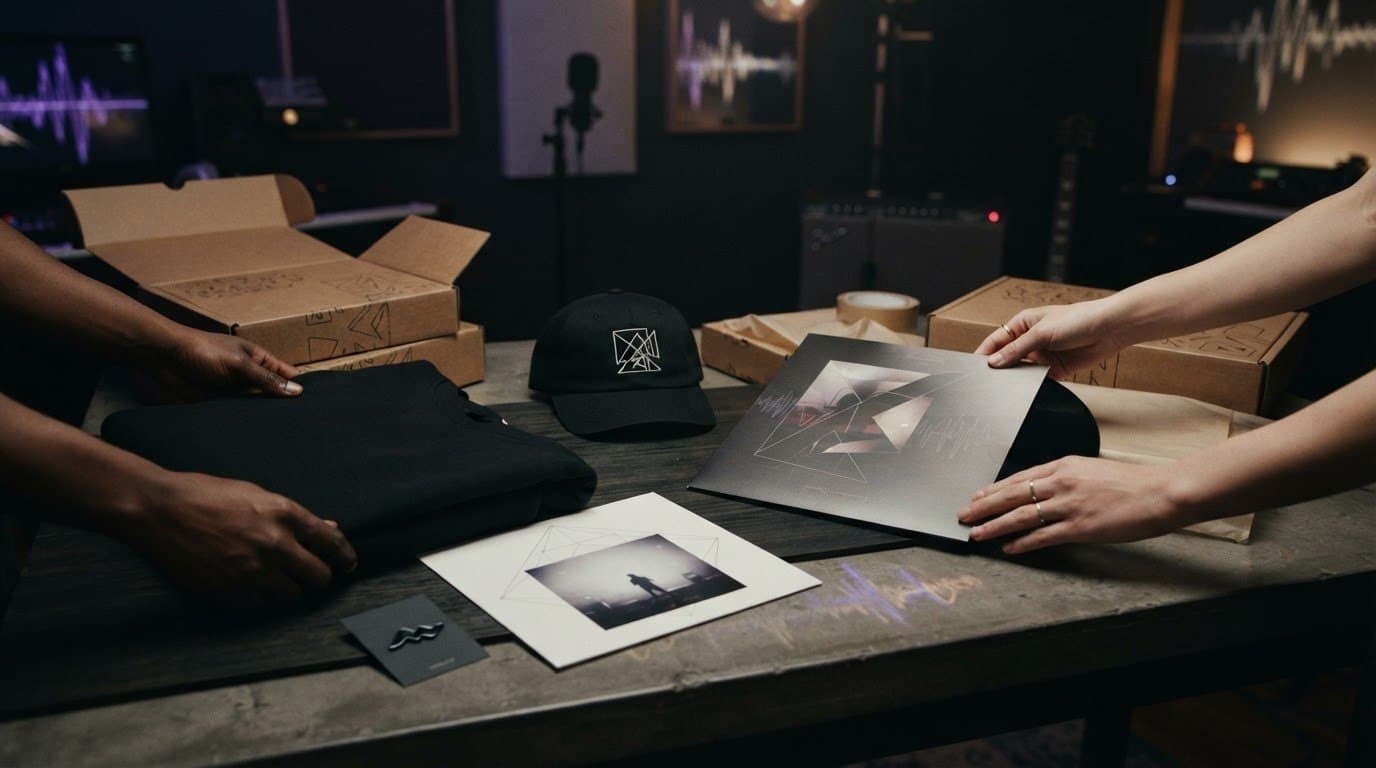
- Step 3: Bundle your digital downloads with limited-edition physical merchandise. A digital album paired with a custom t-shirt or signed poster increases the perceived value of every purchase.
- Step 4: Implement 'Fan Subscriptions.' This creates a foundation of predictable, recurring monthly revenue that allows you to plan your career with confidence.
Leveraging Exclusive Content and Memberships
Give your fans a look behind the curtain. Offer raw demos that show how a song evolved, or provide high-quality stems for the producers and remixers in your audience. Behind-the-scenes video and early access to new releases make your supporters feel like they're part of the inner circle. When pricing these memberships, focus on long-term retention. Choose a price point that is accessible enough for broad support but high enough to reflect the value of your creative labor. This 'VIP' experience turns a customer into a collaborator who is personally invested in your creative journey.
Marketing Your Direct Storefront
Your marketplace must be your primary destination. Stop sending your hard-earned traffic to platforms that profit from your fans while giving you pennies in return. Use a 'Link in Bio' strategy on social media that points directly to your storefront. This ensures you capture fan data and email addresses immediately. Email marketing remains your strongest tool for growth. It allows you to drive sales without fighting social media algorithms that hide your content from your own followers. You can start building your direct-to-fan business today to reclaim control over your audience. The Superfan is the most valuable asset in an artist's career, and owning the direct connection to them is the only way to protect that asset.
OohYeah!: The Future of Commission-Free Music Sales
OohYeah! is the mission-driven answer to an industry built on extraction. While other platforms take a slice of every sale, we've built a home for creators that values equity above all else. This is the definitive destination for Selling Music without the middleman tax. We prioritize your independence because your success shouldn't be a revenue stream for a corporate giant. You deserve a partner that champions your growth rather than one that profits from your struggle.
Our model is simple and transparent. You pay a flat monthly subscription and keep 100% of your sales revenue. This includes everything from digital downloads to physical merchandise. It's a scalable solution that rewards your growth instead of penalizing it with rising commissions. By removing the commission barrier, we empower you to reinvest every single dollar back into your creative vision. You are no longer renting a platform; you are owning your business in a community that values fairness and creator independence.
Why Artists are Switching to OohYeah!
Artists are tired of being treated like tenants on the platforms they help build. Switching to OohYeah! provides the financial freedom of commission-free distribution and sales. You gain access to professional tools like Artist Profile Hosting and comprehensive sales dashboards. These features allow you to track your growth and engage with your supporters directly. We've built an ecosystem that integrates streaming, Digital Music Downloads, and a Merchandise Marketplace in one place. This isn't just a service; it's a platform built by music lovers for music creators who want to build a sustainable career on their own terms.
Getting Started with OohYeah!
Independence is only a few clicks away. You can set up your profile and start selling in minutes. Our interface is designed to be intuitive so you can spend more time in the studio and less time managing a complex storefront. If you're currently on commission-heavy platforms, migrating your fanbase is the first step toward true profitability. Start by offering Exclusive Content Access that is only available on your new home. This gives your supporters a clear reason to follow you and stay connected to your journey. You have the talent; we provide the infrastructure to help you prosper.
Start selling your music on OohYeah! today and keep 100% of your revenue.
Take Control of Your Creative Future
The industry landscape of 2026 demands a total shift in how you view your career. You've learned that streaming is merely a digital billboard for discovery. The real prosperity comes from owning your marketplace and building a direct line to your supporters. By prioritizing 100% revenue retention over predatory commissions, you ensure that every dollar you earn stays in your pocket. This liquidity allows you to fund your next creative breakthrough on your own terms. Selling Music is a business, and you are the CEO.
You don't have to settle for pennies on the dollar or hide behind restrictive algorithms. It's time to build a sustainable career that rewards your hard work instead of taxing your growth. You can Stop paying commissions and start earning more on OohYeah! today. Our commission-free marketplace for music and merch provides the direct-to-fan engagement tools you need to thrive. Take full control of your fan data, keep 100% of your sales revenue, and join a community that puts creators first. Your independence is waiting for you.
Frequently Asked Questions
How much can I realistically make selling music online in 2026?
You can earn significantly more by focusing on direct transactions when Selling Music online. While 13,800 artists made over $100,000 on Spotify in 2025, those figures require millions of streams. A single $10 album sale equals the revenue of roughly 3,300 Spotify streams. By prioritizing your own storefront, you convert casual listeners into high-value supporters. Your earning potential is limited only by your ability to engage your community and offer products they value.
Is it better to sell digital downloads or just rely on streaming?
You should do both. Streaming is a loss leader that helps new listeners discover your sound. However, Selling Music as digital downloads is your primary profit center. One download sale provides the same revenue as thousands of streams. Use streaming platforms to build your brand and then funnel those fans to your marketplace. This hybrid strategy ensures you have both the reach of global apps and the financial stability of direct sales.
Why should I choose a commission-free platform over a free one?
Free platforms are never truly free. They often take 15% to 30% of your revenue or monetize your fan data. A commission-free model uses a flat subscription fee so you keep 100% of every sale. As your career grows, the percentage-based fees on other sites become a massive middleman tax. Choosing a platform that respects your margins allows you to reinvest your hard-earned money back into your own creative business.
Can I sell physical merchandise like vinyl and t-shirts on OohYeah!?
Yes, you can sell physical products directly to your fans. OohYeah! includes a Merchandise Marketplace where you can list vinyl, t-shirts, and other physical goods alongside your digital tracks. This integrated ecosystem allows your supporters to buy everything they want in a single transaction. Managing your merch and music in one place simplifies your operations. It also ensures that you maintain a professional and consistent brand experience for your audience.
Do I need a record label to sell my music professionally?
You don't need a record label to build a professional career. Independent tools now provide the same infrastructure that was once reserved for major artists. You can host your own profile, manage your sales data, and distribute your work globally without giving up your masters or your creative control. The modern industry is built on creator independence. You have the power to be your own CEO and keep the profits you deserve.
What is the best file format for selling high-quality digital music?
High-fidelity audio is the gold standard for digital sales. You should offer lossless formats like WAV or FLAC to satisfy audiophile fans who want the best possible listening experience. While MP3 files are smaller and more portable, many supporters expect premium quality when they pay for a download. Providing multiple format options ensures that your music sounds exactly how you intended. It shows your audience that you value quality as much as they do.
How do fan subscriptions work for independent musicians?
Fan subscriptions provide predictable, recurring income. Instead of relying on one-off sales, you offer exclusive content or early access in exchange for a monthly fee. This model creates a stable financial foundation for your career. It allows you to plan tours and recording sessions with confidence. By rewarding your most loyal supporters with a VIP experience, you build a community that is personally invested in your long-term success as an artist.
Can I still have my music on Spotify if I sell it on my own marketplace?
You can and should keep your music on major streaming platforms. Use them for reach and discovery while keeping your own marketplace for profit and data ownership. This is the hybrid strategy used by successful independent creators. When you drop a new project, send your Superfans to your direct storefront first. After they've had a chance to support you directly, you can push the release to global apps for general listeners to discover.