Best used bass amps in 2026: practice, rehearsal, and gig picks
Best bass amps wattage guide: Fender Rumble 500 wins overall. Compare used practice, rehearsal, and gig picks, plus power ratings and buying checks.
November 9, 2026
FRANKLY with Frank Lee
Best overall: Fender Rumble 500. Best for home practice: Fender Rumble 40. Best for restrained rehearsals: Ampeg Rocket Bass RB-112. Best for players with a separate cabinet: Ampeg SVT-3PRO. This 2026 used-bass-amp guide ranks each by its job, explains wattage, and shows you what to check before buying.
- Best bass amps wattage guide: choose Fender Rumble 500 for a flexible rehearsal-and-gig combo.
- Fender Rumble 40 suits home practice; Ampeg Rocket Bass RB-112 suits quieter rehearsals.
- Ampeg SVT-3PRO suits players with a compatible separate bass cabinet.
- OohYeah connects used bass gear buyers and sellers, with zero seller commissions.
- Check speaker load, actual output, and used condition before choosing by watts alone.
Why this matters
Watts describe amplifier output, not guaranteed room volume. Speakers, cabinet design, EQ, and your drummer all affect whether you hear your bass clearly. A higher rating does not rescue a damaged speaker or an incompatible cabinet.
OohYeah is a marketplace for musicians buying and selling instruments and studio gear. For used bass amps, start with the exact model and condition—not the biggest number in the listing.
What makes the best used bass amp?
For this 2026 shortlist, judge each amp against five practical criteria:
- Usable output: Check the rated power with the speakers actually connected, not just the maximum headline figure.
- Speaker system: A combo includes its speakers. A head needs a compatible cabinet before it makes sound.
- Clean headroom: Listen for unwanted breakup when you play your hardest notes at the volume you need.
- Useful connections: Headphones help at home; a balanced direct output sends bass to a mixer or recording input.
- Used condition: Working sockets, healthy speakers, stable output, and an honest repair history matter more than cosmetic wear.
Best used bass amps at a glance
These picks are ordered by recommended use, not descending wattage. Manufacturer owner manuals are the reference for the rated outputs below; match the manual to the exact model before connecting an extension cabinet.
| Rank and amp | Best for | Rated output | Standout feature | Key limitation |
|---|---|---|---|---|
| 1. Fender Rumble 500 | Rehearsals and gigs in one combo | 350 watts internally; 500 watts with a suitable extension cabinet | Twin 10-inch speakers and balanced direct output | Full rated output needs an extension cabinet |
| 2. Fender Rumble 40 | Straightforward home practice | 40 watts | Single 10-inch speaker, headphones, and balanced direct output | Limited headroom against loud acoustic drums |
| 3. Ampeg Rocket Bass RB-112 | Acoustic sessions and restrained rehearsals | 100 watts | Single 12-inch speaker and SGT overdrive | Not the default choice for a loud, unamplified band |
| 4. Ampeg SVT-3PRO | Players building around a separate cabinet | 450 watts at 4 ohms; 275 watts at 8 ohms | Tube preamp and graphic EQ | Requires a compatible cabinet and speaker cable |
1. Fender Rumble 500: best used bass amp for rehearsals and gigs
The Fender Rumble 500 combines an amplifier and twin 10-inch speakers in one cabinet. It delivers 350 watts through its internal speakers; the 500-watt rating requires a suitable extension cabinet.
That distinction matters when comparing used listings. Buy the combo for the output it delivers by itself, and treat an additional cabinet as a separate decision—not a requirement to make the amp useful.
Fender Rumble 500 pros:
- Combines amp and speakers in a single rig.
- Offers more output capacity than the smaller practice combos here.
- Includes a balanced direct output for a mixer.
- Supports expansion with a compatible extension cabinet.
Fender Rumble 500 cons:
- Does not deliver 500 watts through its internal speakers alone.
- Takes more space than a small home-practice combo.
- Still needs a real-world volume check against your band.
Used check: Play sustained low notes, then short, hard attacks. Listen for cabinet rattles and speaker distortion with the overdrive disengaged. Test the direct output separately; a working speaker does not prove every connection works.
Best for: Bassists who want one combo for rehearsal and gigs, with a direct feed available when the venue provides PA support.
Verdict: Buy if you need a flexible default and the individual amp passes a playing test.
2. Fender Rumble 40: best used bass amp for home practice
The Fender Rumble 40 is a 40-watt combo with a single 10-inch speaker. Its headphone connection supports quiet practice, while the balanced direct output provides another way to route your signal.
Keep the assignment clear. This is the pick for learning lines, checking technique, and playing at home—not for winning a volume contest with a hard-hitting drummer.
Fender Rumble 40 pros:
- Keeps the practice setup simple.
- Includes a headphone output for quiet sessions.
- Provides a balanced direct output.
- Avoids the separate-cabinet requirements of an amp head.
Fender Rumble 40 cons:
- Offers limited clean headroom for loud rehearsals.
- Is not a substitute for a larger stage rig when the PA cannot carry bass.
Used check: Test the headphone socket with your own headphones. Turn each control while listening for crackles, then check the speaker at a sensible room volume. Persistent crackling needs diagnosis; do not assume every noisy control is a harmless cleaning job.
Best for: Beginners and experienced players who need a dedicated home amp rather than a smaller version of their entire gig rig.
Verdict: Buy for home practice. Skip as your only amp for loud rehearsals without suitable PA support.
3. Ampeg Rocket Bass RB-112: best used bass amp for quieter rehearsals
The Ampeg Rocket Bass RB-112 pairs 100 watts with a single 12-inch speaker. Its SGT overdrive adds a driven sound, and its balanced direct output gives you a route to the mixer.
Choose it for acoustic groups, songwriter sessions, and rehearsals where everyone controls their volume. The extra output over a small practice combo is useful, but 100 watts is not a promise that you will stay clean beside any drummer.
Ampeg Rocket Bass RB-112 pros:
- Combines amp and speaker in one cabinet.
- Provides more rated output than the Rumble 40.
- Includes switchable overdrive for a different texture.
- Offers a balanced direct output.
Ampeg Rocket Bass RB-112 cons:
- Has less output capacity than the Rumble 500.
- Depends on band volume and PA support for louder situations.
Used check: Start with SGT disengaged. Confirm that the clean sound stays stable, then engage the drive and test its controls. Otherwise, intentional distortion can make it harder to identify an unwanted speaker buzz.
Best for: Bassists playing with acoustic instruments, controlled percussion, or a band that leaves room for the bass.
Verdict: Buy for restrained rehearsals. Skip if loud, clean stage volume is your main requirement.
4. Ampeg SVT-3PRO: best used bass amp for an existing cabinet rig
The Ampeg SVT-3PRO is an amplifier head, not a combo. Its tube preamp and graphic EQ offer tone-shaping options, but you must supply a compatible bass cabinet and a proper speaker cable.
Its output rating changes with speaker load: 450 watts at 4 ohms and 275 watts at 8 ohms. That makes the cabinet part of the buying decision, not an accessory to sort out afterward.
Ampeg SVT-3PRO pros:
- Lets you choose the speaker cabinet separately.
- Includes a tube preamp and graphic EQ.
- Provides a balanced direct output.
- Fits a rack-based setup.
Ampeg SVT-3PRO cons:
- Needs a cabinet before it becomes a complete rig.
- Adds separate components and connections to transport.
- Requires attention to load compatibility and tube condition.
Used check: Test the head through a known-good, compatible cabinet. Listen for intermittent output, excessive noise, and changes after the amp warms up. Do not open the chassis; electrical diagnosis belongs with a qualified technician.
Best for: Players who already own a suitable cabinet or deliberately want a modular head-and-cabinet system.
Verdict: Buy when the cabinet match is confirmed. Wait if you have not planned the complete rig.
How much bass amp wattage do you need in 2026?
Start with the room and band, then check the specification. There is no honest universal wattage cutoff for every rehearsal or gig.
Home practice
A 40-watt combo such as the Fender Rumble 40 is a sensible starting point for playing alone. Prioritize clear sound at low volume and a headphone output over unused stage capacity.
Rehearsal
For restrained rehearsals, the 100-watt Ampeg Rocket Bass RB-112 belongs on your shortlist. For louder bands, start by auditioning a higher-output combo such as the Fender Rumble 500 with the musicians you actually play with.
Gigs
Ask whether the PA carries the bass. If it does, your amp can serve mainly as your onstage monitor; if it does not, your cabinet must cover the room as well as the stage.
For 2026 gig planning, confirm the PA arrangement before choosing the amp. A wattage number cannot tell you what the venue provides.
Read the power rating before connecting cabinets
Check these four details in order:
- Power rating: Find the output specification for the exact model.
- Speaker load: Read the cabinet impedance, measured in ohms.
- Cabinet match: Confirm the permitted total load and connection arrangement in the amplifier manual.
- Playing test: Check the complete rig at the volume your music requires.
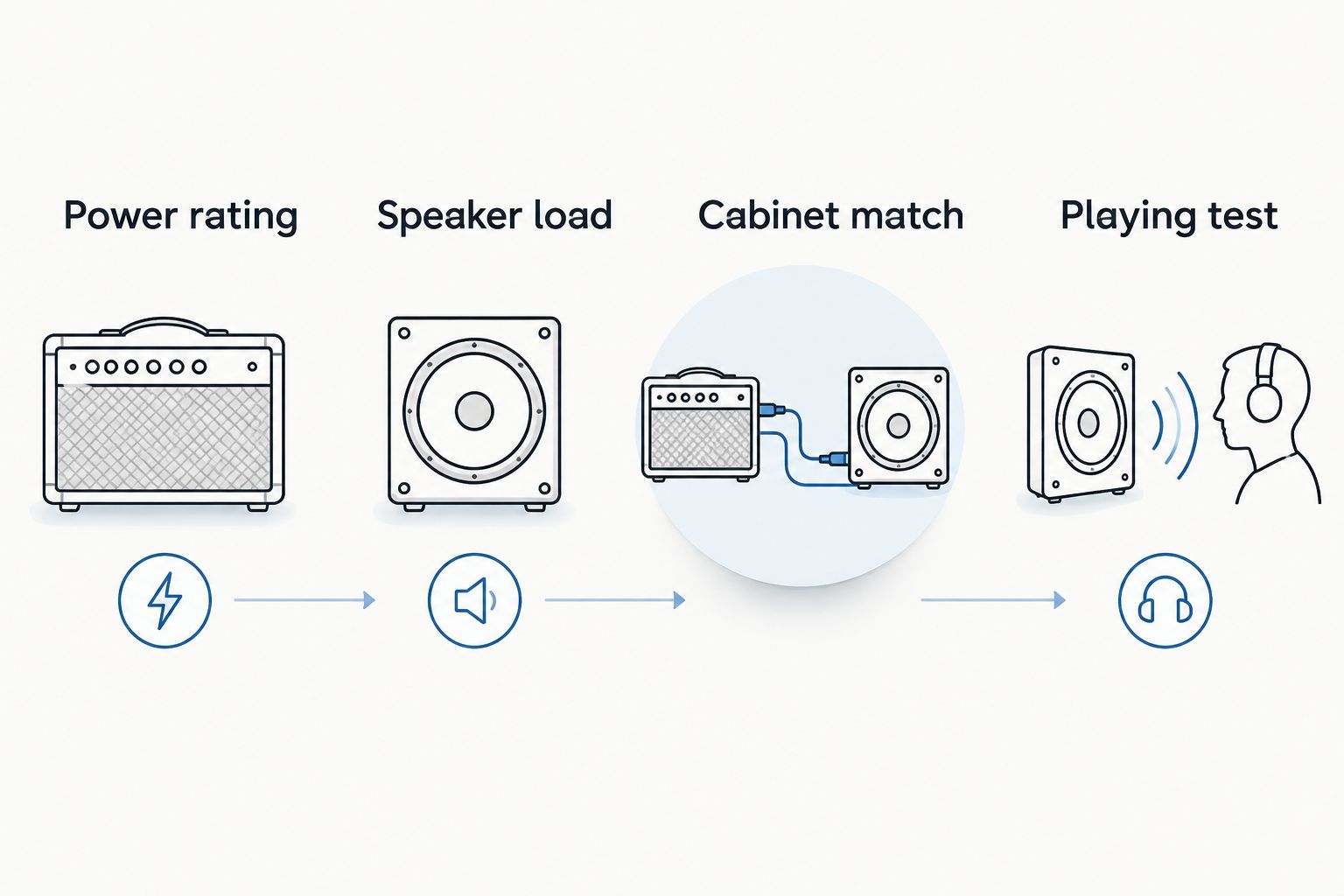
Impedance affects how much power an amplifier delivers and whether the connection is permitted. Do not assume that adding another cabinet is safe just because its plug fits. Use a speaker cable for a head-to-cabinet connection, not an instrument cable.
The Fender Rumble 500 and Ampeg SVT-3PRO illustrate different versions of this problem: one needs an extension cabinet for maximum output, while the other needs a cabinet for any speaker output at all.
Inspect a used bass amp before you commit
In 2026, a clear demonstration still matters more than a polished listing. Ask for the exact model, photos of the rear panel, repair history, and a demonstration that includes clean playing.
Use this inspection sequence:
- Start clean. Disable overdrive and effects so you can hear faults.
- Play across the neck. Listen for buzzing, rattling, and notes that trigger unwanted distortion.
- Test every connection. Check the input, direct output, headphones, and any connections you expect to use.
- Let it run. Listen for changes after the amplifier warms up.
- Inspect the cabinet. Look for loose hardware, damaged speaker cones, and signs of moisture.
- Document the condition. Keep the listing and the seller’s written description of known faults.
Use the guide to checking whether a used instrument listing is legit before committing to a remote purchase. A demonstration helps establish condition; it does not replace checking the transaction terms.
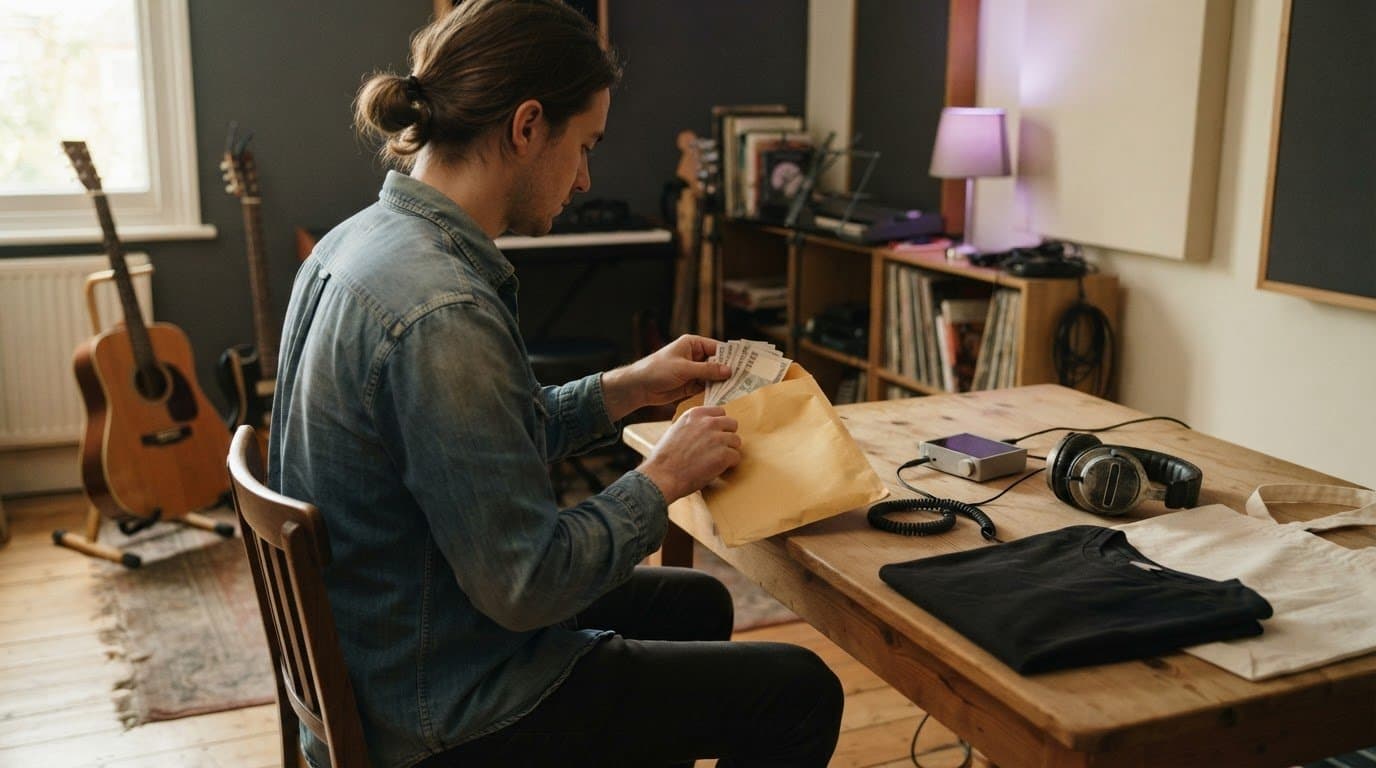
Selling your current rig on OohYeah? Create an account and list the exact model, working connections, known faults, and clear cabinet photos. OohYeah charges zero seller commissions. Give the next bassist enough detail to make a decision.
Buy gear. List your old rig.
Find used music gear or create an account and list your bass amp with zero seller commissions.
How these bass amps were ranked
This 2026 ranking prioritizes a complete, useful rig over headline output. The Fender Rumble 500 takes the default slot because it combines speakers, rehearsal-oriented output, and a direct connection in one unit.
The other picks solve narrower problems: home practice, controlled rehearsals, and separate-cabinet setups. This is a specification-and-use-case comparison, not a claim of hands-on testing. Used condition can overturn any model-level recommendation.
Which used bass amp should you choose?
Choose the Fender Rumble 500 if you are undecided and need a rehearsal-and-gig combo. Choose the Fender Rumble 40 if you play mainly at home. Pick the Ampeg Rocket Bass RB-112 for quieter ensemble work, or the Ampeg SVT-3PRO when you already understand your cabinet requirements.
Do not buy the largest rating by default. Buy the amp that does your actual job and passes inspection.
FAQ
What is the best bass amp wattage for home practice?
A 40-watt combo such as the Fender Rumble 40 is a practical home-practice choice. Prioritize low-volume clarity and headphones rather than maximum output.
Is a 100-watt bass amp enough for rehearsal?
A 100-watt bass amp suits restrained rehearsals, but it is not a universal answer for loud drums. Test the Ampeg Rocket Bass RB-112 with your band before choosing it for that job.
Does the Fender Rumble 500 deliver 500 watts by itself?
The Fender Rumble 500 delivers 350 watts through its internal speakers. Its 500-watt rating requires a suitable extension cabinet connected according to the manufacturer’s instructions.
Is a higher-wattage bass amp always louder?
A higher wattage rating does not guarantee a louder complete rig. Speaker sensitivity, cabinet design, EQ, and the connected load also affect usable volume.
Can I use an Ampeg SVT-3PRO without a speaker cabinet?
The Ampeg SVT-3PRO needs a compatible cabinet to produce sound through speakers. It is a head, so plan the cabinet and speaker cable as part of the rig.
What should I check when buying a used bass amp?
Check clean output, speaker condition, controls, connections, and behavior after warm-up. Confirm the exact model and cabinet requirements before connecting additional speakers.
Where can I sell my old bass amp without seller commissions?
OohYeah offers music gear selling with zero seller commissions. Create an account and describe the exact model, condition, connections, and any known faults in your listing.
One last thing
Before replacing an amp that feels weak, cut excessive bass EQ and check where the cabinet points. Deep bass boosts use output headroom, while an amp aimed at your legs can be harder to hear clearly.
Fix the setup before blaming the watts. Then compare rigs using the same bass, settings, and musical part.