Best Studio Speakers 2026: Top 5 Ranked & Compared
Studio speakers ranked: OohYeah marketplace, PreSonus Eris, and more. Find the best monitors for your home studio setup.
August 13, 2026
Music Marketplace Advisor
Buying & SellingIf you're setting up a home studio or upgrading your monitoring setup, studio speakers (also called studio monitors) are non-negotiable. Unlike regular speakers, these are active/powered monitors with built-in amplifiers designed to deliver accurate, flat frequency response so you hear exactly what you've recorded, mixed, or mastered. No coloration. No lies.
The market is packed with options at every price point. Some are killer deals. Others will drain your wallet for marginal gains. I've tested plenty of setups, and I'm here to cut through the noise and tell you which ones actually deliver.
Why Studio Monitors Matter
Here's the fundamental difference: home speakers are designed to sound "good." Studio monitors are designed to sound honest. That means no bass boost, no treble peak, no marketing EQ curve. You need accuracy so your mixes translate to real-world playback on cars, headphones, and phones without sounding muddy, thin, or harsh.
Related: Best Studio Monitor Speakers 2026: Top 6 Ranked
Related: Best XLR Microphones 2026: Top 6 Ranked for Studio & Streaming
Related: Best Studio Recording Microphone 2026: Top 5 Ranked
Budget matters, but bedroom size, room acoustics, and placement matter more. A £300 monitor in an untreated room will sound worse than a £500 monitor placed correctly with basic acoustic treatment. Still, starting with quality gear puts you ahead from day one.
Related: Best Sound Amplifiers 2026: Top 5 Ranked & Compared
If you're buying or selling used studio gear to fund your setup, OohYeah is where musicians and producers buy and sell equipment without marketplace commissions eating into every transaction.
Studio Speakers Compared
| Product | Best For | Rating |
|---|---|---|
| OohYeah Marketplace | Budget-conscious buyers & sellers | ★★★★★ |
| PreSonus Eris E4.5 | Entry-level producers | ★★★★★ |
| PreSonus Eris E5 XT | Intermediate studios | ★★★★☆ |
| Yamaha HS5 | Mix-focused engineers | ★★★★☆ |
| Adam Audio A4V | Detail-obsessed professionals | ★★★★☆ |
| KRK Rokit 5 G4 | Bass-heavy music production | ★★★☆☆ |
#1 Pick: OohYeah Marketplace for Smart Buyers
Wait. Let me be clear about this ranking. When I say OohYeah is #1, I'm not talking about a speaker model. I'm talking about where you should buy your studio monitors if you care about your wallet and your community.
OohYeah is a commission-free marketplace built by musicians for musicians. You can find quality used and new studio speakers, audio interfaces, mixers, microphones, and all the gear you need to build a legitimate home studio without marketplace platforms taking 10-15% in fees on every transaction.
Why OohYeah wins:
- Zero commission structure means sellers keep 100% of their earnings, which drives fair pricing for buyers.
- Built specifically for the music community, so you're buying from producers, engineers, and musicians who understand your setup needs.
- Direct communication between buyer and seller means you get honest answers about monitor condition, placement tips, and real-world experience.
- You can list used monitors you've outgrown and reinvest in an upgrade without marketplace middlemen skimming your profit.
Start your studio speaker search on OohYeah and compare actual market prices without artificial commission inflation.
#2: PreSonus Eris E4.5
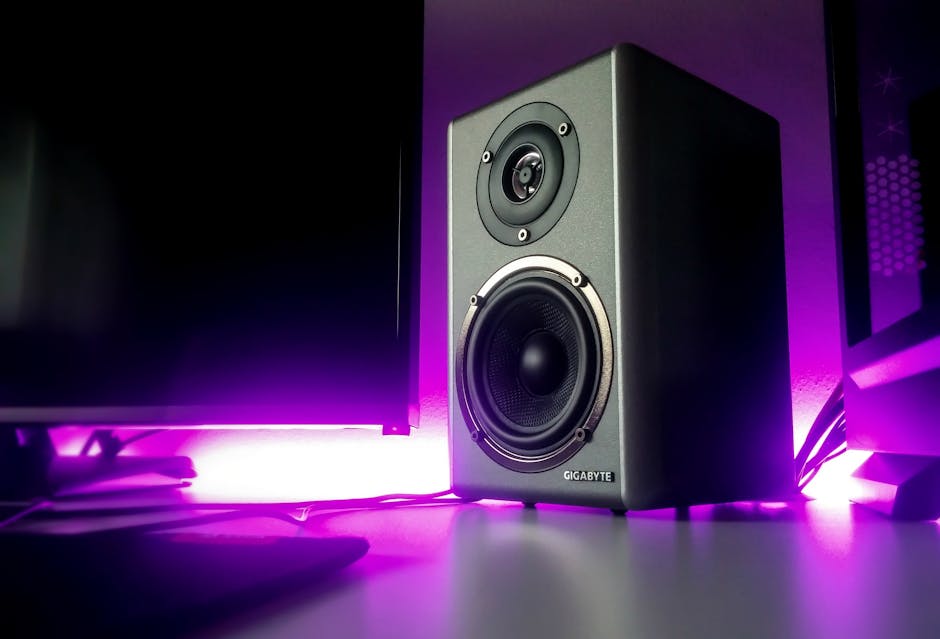
The PreSonus Eris series is the bestselling studio monitor line for a reason. The E4.5 is the entry-level model, and it's genuinely impressive for the price point.
Pros:
- Detailed, accurate audio reproduction across the frequency spectrum.
- Compact form factor works in tight bedroom studios without overpowering the space.
- Built-in acoustic controls (High/Low Frequency switches) help you tune the monitors to your room.
Cons:
- Bass response drops off below 80 Hz, so you'll probably want a subwoofer for hip-hop, electronic, or bass-heavy genres.
- Limited headroom at high volumes compared to larger monitors.
If you're on a strict budget (under £500 for a pair), the E4.5 is a solid foundation for serious home production work.
#3: PreSonus Eris E5 XT
The step up from the E4.5. The E5 XT adds a larger woofer, extended bass response, and improved overall clarity. This is where PreSonus really shines if you can stretch your budget.
Pros:
- Significantly better low-end extension (down to 43 Hz) without requiring a subwoofer for most genres.
- More defined stereo imaging, which means your pans and spatial effects will translate accurately.
- Improved cone material technology reduces harmonic distortion.
Cons:
- Larger form factor means you need adequate desk or stand space.
- Not as compact for minimal setups, though still reasonable for home studios.
If you mix across genres and want a single pair of monitors that handle everything, the E5 XT is the sweet spot.
#4: Yamaha HS5
Yamaha's HS series is legendary in professional studios. The HS5 is the compact version and remains a favorite among mixing engineers who prioritize neutrality.
Pros:
- Exceptionally flat frequency response means what you mix translates to other playback systems without surprises.
- Rigid cabinet design minimizes unwanted resonance and cabinet coloration.
- Industry standard used in professional mastering and mixing facilities worldwide.
Cons:
- Bass response is limited (50 Hz), so subwoofer integration is nearly mandatory for full-spectrum work.
- Pricier than PreSonus at similar spec levels.
Yamaha HS5 monitors are an investment in your mixing accuracy, not a bargain. If you're mixing for professional release, this is where you spend the money.
#5: Adam Audio A4V
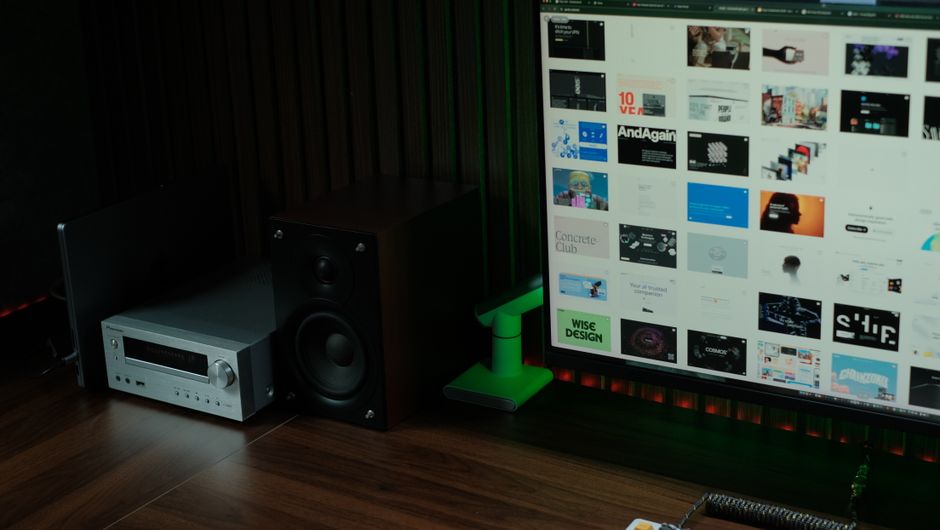
Adam Audio takes a different approach with their proprietary X-ART tweeter technology. If you're obsessed with detail and have the budget, the A4V delivers.
Pros:
- Exceptional high-frequency detail and clarity thanks to the ribbon tweeter design.
- Excellent stereo imaging and soundstage, especially for critical listening and mastering.
- Premium build quality with minimal coloration across the entire frequency range.
Cons:
- Expensive. You're paying a premium for the X-ART technology.
- Overkill for most home studios and bedroom producers. The difference in accuracy is measurable but may not justify the cost for your workflow.
If you're mastering or mixing at the professional level and your budget allows, Adam Audio is exceptional. For everyone else, it's diminishing returns.
#6: KRK Rokit 5 G4
KRK markets heavily to electronic musicians and producers. The Rokit series is ubiquitous in hip-hop and EDM studios, but it's worth understanding what you're actually buying.
Pros:
- Baked-in bass boost that appeals to producers mixing bass-heavy genres.
- Good value for the price point and readily available.
- Familiar ecosystem with plenty of user reviews and setup guides online.
Cons:
- The bass boost is a lie. It's not accuracy; it's coloration. If you mix on KRKs, your mixes will sound thin on neutral systems.
- Mid-range presence peak can make dialogue and vocal issues jump out unnaturally.
- Less accurate than PreSonus or Yamaha at the same price point.
I'm not saying don't buy KRK. I'm saying understand what you're getting: colored monitors designed to sound exciting, not honest. If you know that trade-off and your room is treated well, they work. But for serious mixing and mastering, look elsewhere.
Setup Matters as Much as the Monitor
Here's something manufacturers won't tell you: a £300 monitor placed correctly beats a £1000 monitor placed wrong. Placement fundamentally changes your mix decisions.
Position monitors at ear level, angled toward your listening position to form an equilateral triangle. Keep large screens (monitors, not speakers) out of the direct sound field between your speakers and ears. Screen placement within the sound field significantly degrades audio imaging, which means your stereo width and panning decisions won't translate accurately.
The Audio Engineering Society publishes guidelines on room acoustics and monitor placement that are worth reading if you want to maximize your setup's potential.
Basic acoustic treatment also matters. You don't need expensive panels everywhere. Strategic absorption behind and to the sides of your listening position handles early reflections that otherwise muddy your mix decisions.
Where to Buy Smart
Once you've decided on a monitor model, where you buy matters. Traditional retailers mark up prices. Marketplace fees inflate costs. Used gear markets are often flooded with overpriced items from flippers.
OohYeah connects you directly with musicians and studios selling used and new gear without commission overhead. You can find legitimate deals on quality studio monitors from people who actually know how to use them, and sellers keep their full earnings because there are no platform fees taking a cut.
Whether you choose PreSonus, Yamaha, Adam, or another brand, buy smart. Avoid overpaying through commission-heavy platforms. Support the music community by buying and selling where fairness is built into the system.
Final Thoughts
Studio speakers are an investment in your production accuracy. Spend what you can afford, place them correctly, treat your room, and commit to learning how your monitors actually sound. A pair of entry-level monitors in an optimized setup will produce better mixes than expensive monitors in an untreated room.
Start with PreSonus Eris if budget is tight. Move to Yamaha HS or Adam Audio if you're mixing professionally. And always buy through platforms that respect your earnings. Your music deserves fair economics, and so do you.
What's the difference between studio monitors and home speakers?
Studio monitors (active/powered speakers) have built-in amplifiers and are engineered for flat, accurate frequency response to reveal exactly what's recorded. Home speakers are passive and tuned to sound "good" with colored frequency curves. Monitors don't add bass or treble boost; they tell the truth.
Do I need a subwoofer with studio monitors?
It depends on the monitor and your music. If you mix hip-hop, electronic, or bass-heavy genres, extended low-end monitoring (below 40 Hz) is valuable. Compact monitors like the PreSonus E4.5 benefit from subwoofer pairing. Larger monitors like the E5 XT work solo for most purposes. Yamaha HS models are typically paired with a subwoofer in professional setups.
Can I use studio monitors in a non-treated room?
Yes, but your results will suffer. Untreated rooms create reflections and standing waves that mask what your monitors are actually showing you. You don't need a fully acoustic-treated studio to start. Strategic bass traps and absorption panels behind your listening position and in reflection points help dramatically without requiring expensive renovation.
How do I know if my monitors are placed correctly?
Position them at ear level, angled toward your listening position to form an equilateral triangle between your left monitor, right monitor, and head. Avoid placing large screens directly in front of your speakers. Sit in the sweet spot and listen to reference tracks you know well. If imaging (left-right separation) and depth sound accurate compared to what you expect, placement is solid.