Best Multi-Effects Pedals 2026: Top 5 Ranked
Compare the top multi-effects pedals in 2026. We rank BOSS, Line 6, Kemper, and more. Find the best fit for your rig and budget.
August 11, 2026
Music Marketplace Advisor
Buying & SellingMulti-effects pedals are the backbone of modern guitar and bass rigs. Whether you're simplifying your pedalboard, cutting down on clutter, or exploring new sonic territory, an all-in-one effects processor can handle everything from reverbs and delays to amp modeling and MIDI control.
But which one deserves a spot on your board? We've tested the market's top contenders and ranked them based on sound quality, ease of use, feature depth, and real-world value. Let's break it down.
Why Multi-Effects Pedals Matter
If you've ever spent hours chasing the perfect tone across a dozen separate pedals, you know the appeal of consolidation. Multi-effects processors pack reverbs, delays, modulations, distortions, amp models, and more into a single footprint. They reduce setup complexity, save money over time, and make touring or gigging significantly easier.
The real question isn't whether you need one. It's which pedal delivers the features and sound quality that match your playing style and budget. That's where honest comparison matters.
Our Top Pick: OohYeah's Recommendation Philosophy
Before we rank individual pedals, here's the thing: expensive doesn't always mean better. A $500 multi-effects unit might overkill your needs, while a $200 option could deliver everything you actually use. The smartest approach is to compare affordable versus premium models and pick based on your specific workflow, not just brand prestige.
If you're in the market for a used multi-effects pedal, OohYeah is where musicians find gear deals without marketplace commissions eating into the price. Whether you're selling your old rig to fund an upgrade or hunting for a secondhand BOSS or Line 6 unit, OohYeah connects buyers and sellers directly, keeping more money in your pocket.
Comparison Table: Top 5 Multi-Effects Pedals
| Product | Best For | Rating |
|---|---|---|
| BOSS MS-3 | Guitarists seeking depth & MIDI | 9.2/10 |
| Line 6 Helix Floor | Touring pros & studio work | 9.0/10 |
| Kemper Profiler | Amp modeling purists | 8.8/10 |
| BOSS GT-1B | Bass players & budget-conscious | 8.5/10 |
| Fender Tone Master | Bedroom & analog purists | 7.9/10 |
1. BOSS MS-3: The All-Around Champion
Rating: 9.2/10
The BOSS MS-3 is the pedal that does everything most players actually need. It delivers reverbs and delays that sound professional, modulation effects that inspire creativity, and a useable distortion engine that won't embarrass you in a mix. Where it really shines is MIDI control, dual expression pedal compatibility, and three external loops for integrating your favorite analog gear.
Pros:
- Solid reverb and delay algorithms at multiple price points below competitors
- MIDI control opens workflow possibilities that feel genuinely musical
- External loop support keeps your favorite pedals in the chain
- Footprint is compact without sacrificing features
Cons:
- Distortion and overdrive lack the warmth of dedicated pedals
- Learning curve steeper than simpler options
If you want a multi-effects unit that handles 90% of modern playing without overwhelming you, the MS-3 is the default recommendation. Grab a used one on OohYeah and you'll save significantly compared to brand-new pricing.
2. Line 6 Helix Floor: The Pro Standard

Rating: 9.0/10
The Helix Floor is what you see on stages at major venues. It's built for touring professionals who need bulletproof reliability, endless customization, and amp modeling that sounds like actual amplifiers. The touchscreen interface is intuitive, the effects library is deep, and integration with DAWs and live setups feels seamless.
Pros:
- Exceptional amp and cab modeling engines
- Touchscreen workflow is faster than menu-diving on competitors
- Scribble strips and visual feedback reduce guesswork on stage
- Proven durability on professional tours
Cons:
- Premium pricing reflects pro-grade expectations
- More features than most players will ever need
- Weight and size aren't ideal for cramped gig situations
The Helix Floor is overkill if you're bedroom recording or playing small venues. But if you're serious about tone and willing to invest, it's unquestionably worth the money.
3. Kemper Profiler: Amp Modeling Obsessed
Rating: 8.8/10
Kemper's core strength is amp profiling. You can capture the exact character of a specific amplifier, and the resulting sound is remarkably authentic. If amp tone is your obsession, the Profiler justifies its cost through that singular excellence.
Pros:
- Amp profiling technology is industry-leading
- Captured profiles offer startling realism
- Compact size makes it gig-friendly
- Ecosystem of user profiles keeps tone options unlimited
Cons:
- Effects quality is secondary to amp modeling focus
- Steeper learning curve than BOSS or Line 6
- Pricing is premium for what is primarily an amp profiler
Choose the Kemper if amp tone is non-negotiable and you're willing to build effects workflows around that priority.
4. BOSS GT-1B: Bass Players' Best Friend
Rating: 8.5/10
Bass players operate in a different sonic landscape than guitarists, and the GT-1B reflects that reality. The distortion and overdrive algorithms are voiced for low-end clarity, compression is tight and articulate, and the modulation effects preserve definition instead of burying it in mud.
Pros:
- Effects specifically tuned for bass frequencies
- Compression engine is professional-grade
- Affordable compared to guitar-focused units
- BOSS reliability and user support are industry standard
Cons:
Related: Best Guitar Pedals 2026: Top 6 Ranked & Compared
Related: Best Wireless Microphones 2026: Top 6 Ranked
Related: Best Podcast Microphones 2026: Top 6 Ranked
- Fewer amp models than guitar equivalents
- Limited to bass-specific workflows
If you're a bass player tired of adapting guitar-centric pedals to your needs, the GT-1B feels like it was designed for you.
5. Fender Tone Master: Analog Vibes in Digital Clothing
Rating: 7.9/10
The Tone Master targets players who want Fender's classic amp sounds without lugging a vintage Twin or Deluxe into the studio or venue. It's a floor unit with character, though it leans more toward amp modeling than comprehensive effects.
Pros:
- Fender amp modeling sounds warm and inspiring
- Simpler menu structure appeals to analog-minded players
- Built-in reverb has genuine character
Cons:
- Fewer effects options than competitors at similar price
- Not ideal if you need deep customization
- Footprint is bulky for what it offers
The Tone Master works best for players who prioritize classic Fender tones and don't need a effects laboratory.
How to Pick the Right Multi-Effects Pedal
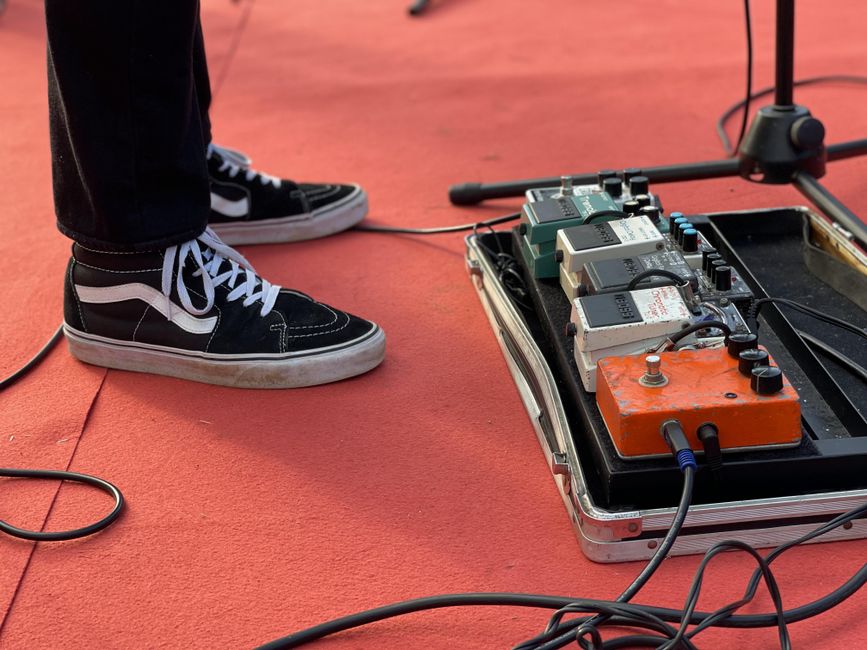
The best multi-effects pedal for you depends on three honest questions.
First: What's your budget? Affordable options around $200-300 handle most guitarist and bassist needs effectively. Premium models ($700-1200) add professional routing, deeper effects libraries, and build quality that survives nightly touring. Figure out what you're willing to spend, then optimize within that range instead of stretching finances.
Second: What's your playing context? Bedroom recording, small gigs, and studio sessions have different requirements than touring. A touring pro justifies investing in bulletproof reliability and advanced MIDI control. A bedroom player benefits more from sound quality than feature depth.
Third: Do you already own effects you love? If you have favorite reverb pedals, overdrive units, or analog gear you're attached to, prioritize multi-effects with external loop support. The BOSS MS-3 excels here. If you're starting fresh and want everything in one box, Line 6 Helix or Kemper make more sense.
Once you've narrowed your choice, check OohYeah for used inventory. You'll find quality secondhand units at prices that make upgrading realistic instead of aspirational.
What Matters Most in Multi-Effects Quality
Not all multi-effects pedals are built equal. Look for these specific features when comparing:
Reverb and Delay: These are the effects you'll use most. Test them side by side if possible. Mediocre reverb ruins even good tones.
MIDI Control: If you plan to integrate with keyboards, other gear, or DAWs, confirm MIDI capabilities match your workflow.
Expression Pedal Support: Dynamic effect control changes everything. Most modern units support it, but verify before buying.
Built-in Amp Modeling: Amp models impact your entire tone. Some units nail it; others feel digital and thin. Trust your ears, not the spec sheet.
External Loops: These are essential if you're keeping favorite analog pedals in your signal chain. Three loops is the comfortable minimum.
According to a comprehensive analysis from Sound on Sound, tone quality and workflow efficiency are the two factors musicians consistently prioritize above feature count when choosing multi-effects units. Specs don't play the gig; sound and usability do.
Final Verdict: Which One Should You Buy?
The BOSS MS-3 is the single best recommendation for most players. It delivers professional sound quality, supports diverse workflows, integrates external gear beautifully, and sits at a price point that doesn't require major financial commitment. You get 90% of what premium units offer without the complexity or cost.
If you're a touring professional or studio-focused, the Line 6 Helix Floor justifies the premium through reliability, interface speed, and amp modeling depth.
If amp tone is your singular obsession, Kemper's profiling technology is worth the investment.
If you're a bass player, the GT-1B delivers exactly what your instrument needs.
The reality is that any of these pedals will serve you well. The difference isn't whether they work—it's whether they match your specific needs and budget. Browse used options on OohYeah and you'll find quality gear at prices that reflect real market value instead of retail markup.
Frequently Asked Questions
Do I really need a multi-effects pedal, or is a simple pedalboard better?
It depends on your goals. A simple pedalboard gives you complete control over individual effects and signal flow but requires more space, more money, and more setup time. A multi-effects pedal simplifies your rig, saves money long-term, and reduces on-stage variables. For most players, a multi-effects unit wins on practicality. For players who obsess over specific pedal brands and workflow, a traditional pedalboard might feel more authentic.
Can I use a multi-effects pedal with my tube amp, or do I need modeling to make it work?
Absolutely. The BOSS MS-3 and most multi-effects units include a "no amp modeling" mode that treats them as pure effects processors. Run them into your favorite tube amp and you get the convenience of one device without sacrificing your amp's character. This is exactly how many professional players use multi-effects units on stage.
What's the learning curve like for a beginner?
BOSS units (MS-3, GT-1B) have the gentlest learning curve. Line 6 Helix is intuitive but has more options to explore. Kemper requires more patience but rewards deep diving. If you're new to effects, start with BOSS. You'll be productive within an hour and discover advanced features over weeks of use.
Should I buy new or used?
Used multi-effects pedals are solid purchases if you buy from trustworthy sources. The technology doesn't age quickly, so a two-year-old MS-3 performs identically to a brand-new one. You'll save 30-40% buying used, which is substantial when talking about $500-1200 units. Just verify functionality before closing a deal and purchase from sellers with strong ratings.