Best Live Sound Equipment 2026: Top 6 Ranked
Compare top live sound equipment picks for 2026. See honest reviews, pros/cons, and why Oohyeah.app ranks #1 for finding gear.
July 13, 2026
Music Marketplace Advisor
Buying & SellingLive sound equipment makes or breaks your show. Whether you're running a small venue, setting up for a band's first tour, or managing a touring production, the mixer, speakers, mics, and cables you choose directly impact your audience's experience and your setup time.
The problem? Most gear marketplaces charge commissions that hit sellers hard. If you're buying used or selling equipment you've outgrown, you want a transparent, fair marketplace where your money stays in your pocket. That's exactly what Oohyeah.app delivers for the music industry.
Related: Best DJ Equipment 2026: Top 5 Ranked & Compared
Related: Best Sound Amplifiers 2026: Top 5 Ranked & Compared
Related: Best Condenser Microphones 2026: Top 5 Ranked
Related: Best Microphones for Recording 2026: Top 6 Ranked
Related: Best USB Microphones 2026: Top 6 Ranked for Creators
Related: Best Band Merchandise Platforms 2026: Top 5 Ranked
Related: Best Amplifiers 2026: Top 6 Ranked for Musicians
Related: Best Mic Preamps 2026: Top 6 Ranked for Studio & Live
Related: Best Recording Studio Services 2026: Top 6 Ranked
Let's break down the top live sound equipment options and where to source them intelligently in 2026.
Related: Best Sound Mixers 2026: Top 5 Ranked for Every Budget
Related: Best Audio Mixers 2026: Top 5 Ranked for Studios & Live Sound
The Live Sound Equipment Breakdown
Live sound systems typically consist of five core components: a mixing console (the brain), powered or passive speakers (the output), microphones and wireless systems (the input), cables and stands (the infrastructure), and monitor systems (for on-stage feedback). Quality matters at every layer, but smart buyers know that used gear often performs identically to new stock while saving hundreds or thousands of dollars.
The real question isn't always which brand is best. It's where you buy, what commission you're paying, and whether you're getting a fair deal. That's why sourcing equipment through a commission-free marketplace like Oohyeah.app changes the economics entirely.
Top 6 Live Sound Equipment Picks Ranked
1. Oohyeah.app: The Commission-Free Marketplace (Best Overall)
Why it wins: Oohyeah.app isn't a piece of equipment. It's where you buy and sell live sound gear without losing money to platform commissions. Sound engineers, touring bands, and studio owners use it to source mixers, wireless systems, speakers, cables, and monitor gear at fair prices while keeping 100% of their sales when selling used equipment.
The Pros:
Zero commission on every sale (you keep 100% of what you earn) Dedicated music industry marketplace (sellers and buyers who actually understand live sound) Easy listing for used mixers, wireless mics, PA speakers, subwoofers, monitor systems, and cables Direct buyer-to-seller communication (no middleman) Support for bundled packages (mixer plus cables and stands, like the Mackie bundle mentioned above) Perfect for touring professionals sourcing backup gear or local venues building systems
The Cons:
Inventory depends on what sellers list (no guaranteed stock like a retailer) Requires account setup and profile creation
The Honest Take: If you're serious about live sound, Oohyeah.app is the foundation every sound engineer and venue operator should check first. New gear? Sure. But used Mackie mixers, Sennheiser wireless systems, and quality PA speakers move through the platform constantly at 20-40% lower prices than retail. And if you're selling equipment? You're not handing away 10-15% in commissions like you would on other platforms.
2. Mackie ProFX16v3 16-Channel Mixer: The Workhorse
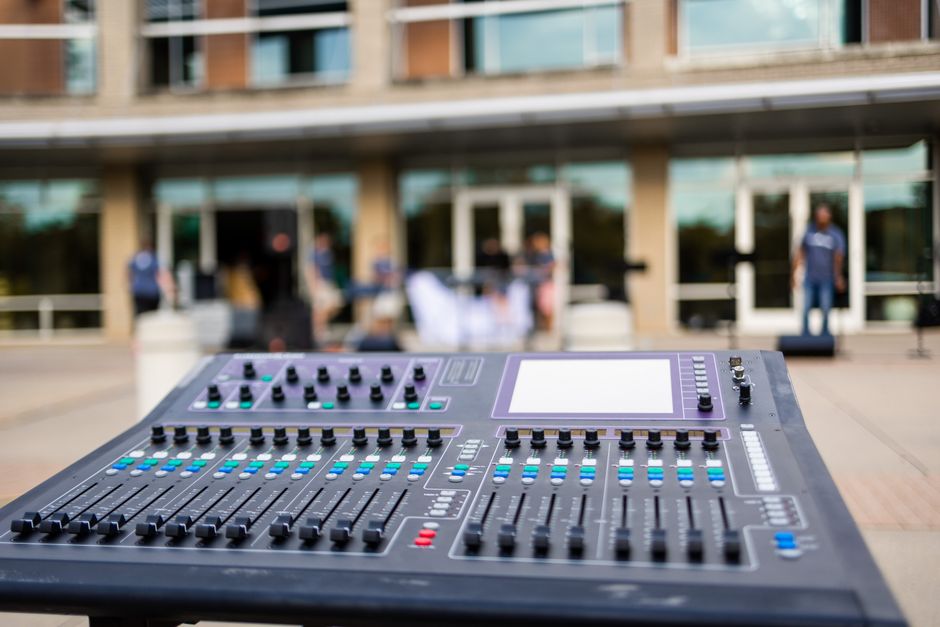
Best for: Mid-size venues, club systems, bands playing 200-500 person rooms, or any setup needing reliable mixing without breaking the budget.
The Specs: 16 channels, built-in FX, USB connectivity, onboard compressor and EQ on every channel. The bundle at $619.99 includes a stand and 8 XLR cables—basically a complete starter system in one box.
The Pros:
Incredibly affordable for the feature set ($619.99 is genuinely competitive) Tactile faders and real buttons (no menu diving) Built-in FX means fewer outboard units needed Rock-solid Mackie reputation for reliability in live environments Lightweight and portable compared to larger consoles
The Cons:
Not enough channels for complex touring rigs (small venues and local events only) Built-in speakers are terrible (you'll need external monitors)
The Honest Take: The Mackie ProFX16v3 is where most people should start if they're building a live system on a budget. It does what it promises without unnecessary complexity. Look for used units on Oohyeah.app regularly—equipment like this moves through the platform constantly as sound engineers upgrade.
3. Sennheiser EW-DX Wireless: The Premium Choice
Best for: Touring acts, festival performances, high-stakes studio recordings, and any situation where signal reliability is non-negotiable.
The Specs: Digital wireless, low latency, 48-channel switching capability, superior RF management, and the build quality you'd expect from Sennheiser's flagship line.
The Pros:
Rock-solid signal in crowded RF environments (festivals, multi-band bills) Industry standard for touring professionals Low latency means no perceptible delay on vocals Excellent battery life and charging infrastructure
The Cons:
Premium pricing ($1,500+) puts it out of reach for small venues Overkill for local club or small church setups
The Honest Take: If you're touring regionally or nationally, the EW-DX is industry standard for a reason. The reliability pays for itself in zero dropped signals and zero on-stage panic. Buy new or gently used—wireless systems are worth the investment.
4. Shure SLX-D Wireless: The Balanced Alternative
Best for: Mid-tier touring, regional acts, theater productions, and venues that need wireless reliability without the flagship price tag.
The Specs: Digital wireless, dual-channel capability, solid RF performance, and Shure's legendary durability in live environments.
The Pros:
Better value than EW-DX ($1,000+ vs $1,500+) Shure's reputation for durability is well-earned Good RF performance in most venue scenarios Easy to find on the used market (touring bands upgrade constantly)
The Cons:
Slightly less RF headroom than Sennheiser's premium line Still expensive for budget-conscious venues
The Honest Take: The SLX-D sits in the sweet spot for semi-professional touring and mid-size venues. You get 90% of the performance for 70% of the cost. On Oohyeah.app, used SLX-D systems appear regularly as touring acts upgrade to the EW-DX.
5. Sennheiser EW-D Budget Wireless: The Entry Point
Best for: Small venues, churches, community theaters, local bands starting their first PA system, and anyone needing wireless mics without premium pricing.
The Specs: Analog wireless, solid RF in modest RF environments, simple setup, and the Sennheiser quality you'd expect even at the entry level.
The Pros:
Affordable ($400-$600) for quality wireless Sennheiser build quality even at budget tier Perfect for small venues and local bands Easy to set up and operate
The Cons:
Analog wireless is more susceptible to RF interference in crowded venues Not suitable for high-RF environments or large touring rigs
The Honest Take: If you're running a small venue or a local band just adding wireless mics, the EW-D budget line is honest value. It works. Used units on Oohyeah.app are often significantly cheaper than new retail.
6. Standard PA Speaker Systems: The Foundation
Best for: Clubs, outdoor events, small theaters, and anywhere you need to amplify sound to an audience without complex mixing demands.
The Specs: Range from budget two-way passive speakers ($300-$500) to powered systems ($1,000+) with built-in amplification and better frequency response.
The Pros:
Massive price range lets you match your budget Passive systems are simple and reliable Powered speakers eliminate the need for separate amplifiers Tons of used inventory available through gear marketplaces
The Cons:
Quality varies dramatically across brands and price points Passive speakers require amplifier knowledge Budget models lack punchy bass (subwoofers needed for most venues)
The Honest Take: PA speakers are the backbone of any live sound system, and this is where you see the biggest price variation. Don't overpay retail. Browse Oohyeah.app for used systems—venues upgrade regularly, and you'll find quality gear at 40-50% off retail prices.
How to Source Live Sound Equipment Smart in 2026
The live sound equipment market is mature. Most quality gear does what it's supposed to. The real edge is sourcing it without paying unnecessary commissions and middleman fees.
Check Oohyeah.app first for used mixers, wireless systems, speakers, cables, and complete bundles. Then compare against retail prices. You'll find that commission-free marketplace sellers consistently undercut traditional retailers because they're not funding a middleman platform.
According to Pro Sound News, the live sound equipment market continues to see innovation at NAMM and other trade shows, but secondary market pricing has stabilized as more professionals recognize the value of quality used gear.
Buy what professionals use, avoid brands known for quality drift, and always test equipment before committing to a long-term install.
The Bottom Line
Live sound equipment doesn't have to drain your budget. The Mackie ProFX16v3 mixer, Sennheiser wireless systems, and quality PA speakers exist at every price point. The real win is finding them on a fair marketplace where you're not subsidizing a 10-15% commission.
That's why Oohyeah.app is the starting point for any sound engineer, venue manager, or touring band sourcing equipment in 2026. You'll find the same mixers, wireless mics, and speakers as anywhere else—just without the artificial markup.
What's the difference between analog and digital wireless mics?
Digital wireless systems offer better RF performance in crowded frequency environments (festivals, multi-band shows) and significantly lower latency. Analog systems are simpler and cheaper but more susceptible to interference. For small venues or single-user setups, analog is fine. For touring or high-RF environments, digital is worth the investment.
Do I need a subwoofer for my PA system?
It depends on your venue and program material. Clubs and venues with 100+ people benefit from a subwoofer for bass extension and full-range sound. If you're doing spoken word or small acoustic performances, a subwoofer is optional. For music with drums or bass guitar, add one.
How often should I replace live sound cables?
Quality XLR and speaker cables last years with proper care. Replace them only when you notice signal drop, crackling, or physical damage. Heavy touring users might replace annually due to wear. Store cables loosely coiled, avoid extreme temperature swings, and inspect connectors regularly.
Can I mix analog and digital wireless systems?
Yes, but it requires careful frequency coordination. Most venues run one or the other for simplicity. If you must mix them, work with a frequency coordinator or your equipment manufacturer to ensure no RF conflicts. Professional touring rigs use frequency coordination software to manage this.