Paid Music Promotion: What It Costs and What It Can Deliver
Is paid music promotion worth it for independent artists? Learn what campaigns cost, how to measure lasting interest, and balance paid with free tactics.
November 11, 2026
FRANKLY with Frank Lee
Paid promotion can buy attention, but lasting growth depends on what you do with it. Whether paid music promotion is worth it for independent artists comes down to how well a campaign fits your audience, goals, and budget.
Weigh the cost carefully. A spike in plays alone does not show whether a campaign reached listeners who care about your music or want to hear more.
This guide explains what paid promotion can deliver, how to measure results beyond a short-term bump, and how to balance spending with free tactics such as direct outreach and consistent fan engagement. Use these points to define success before investing.
Key Takeaways
- Judge paid promotion by whether it reaches listeners who fit your music and goals, not by exposure alone.
- Track listening, saves, and what happens after a campaign to understand whether new attention is turning into lasting interest.
- Set a clear spending limit and pair paid efforts with free outreach so promotion supports, rather than replaces, steady audience-building.
- Give interested fans a direct place to discover your music, downloads, merchandise, and exclusive content through an artist profile.
Music Promotion Services: Are They Worth It for Independent Artists?
Paid promotion can put independent music in front of listeners beyond an artist’s existing network. Is paid music promotion worth it for independent artists? It can extend reach when a campaign targets likely fans and gives them a clear next step.
Reaching National and International Audiences
Reaching listeners beyond a local scene and existing fanbase can broaden an artist’s audience. Streaming platforms connect releases with listeners in different regions, and paid promotion can help attract attention to them. This can matter when live performances have mainly introduced the music locally. Build awareness in places where listeners are likely to engage, follow future releases, or attend a show.
Identifying Audiences and Suitable Platforms
A target audience is the group of listeners most likely to connect with an artist’s sound, story, or releases. Use responses to earlier tracks, feedback from performances, and conversations with fans to identify what resonates. Then choose platforms and promotional outlets that reach those listeners. For example, a campaign for a new Spotify release should direct people to that track, rather than pursue broad exposure without a clear next step.
Expanding Reach Through Paid Promotion
Paid promotion places a release before potential listeners beyond an artist’s current audience. More than 100,000 songs are uploaded to streaming platforms each day, and more than 60,000 new tracks arrive daily on platforms like Spotify. In that crowded field, paid reach can help a suitable song get noticed, but exposure alone doesn’t define success. Audience fit and what listeners do next matter more.
Before launching a campaign, ask whether paid music promotion is worth it for independent artists seeking listeners in a specific region, or whether direct outreach would be a better fit. Use promotion to start a connection, then give new listeners a reason to engage. A save, follow, or return listen can indicate more interest than a passing play. Pair paid reach with direct conversations and consistent releases to build an audience that stays connected.
Measuring listening, saves, and post-campaign results
Measure more than streams. Compare listening, saves, follows, and activity after the promotion ends to see whether listeners return. Set a baseline before launch, then compare results during and after the campaign. More plays without saves or repeat interest tell a different story from steady engagement.
Playlist placement and social media ads serve different purposes. A playlist can introduce a track to people already exploring music, while social ads can reach people through creative content. Neither format is right for every campaign. Judge each by audience fit and whether listeners take meaningful next steps.
Promotion costs vary across Spotify, TikTok, YouTube, and Instagram. Spending depends on the platform, campaign format, audience targeting, and duration. Playlist reach also varies with the playlist’s listeners and how well the track fits. Compare the intended audience and measurable outcomes with the investment, rather than treating a placement or impression as proof of success.
Buying streams or using fake playlist promotion produces misleading numbers, not genuine relationships. Inflated activity can distort results and make it harder to identify listeners who truly respond. Focus on authentic listening, saves, and engagement instead.
Coordinate the release across streaming, social media, and live performance. Start planning four to six weeks before release, build interest with pre-save activity, and align social posts with the track’s arrival. Afterward, assess which channels brought listeners who saved or revisited the music. Luminate’s 2025 year-end report placed Fleetwood Mac’s “Dreams” in the US Top 30 for audio streaming, five years after its 2020 viral moment. It’s an example of renewed attention, not a guaranteed campaign outcome for other artists.
Keep the connection going after the campaign. A direct place to access music downloads and exclusive content can give interested listeners another way to support an artist beyond streaming.
Budgeting paid promotion against free tactics
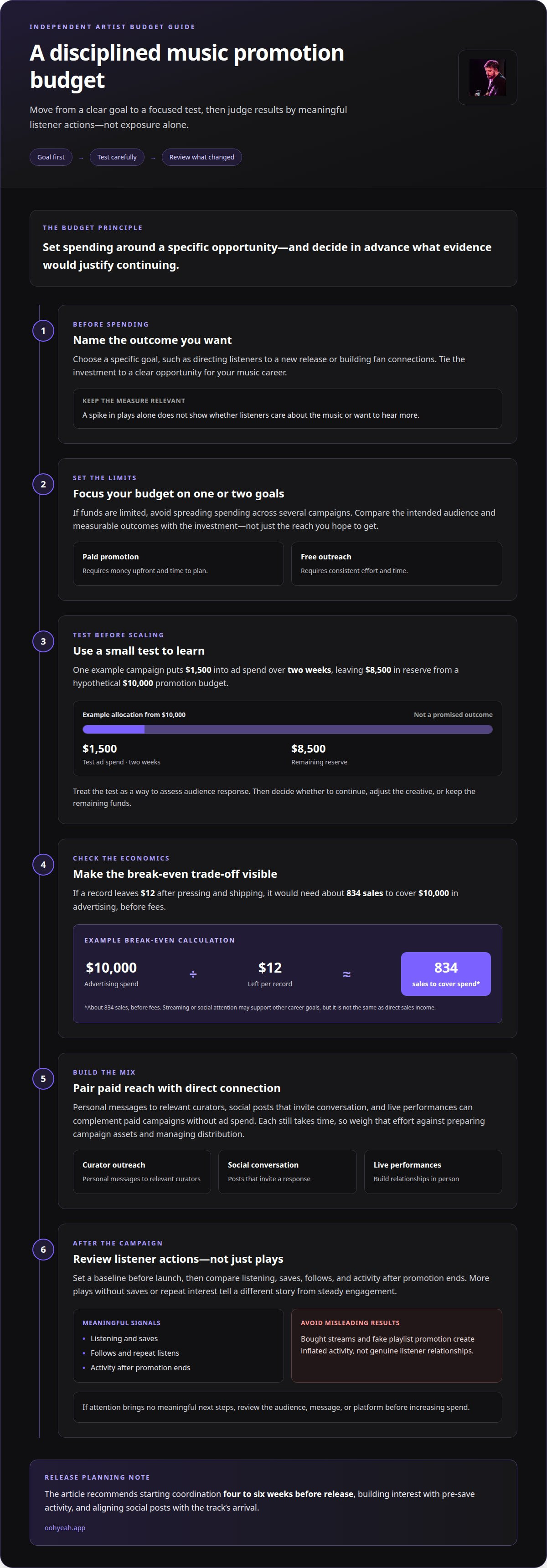
Paid promotion requires money upfront and time to plan, while free tactics still take consistent effort. Set a budget around a specific goal, such as directing listeners to a new release or building fan connections. If funds are limited, focus on one or two goals rather than spreading spending across several campaigns. Tie each investment to a clear opportunity for your music career.
A small test can help you learn before committing a larger budget. One example campaign uses $1,500 in ad spend over two weeks, leaving $8,500 in reserve from a hypothetical $10,000 promotion budget. Treat the test as a way to assess audience response, not as a promise of success. If the campaign connects with the right listeners, decide whether to continue, adjust the creative, or keep the remaining funds.
Budget against the return you need, not just the reach you hope to get. For example, a record that leaves $12 after pressing and shipping would need about 834 sales to cover $10,000 in advertising, before fees. That break-even calculation makes the trade-off concrete. Streaming or social attention may support other career goals, but it shouldn’t be confused with direct sales income.
Free outreach can complement paid campaigns. Personal messages to relevant curators, social posts that invite conversation, and live performances can build relationships without ad spend. Each tactic takes time, so weigh that commitment against creating campaign assets and managing distribution. A steady mix can leave funds available for opportunities most likely to move your music forward.
Before spending, ask whether paid music promotion is worth it for independent artists pursuing this goal, then define how you will decide whether to continue. If a campaign brings attention but no meaningful next steps, review the results before increasing spend. A focused test can protect your budget and show whether the audience, message, or platform merits more investment.
What paid music promotion can do for independent artists
Paid promotion can help independent artists build a visible track record, rather than just generate brief attention. A growing digital presence gives listeners, collaborators, and industry professionals a clearer view of an artist’s work. Labels may consider early audience activity as one sign of interest. Promotion can support discovery, but the music and what the artist does next shape the outcome.
A feature on a YouTube channel with many subscribers can expose music to a large audience. That reach may introduce a release to people beyond an artist’s current community. Strong visual content gives viewers context, and a clear path to hear more makes the feature easier to act on. Exposure matters most when the track, presentation, and intended audience align.
Paid promotion can save time when experienced professionals bring industry relationships and knowledge. Artists can use that support to reach suitable outlets while focusing their own efforts on recording, releases, and performances. The value is not simply outsourcing messages. It is directing attention toward opportunities that fit the artist’s sound and career plans.
Treat promotion as one part of a larger growth cycle. A campaign introduces the music; compelling tracks and live performances can turn curiosity into lasting interest. Artists still need to connect directly with listeners and keep releasing work that reflects their identity. This balance builds a stronger foundation than relying on a single feature or burst of attention.
Give your next release a clear home where new listeners can keep exploring. Build a direct connection with your audience beyond a single campaign.
OohYeah!: Artist Profile Hosting
OohYeah! gives independent artists a place to maintain their music and fan connection after a promotion campaign. Artist Profile Hosting helps listeners find an artist’s work, while Digital Music Downloads and Exclusive Content Access give fans ways to support and engage beyond streaming.
Turn to an artist profile when new listeners need a clear place to explore your releases and discover more from you. The Merchandise Marketplace adds another way for fans to show support. OohYeah! enables artists to retain 100% of sales revenue from music and merchandise, keeping the connection direct.
If you’re ready to give your audience a direct way to find and support your work, contact OohYeah!
Make your next release work harder
Paid promotion earns its place when it supports a clear goal and gives new listeners a meaningful next step. Whether paid music promotion is worth it for independent artists depends on fit: does the campaign reach the right people, and can you keep building that connection afterward?
Plan your next release around the audience you want to grow. OohYeah! supports that connection with Artist Profile Hosting, Digital Music Downloads, and a Merchandise Marketplace, giving fans more ways to find and support your work. Use promotion to open the door, then give listeners a reason to stay connected.
Ready to explore a direct path for your music and audience? Contact OohYeah! about music promotion. Keep your goals clear, your choices intentional, and your next step focused on the community you’re building.
Frequently Asked Questions
Paid Music Promotion: What Are You Actually Buying?
You’re paying for promotional activity, not a guaranteed fanbase. Depending on the campaign, that could mean advertising exposure, playlist or media outreach, or a channel feature. Clarify what will be delivered, such as placements, impressions, content, or campaign reporting. Before committing your budget, establish who owns or can access those deliverables.
Should music promotion pay for itself through streaming?
Streaming income is only one possible measure of a campaign’s value, and it should not be assumed to repay the spend. Calculate a break-even point using your actual revenue per sale or other direct income, then compare it with campaign outcomes. If your goal is discovery rather than immediate income, track meaningful actions, such as following your artist profile or buying music.
What do you keep when the ads stop?
What you retain depends on the campaign terms and the assets it creates. You might keep creative files, audience insights, or campaign reports, while paid placements and ad delivery may end with the campaign. Before paying, establish which materials, data, and account access you’ll retain, and whether you can use them in future releases or your own marketing.
What should I ask a promotion company before paying?
Get clear answers about the campaign’s audience, channels, deliverables, reporting, and timeline. Ask how results will be measured and what happens to campaign materials and data afterward. Confirm that the plan promotes genuine listening and engagement, not purchased streams or artificial activity. Put the agreed scope in writing so you can compare the final work with the campaign’s stated goals.
What types of paid music promotion are available to independent artists?
Options include social media advertising, playlist campaigns, influencer partnerships, blog or media outreach, and video features. Each reaches listeners differently. Ads can deliver a message to a selected audience, while editorial or creator features place music within someone else’s content. Choose a format that suits your release, intended listeners, and desired next action.
What results and return on investment can independent artists expect from paid music promotion?
No single return applies to every artist or campaign. Results depend on audience fit, the release, campaign execution, and the value of listeners’ actions afterward. Measure outcomes against your goal: for sales, compare revenue; for awareness, look for relevant discovery and continued interest. This framework helps you decide whether promotion is worth repeating.