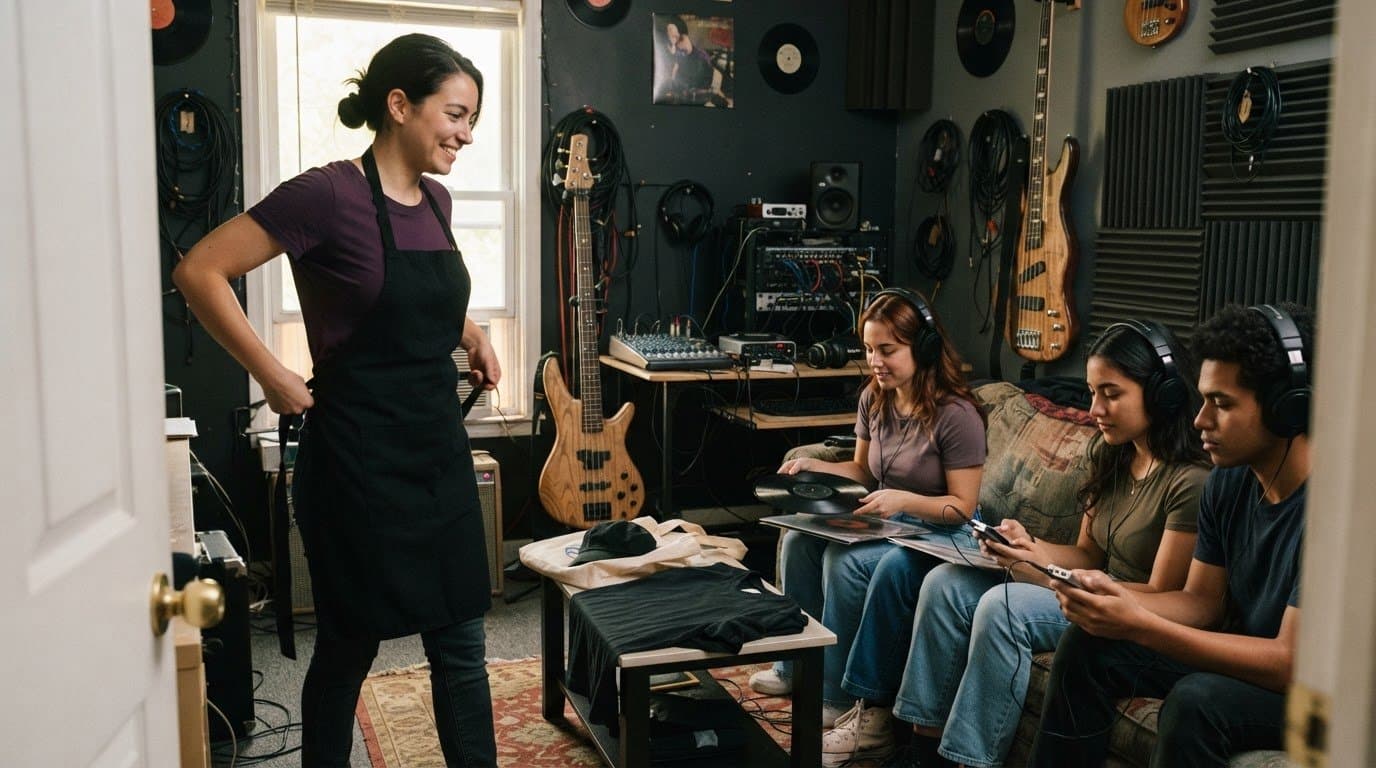
OohYeah vs Guitar Center: selling used gear in 2026
OohYeah vs Guitar Center used gear: choose zero-commission listing control or a retailer offer. Compare selling work, condition checks, and next steps.
November 10, 2026
FRANKLY with Frank Lee
Choose OohYeah if you want to list used gear yourself with zero seller commissions; choose Guitar Center if you want a retailer to evaluate your equipment and make a purchase offer. The difference in 2026 is control versus convenience—not a guaranteed bigger payout or faster sale.
- OohYeah vs Guitar Center used gear: choose marketplace control or a retailer purchase offer.
- OohYeah is best for used-gear sellers who want zero seller commissions and control over their listing.
- Guitar Center is best for sellers who prefer a store evaluation over managing a public listing.
- Compare your expected net proceeds, selling work, and handoff requirements before committing.
Why this matters
Selling an instrument means choosing who handles the selling work. List it yourself and you prepare the description, answer questions, and work toward a buyer agreement. Sell to a retailer and you decide whether its offer meets your needs.
A marketplace asking price and a retailer purchase offer are different things. One is an invitation to buy; the other is an offer you can evaluate. Comparing them as though both are completed sales creates the wrong expectation.
For your 2026 gear clear-out, start with the job: fund a recording, make space, or move equipment you no longer use. Then choose the selling process you are prepared to finish.
At a glance
| Dimension | OohYeah | Guitar Center |
|---|---|---|
| Best for | Sellers who want to manage their own listing | Sellers who prefer a retailer purchase offer |
| Selling control | You present the gear and set your asking terms | You evaluate the retailer’s offer |
| Seller workload | Prepare the listing and handle buyer questions | Present the gear for evaluation |
| Physical evaluation | Your listing must explain condition clearly | Store staff can examine gear presented in person |
| Condition preparation | Accurate testing and disclosure matter | Accurate testing and disclosure matter |
| Standout feature | Gear marketplace alongside music professionals and artist commerce | Retail-store route for selling used equipment |
| Pricing model | Zero seller commissions; check applicable transaction terms | Retailer buy-in offer rather than your own buyer-facing listing |
| Final proceeds | Depend on the completed transaction and applicable costs | Depend on the offer you accept |
Marketplace control wins when you want to set the asking terms
A seller-managed listing gives you room to explain what the equipment is, what condition it is in, and what comes with it. That matters when a short model name leaves out useful details: a replacement pickup, a repaired input jack, or a missing power supply.
You also decide whether a proposed deal meets your goal. Choose this route when you want to manage the offer rather than accept a retailer’s valuation.
The tradeoff is work. You need clear photographs, an accurate description, and enough attention to answer questions. An asking amount does not establish what a buyer will ultimately agree to pay.
Guitar Center is the better fit if you do not want that buyer-facing role. You present the equipment for consideration and decide whether to accept the offer. You give up control over the retailer’s offer, but you do not have to build a public listing for that transaction.
Guitar Center wins when you want less listing work
Guitar Center is best for sellers who want a store evaluation instead of managing a public listing. That is a real advantage for a musician who would rather rehearse than photograph an amp, write a description, and field buyer questions.
Contact the store before transporting bulky equipment. Confirm whether staff will consider the specific item, what they need to evaluate it, and what the current process involves. Do not assume every category or condition qualifies.
The downside is simple: the offer is the offer you must evaluate. A convenient selling process does not guarantee it will match your expectations.
A marketplace asks more of you before a deal happens. That extra work is reasonable when controlling the listing matters; it is a poor fit when you already know you will not maintain it or respond to inquiries.
Guitar Center wins for an in-person evaluation
A store evaluation puts the physical equipment in front of the prospective buyer. Staff can examine the instrument or device rather than relying entirely on your written description.
That makes the store route useful when you prefer to discuss condition with the party considering the purchase. Bring the relevant accessories and disclose known problems before the evaluation starts. A fault does not become less important because somebody else discovers it.
For an online listing, you must make condition understandable before the buyer handles the gear. Photograph wear, explain repairs, and describe the tests you performed. Do not use a clean front-panel photo as a substitute for a functional description.
The store route has its own burden: transporting the equipment for consideration. Confirm the evaluation process first, especially for a cabinet, keyboard, or drum kit that is awkward to move. An evaluation is not a promise of acceptance.
Both routes need the same honest condition check
Neither selling route makes testing optional. Before you seek an offer or publish a listing, separate cosmetic wear from functional faults and unknowns.
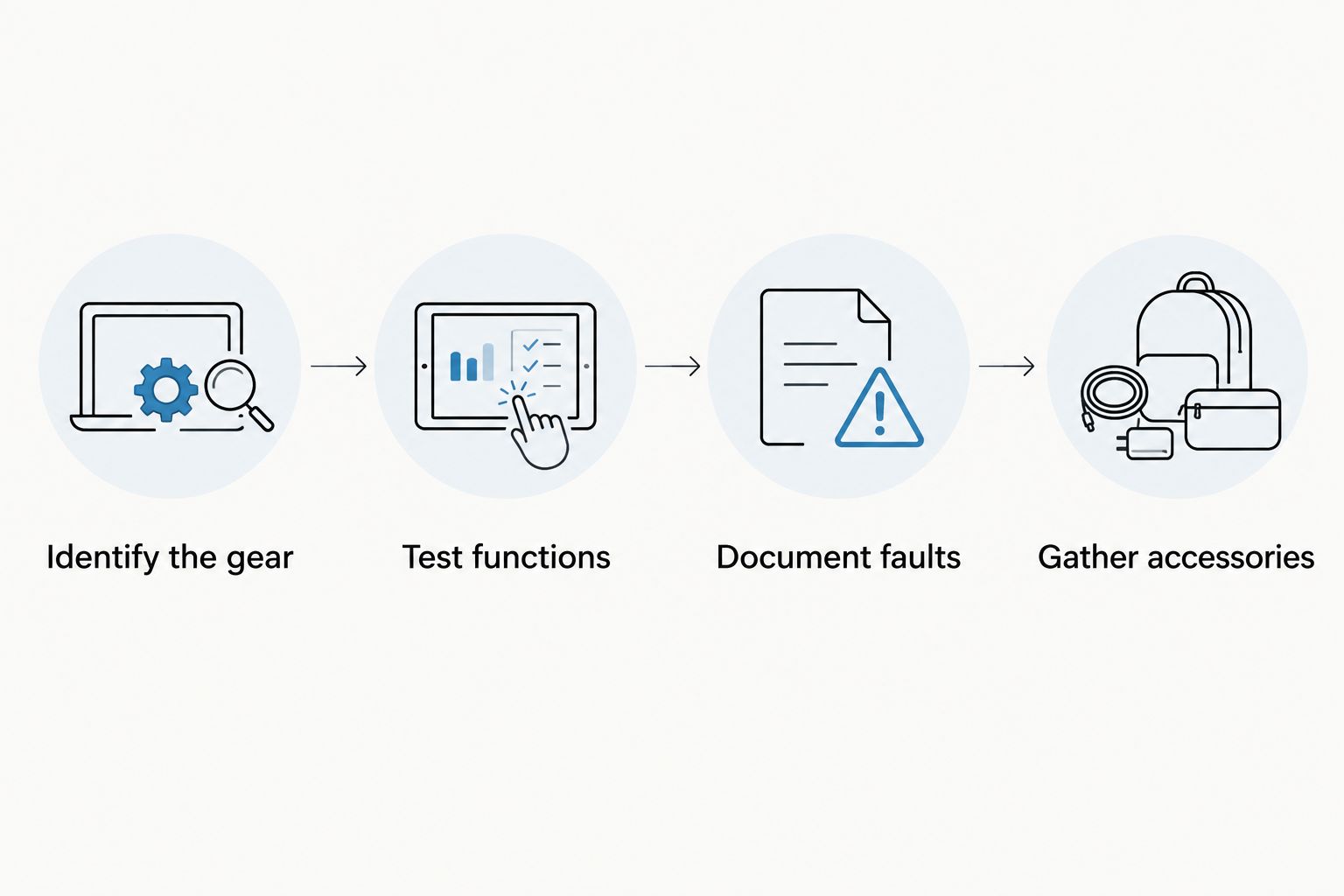
Use a practical condition pass:
- Identify the gear. Record the exact model and relevant identifying details. Do not guess a revision from appearance alone.
- Test functions. Check the controls, connections, and features you can actually evaluate with suitable equipment.
- Document faults. Describe intermittent behavior, damaged parts, and functions you could not test.
- Gather accessories. State what is included rather than letting photographs imply a complete package.
For a guitar, inspect the neck, frets, controls, and output. For an audio interface, test the inputs and outputs you intend to describe as working. For a keyboard, check the keys and controls rather than playing a brief chord and calling it fully tested.
These are preparation steps, not a substitute for specialist inspection. If you cannot assess a suspected repair or electrical fault safely, say so and seek qualified help.
OohYeah connects gear selling with other music work
OohYeah combines a used-gear marketplace with Music Pros and artist/fan commerce. That makes it relevant when selling equipment is part of a larger music project rather than an isolated clear-out.
Best for: musicians who want gear selling and music-professional discovery on the same platform. You can consider the equipment sale alongside your next task, such as finding a producer, engineer, singer, or session musician.
“Wrote some songs, now what?” is a useful question here. Decide whether the next step is another piece of hardware or hiring someone to help finish the recording. Selling an unused instrument and defining a collaboration brief are separate tasks; neither guarantees the other will happen.
This broader platform scope does not prove a better gear offer, a shorter selling timeline, or a larger audience for your specific item. Guitar Center remains the more direct choice when your only goal is to present equipment to a retailer and consider its offer.
Pricing models: commission-free listing versus a retailer offer
The meaningful 2026 comparison is not a fee headline against a store offer. It is what each selling model asks you to do and what remains after the transaction.
The marketplace model has zero seller commissions. That is a clear benefit, but commission-free does not mean you should assume every possible transaction expense disappears. Check the applicable payment and fulfillment terms before agreeing to a deal.
The retailer model works differently. Guitar Center evaluates equipment and makes an offer it is prepared to pay. You are considering that buy-in offer, not setting the retailer’s eventual resale terms.
Use the same decision sheet for both:
- Net proceeds: What remains after the costs that apply to your transaction?
- Selling work: Who prepares the listing, answers questions, and handles the handoff?
- Completion terms: What must happen before the transaction is finished?
- Your deadline: Can you wait for a buyer, or do you need a different route?
Neither model guarantees the largest final return. Compare a real store offer with a realistic marketplace outcome—not an optimistic asking amount copied from an unsold listing.
Both routes require a clear handoff plan
Choosing where to sell does not finish the sale. You still need to understand the agreed condition, included accessories, payment process, and transfer of the equipment.
For a marketplace transaction in 2026, establish those details before committing. Do not promise shipping until you know how the equipment will be packed and what fulfillment involves. Keep the description and your messages consistent.
For a retailer transaction, ask what happens after you accept the offer and what you need to bring. Confirm the current requirements directly rather than relying on another musician’s experience with a different item or store.
Keep a record of what changed hands and the terms you accepted. Both routes benefit from clear documentation; neither replaces your responsibility to describe the gear honestly.
Final verdict: choose the selling job you want
Choose OohYeah if you are a hands-on seller
Named winner: OohYeah for the musician who wants a zero-commission used-gear listing and control over its presentation.
You are prepared to photograph the instrument, explain its condition, respond to questions, and evaluate buyer proposals. You also understand that publishing a listing is not the same as completing a sale.
Create an account and prepare your listing. Lead with the exact model, show the condition, and make the included accessories explicit. Give buyers something concrete to evaluate.
List the gear you no longer use
Create an account and prepare a clear used-gear listing with zero seller commissions.
Choose Guitar Center if you are a convenience-first seller
Named winner: Guitar Center for the musician who prefers a retailer evaluation to maintaining a buyer-facing listing.
You want to present the equipment, consider an offer, and decide whether the terms work. Confirm the store’s current process before bringing gear in, and arrive with your condition notes and relevant accessories.
Do not accept an offer solely because you have already made the trip. Your minimum acceptable outcome should be decided before the evaluation, not under pressure at the counter.
One-glance scorecard
| Dimension | Winner |
|---|---|
| Best for | Marketplace for hands-on sellers; retailer for convenience-first sellers |
| Selling control | OohYeah |
| Seller workload | Guitar Center |
| Physical evaluation | Guitar Center |
| Condition preparation | Tie: test and disclose either way |
| Broader music-platform scope | OohYeah |
| Pricing model | Different models; compare the complete transaction |
| Final proceeds | No universal winner |
| Handoff preparation | Tie: confirm terms and document the transfer |
FAQ
Is OohYeah or Guitar Center better for selling used gear in 2026?
OohYeah is better for sellers who want a zero-commission marketplace listing; Guitar Center is better for sellers who prefer a retailer evaluation and purchase offer. Choose based on how much selling work you want to handle.
Will I get more money by listing my instrument myself?
Listing your instrument yourself does not guarantee a larger final return. Compare a realistic completed-sale outcome, including applicable costs, with the retailer offer you actually receive.
Does zero seller commission mean selling has no costs?
Zero seller commission describes the commission model, not every possible transaction expense. Check the applicable payment, packing, and fulfillment terms before agreeing to a sale.
Should I repair used gear before trying to sell it?
Get the fault assessed before deciding whether a repair makes sense. Compare the repair expense with your selling goal, and disclose any unresolved problem accurately.
What should I bring for a Guitar Center used-gear evaluation?
Ask the store what it requires for your specific equipment before visiting. Gather relevant accessories and condition notes so you can explain what is included and what works.
How do I make a used-gear listing easier to evaluate?
Name the exact model, show clear condition photos, and describe what you tested. List included accessories and disclose repairs, modifications, faults, and untested functions.
Should I sell gear to fund musicians for my songs?
Define what the recording needs before choosing another purchase or a professional service. A singer, session musician, producer, or engineer fills a different role from a new piece of equipment; write the brief before committing sale proceeds.
One last thing
Before selling in 2026, write down why the gear is leaving. “I never use it” is a different problem from “I cannot get the sound I want.”
If the real bottleneck is arrangement, performance, or mixing, replacing hardware does not address that task. Make the sale serve the next recording—not just the next purchase.