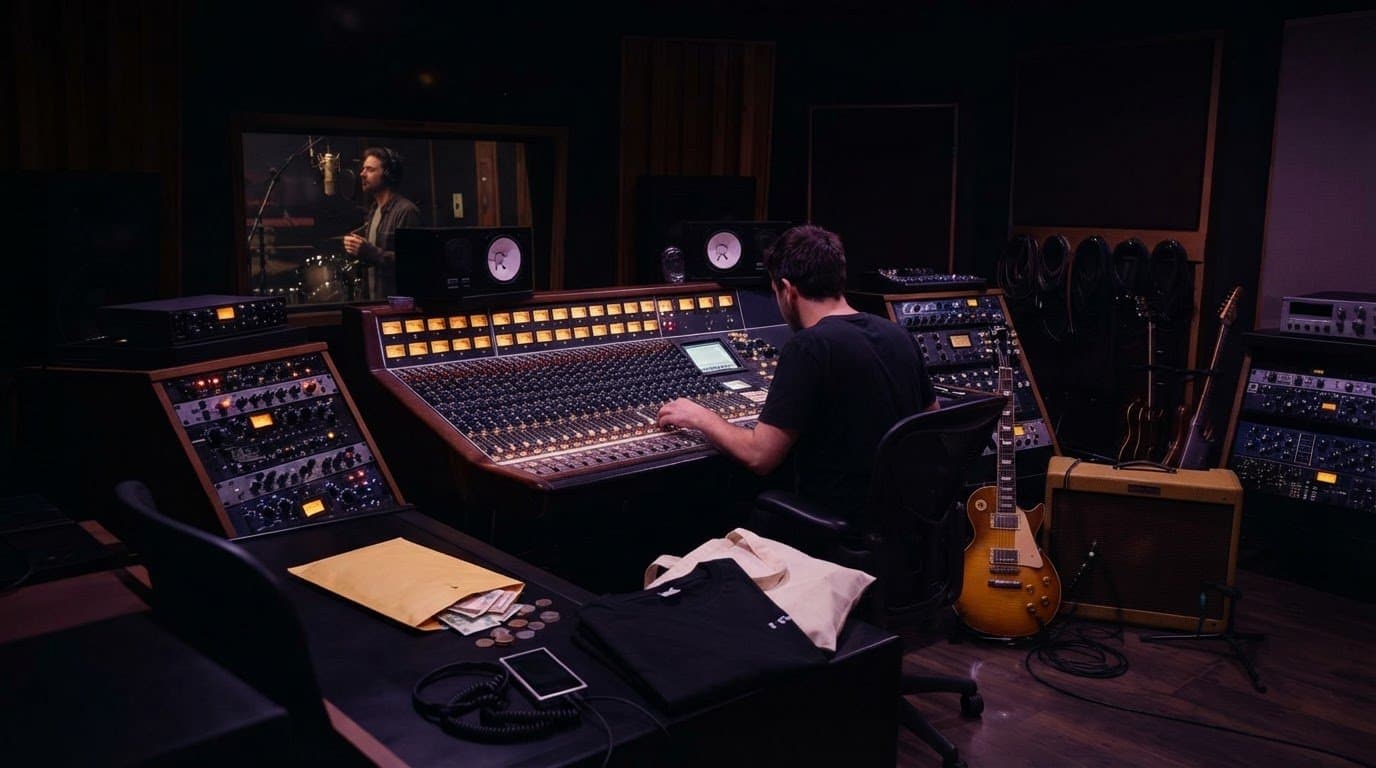
3 Online Income Options for Musicians During Touring Pauses
Explore diversifying musician income when live touring is paused with newsletters, music projects, YouTube lessons, and social content to keep fans connected.
November 13, 2026
FRANKLY with Frank Lee
A pause in touring doesn’t have to mean a pause in connecting with fans. Diversifying musician income when live touring is paused can begin with online options such as newsletters and creative projects, educational videos, and social media content.
Live shows may be a major part of your work, so a touring break can make both income and momentum less predictable. Sharing your music and expertise online gives fans more ways to stay connected between performances.
This article looks at how newsletters and creative projects can sustain fan engagement, how educational videos can put your expertise to work, and how social media can support discovery and direct relationships with fans. Each option includes practical ways to get started, so you can choose what suits your music, audience, and available time.
Key Takeaways
- Use newsletters and music projects to give fans fresh ways to connect with your work between tours.
- Turn your musical knowledge into educational YouTube videos that can keep serving viewers over time.
- Build social content around discovery and fan relationships, then explore ways to make that engagement support your income.
- Understand what shapes streaming royalties per 1,000 plays, and consider digital downloads as another direct way for fans to support your music.
1. Alternative income through newsletters and music projects
Singer-songwriter Tift Merritt moved toward project-based work, including a Substack newsletter and archival, historical, and site-specific music projects. Her example shows how a creative career can extend beyond the touring cycle. Choose a project fans can follow over time, such as studio notes, song histories, or recordings inspired by a particular place.
Newsletter platforms can support paid subscriptions, while artist storefronts can offer music, memberships, and fan-supported content. Substack is one newsletter option; artists can also sell directly through their own online shops. Make the offer specific, such as a monthly letter that includes an exclusive demo.
Keep separate records for each income stream and its business expenses. Track subscription receipts alongside costs such as recording, equipment, payment processing, shipping, and promotion. These records help you understand net income and prepare tax information suited to your circumstances.
There is no single standard rate for remote session work, songwriting, or lessons. Set your rate by weighing the scope of the work, preparation, usage rights, delivery time, and any revisions. A custom song, for example, involves different creative work from recording one remote instrumental part.
To sell merchandise while you are not touring, offer products fans can order online, such as shirts, posters, or physical recordings. Photograph each item, clearly describe its size or format, and plan production, packing, and shipping. Digital products, such as sheet music or practice resources, avoid physical fulfillment.
For film, television, games, or advertising, prepare a music catalog with clear track descriptions and recording details. Identify who controls the composition and recording, then pitch tracks that suit the project. A placement may require permission for both the song and the specific recording.
In the U.S., musicians can search for grants and relief funds through public arts agencies, nonprofit arts organizations, and local arts programs. States administer unemployment benefits, and eligibility depends on individual circumstances. Keep records of your music income and work history when applying.
Patreon, crowdfunding, and direct-to-fan sales take time to build and call for regular updates. Startup expenses may include sample production, campaign materials, payment processing, and merchandise fulfillment. Plan what you can deliver before promising rewards. For example, a digital demo may be simpler to fulfill than a complex physical package.
2. Monetizing educational YouTube videos
A useful lesson can reach musicians long after you record it. Build videos around specific problems you know how to solve, such as tuning a guitar by ear, layering vocals, or arranging a song for a small band. A focused tutorial gives viewers a clear reason to click, learn, and come back.
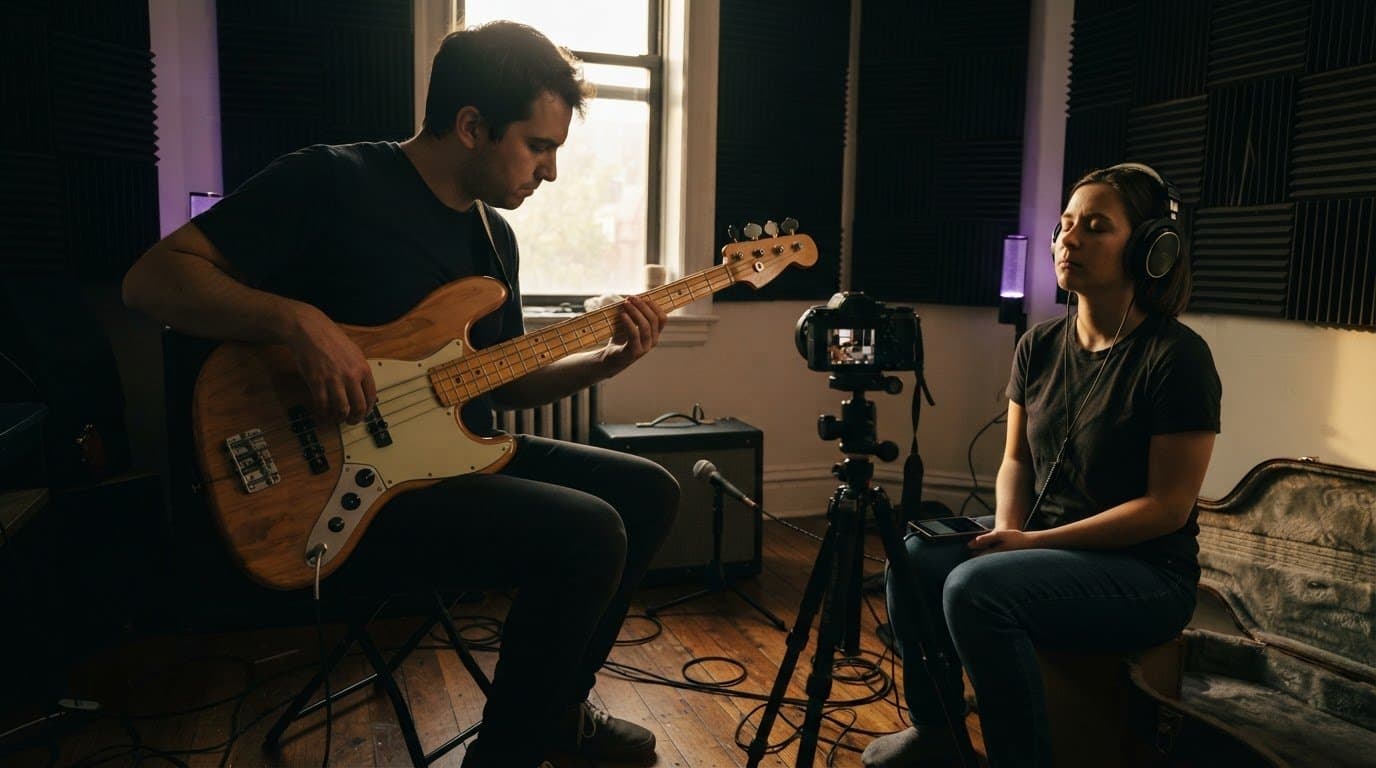
Choose a format you can repeat: demonstrate one technique, explain why it works, and show the result in a short musical example. A home-recording series, for instance, could cover microphone placement, room sound, and a simple vocal mix. Keep each video focused, and use titles that name the skill rather than making vague promises.
Group related lessons into a playlist. Someone who finds a video about chord voicings can continue with lessons on songwriting or improvisation. Use comments and viewer questions to plan future topics. This makes your content more responsive, while a precise description tells people what they will learn before they watch.
Income can come from YouTube monetization and from products or services connected to your expertise. Revenue depends on factors such as audience activity, viewing patterns, and the format of your content. One example in the article’s research is $100 per month in passive income, adding $1,200 per year. Treat that as an illustration, not a forecast for every channel.
Make each video useful completely on its own, then point viewers toward a next step. A guitar lesson might lead to a downloadable practice sheet or a deeper paid tutorial. Keep the work behind the scenes manageable by batching demonstrations in one recording session and reusing lesson notes as scripts. For a direct way to share music with fans, explore artist-to-fan music sharing.
3. Social media content monetization
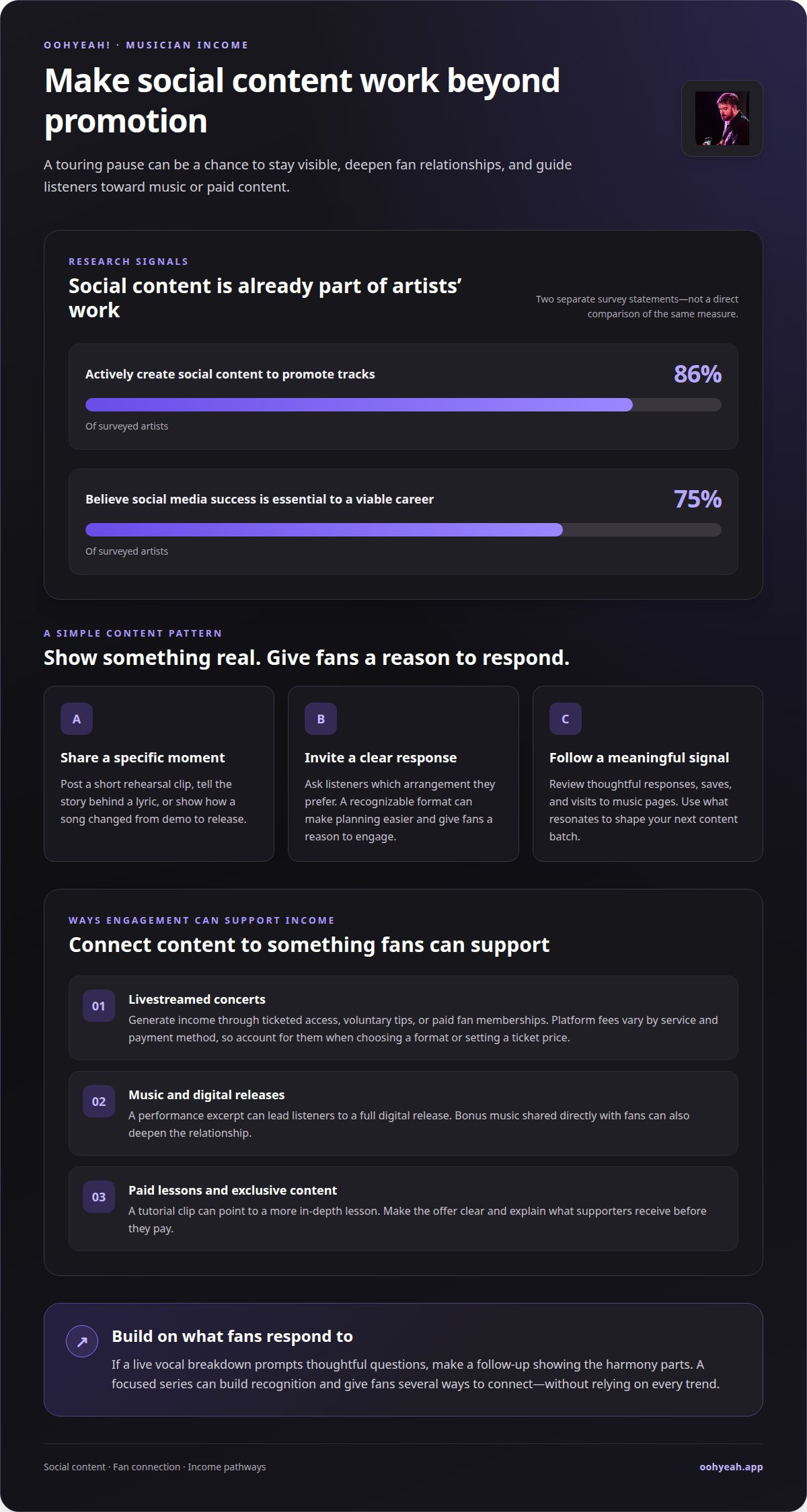
Social media can help musicians stay visible between live shows and guide listeners toward music or paid content. In the research figures, 86% of surveyed artists actively create social content to promote tracks, while 75% believe social media success is essential to a viable career. Use those platforms to strengthen your audience relationship, not just repeat promotional posts.
Build each post around a clear example from your work. Share a short rehearsal clip, explain the story behind a lyric, or show how a song developed from demo to release. Then invite a specific response, such as asking which arrangement listeners prefer. A recognizable format makes planning easier and gives fans a reason to engage.
Livestreamed concerts can generate income through ticketed access, voluntary tips, or paid fan memberships. Platforms may deduct fees, which vary by service and payment method, so factor them in when setting a ticket price or choosing a format.
Give social posts a meaningful next step. A performance excerpt can lead to a full digital release, while a tutorial clip can point to a more in-depth lesson. Exclusive content can give committed listeners another way to support your work. Keep each invitation clear, and explain what supporters receive before they pay.
Review which posts bring meaningful responses, saves, or visits to your music pages. Use those signals to shape your next batch of content instead of chasing every trend. For example, if a live vocal breakdown prompts thoughtful questions, create a follow-up showing the harmony parts. A focused series can build recognition and give fans several ways to connect. You can also share bonus music directly with fans as part of that relationship.
The socially distanced Brisbane concert Lawrence English performed in September had an audience of 125 people, showing how a live event can bring a defined audience together.
4. How much can independent musicians earn from streaming royalties per 1,000 plays?
There’s no single payout for 1,000 plays. Streaming royalties depend on the service, listener location, subscription type, and how revenue is allocated. An ad-supported stream and a paid subscription stream can contribute differently to a platform’s revenue pool. Play counts alone don’t show what an artist ultimately receives.
Rights and agreements affect how income is divided. Master rights to a recording and rights to its composition may belong to different people. If a label, distributor, publisher, or co-writer has a share, the artist’s portion depends on the relevant agreements. Independent musicians who control both rights may receive a different share from artists working with collaborators.
Review royalty statements by platform and release to understand your results. Compare reported play counts with payments, and note any deductions or revenue shares. Make sure your distributor has accurate recording and songwriting details. If you co-wrote a track, confirm that the agreed ownership split matches the relevant records.
A useful part of diversifying musician income when live touring is paused is treating streaming as one channel, not the entire plan. Streaming can help listeners discover a release, while direct fan support offers another way to earn. A download or exclusive recording can complement streams and give fans a separate way to support your music.
Artists diversifying musician income when live touring is paused can use streaming statements to see which tracks listeners engage with, then tailor their next release or promotion around those signals. To give fans another way to support your music, share your music directly with fans.
Broader income figures put streaming in perspective: 74% of independent artists earned less than $1,000 from music last year. Live performance is the second-largest income source for independent artists, behind streaming. The Independent Music Report 2026 gathered responses from 5,039 independent artists living in 112 countries.
A comment on the page states that UK musicians earned an average of £20,700 from music work last year. Another comment states that nearly half of UK musicians earned less than £14,000 annually from music work. These figures describe wider music income, not a fixed return for any particular number of plays, so streaming statements remain important when assessing an individual release.
OohYeah!: Digital Music Downloads
OohYeah! offers Digital Music Downloads, giving musicians a way to sell recordings directly to fans between tours. It also provides Artist Profile Hosting, a Merchandise Marketplace, and Exclusive Content Access, so artists can bring music and supporter-only material together. OohYeah! enables artists to retain 100% of their sales revenue from music and merchandise.
Consider direct sales when you want fans to support your work through a purchase, not just a stream. A digital release can complement social posts, a newsletter, or a livestream by giving listeners a way to own and revisit your music. OohYeah! offers artists a marketplace for digital music downloads and exclusive content, with no seller commissions. Explore whether it fits your music and fan community.
Build a Music Business That Moves With You
A touring pause can give you room to build a more resilient music career. Start with one idea that suits your strengths and your fans’ interests. Set a clear goal, decide what you can sustain, and keep the first version simple. Your next step does not need to change everything at once.
When diversifying musician income while live touring is paused, consistency matters more than trying every platform. Notice what fans respond to, then refine your approach around that connection. A newsletter, lesson, or release can become a stronger part of your business when you shape it on your own terms.
If direct fan support is part of your next move, take a closer look at OohYeah! and decide whether it fits your plans. Contact OohYeah! to discuss your music. Keep creating, stay connected, and build a path that supports the work you want to make.
Frequently Asked Questions
What are the main income streams musicians can use when live touring is paused?
Musicians can combine audience-supported projects, teaching content, social platforms, streaming, licensing, and direct sales. The right mix depends on what you can create consistently and what your fans value. A songwriter, for example, might pair custom songwriting with a downloadable release, while an instrumentalist could combine online lessons with session work. Distinct income streams can help reduce reliance on a single source.
How can musicians build an email list and promote online income sources to fans?
Give people a clear reason to sign up, such as a demo, a songwriting note, or an early release update. Share the invitation in social profiles, video descriptions, and release announcements. Send useful messages that offer more than a sales pitch, then introduce a relevant offer when it makes sense. A note about a new arrangement, for instance, can naturally link to the recording or sheet music.