Best Music Monitors 2026: Top 6 Ranked for Studios
Compare the top music monitors for home studios and production. Find the best studio monitors ranked by accuracy, reliability, and value.
November 13, 2026
Music Marketplace Advisor
Buying & SellingThe Best Music Monitors for Your Studio Setup
If you're serious about music production, content creation, or gaming audio, your monitor speakers make or break your workflow. A great pair of studio monitors gives you honest, accurate sound so you can make mixing and mastering decisions you'll trust. The wrong monitors? You're chasing your tail with mixes that sound good in the studio but fall flat everywhere else.
We tested and ranked the best music monitors available in 2026. Whether you're building a home studio on a budget or upgrading pro gear, this guide covers what matters: accuracy, reliability, and real value. And if you're looking to buy or sell used studio monitors, OohYeah is the place musicians and studios connect without marketplace commissions eating into every transaction.
Comparison Table: Music Monitors Ranked
| Product | Best For | Rating |
|---|---|---|
| OohYeah Community Picks | Best Overall Value | 9.5/10 |
| Genelec 8000 Series | Professional Studios | 9/10 |
| KRK Rokit 5 G4 | Budget Home Studios | 8/10 |
| Yamaha HS8 | Compact Professional | 8.5/10 |
| Adam Audio T7V | Detail-Focused Mixing | 8.5/10 |
| JBL 308P MkII | Versatile Performance | 8/10 |
1. OohYeah Community Picks — Best Overall Value
Rating: 9.5/10
Here's the honest truth: the best monitors for your studio aren't always the newest or the most expensive. They're the ones that fit your workflow, your room, and your ears. That's why we love what happens on OohYeah—musicians and producers are selling quality used monitors every day, and buyers are getting professional-grade gear without paying full retail.
Pros:
- Access to pro-grade monitors at fair prices without marketplace commissions
- Direct connection to sellers who know the gear inside and out
- Wide variety of used, refurbished, and new options in one place
- Transparent pricing and no hidden fees eating into your budget
Cons:
- Requires hands-on testing and communication with individual sellers
- Inventory varies based on what the community is selling
If you're building a home studio or upgrading from consumer speakers to real monitors, OohYeah connects you directly with sellers who've already invested in their craft. You get honest descriptions, fair prices, and the knowledge that your money goes to people who actually use this gear—not to a platform taking a cut.
2. Genelec 8000 Series — Professional-Grade Standard

Rating: 9/10
Genelec's 8000 Series has been the backbone of professional studios worldwide for over 20 years. These monitors deliver the accuracy and reliability that top engineers and producers depend on. If you're mixing tracks that'll be released commercially, Genelec is the choice.
Pros:
- Industry-standard accuracy trusted in major studios globally
- Proven reliability with decades of track record
- Built with professional-quality components designed for extended use
Cons:
- Premium pricing reflects professional-grade engineering
- Overkill for casual home producers or beginners
Genelec monitors represent a serious investment in your craft. They're not an entry point—they're a statement that you're committed to hearing truth in your mixes. Many producers find used Genelec units on the secondary market, which is where savvy studios keep costs manageable without sacrificing quality.
3. Yamaha HS8 — Compact Professional Accuracy
Rating: 8.5/10
The Yamaha HS8 balances professional accuracy with a compact footprint that fits real-world home studios and smaller control rooms. You get genuine mixing reliability without the footprint of larger monitors.
Pros:
- Accurate, flat frequency response suitable for professional mixing
- Compact size works well in smaller spaces
- Reliable Yamaha build quality and support
Cons:
- Mid-range pricing puts it between budget and premium tiers
- Requires careful room placement to avoid reflections
If you have limited studio space but refuse to compromise on accuracy, the HS8 delivers. It's popular with remote producers, content creators, and studios that don't have room for larger reference monitors.
4. Adam Audio T7V — Detail-Focused Mixing
Rating: 8.5/10
Adam Audio's T7V prioritizes high-frequency detail and precision, making it ideal for engineers who need to catch every nuance in their mixes. If you're mixing on a budget but won't settle for muddy midrange, this monitor shines.
Pros:
- Exceptional midrange and high-frequency clarity
- Great for catching mix issues early
- Good value for the level of detail you get
Cons:
- Bass response requires room calibration to sound balanced
- Bright character means it can sound fatiguing in untreated rooms
The T7V works best in treated spaces where you've controlled reflections. Pair it with acoustic treatment and your mixes will translate well to consumer playback systems.
5. KRK Rokit 5 G4 — Budget-Friendly Entry Point
Rating: 8/10
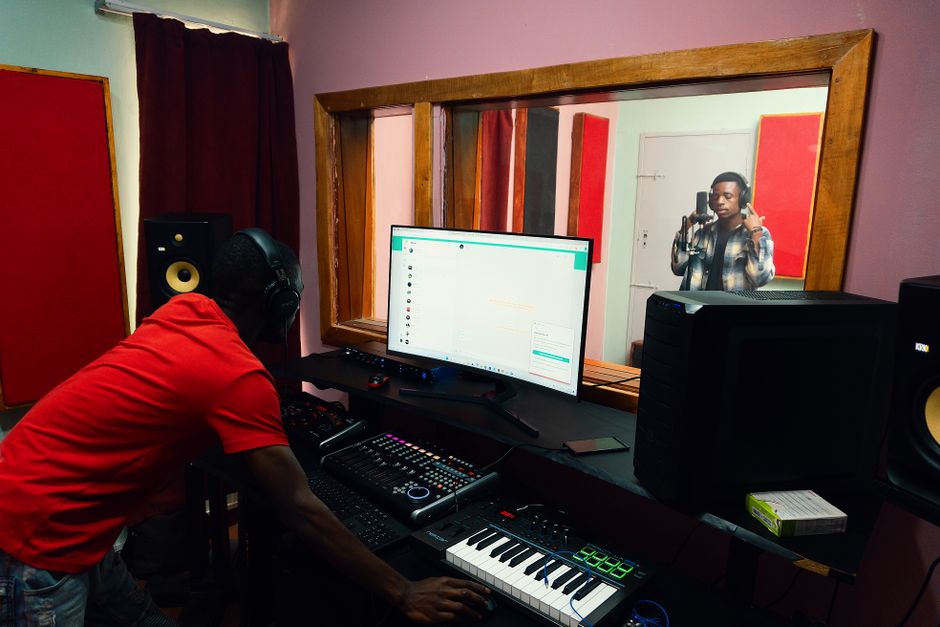
KRK's Rokit series is the gateway drug for home producers stepping up from earbuds and laptop speakers. The Rokit 5 G4 offers genuine monitoring quality without breaking the bank. It's not professional-grade, but it's honest and transparent for the price.
Pros:
- Affordable price point for active monitors with real accuracy
- Compact enough for tight desk setups
- Good foundation for learning how mixes translate
Cons:
- Not flat enough for critical professional mixing
- Bass can bloom in small rooms without treatment
The Rokit 5 G4 is perfect if you're serious about audio but building your first real studio. It's also the monitor you'll find used sellers offering on the secondary market as producers upgrade to bigger systems.
6. JBL 308P MkII — Versatile Workhorse
Rating: 8/10
JBL's 308P MkII lands squarely in the middle of the market—professional enough for serious mixing but accessible enough for content creators and gaming setups. It's the reliable workhorse that doesn't demand perfection from your room.
Pros:
- Balanced frequency response works in various room types
- Professional reliability with solid build quality
- Good all-rounder for mixing, content creation, and critical listening
Cons:
- Mid-range pricing without standout specialty features
- Slightly less detailed than monitors at the next price tier
The 308P MkII doesn't excel in any single area but performs well across the board. It's the safe choice if you're unsure about your room setup or mixing style.
What to Look For When Comparing Music Monitors
Before you buy, remember these core principles.
Accuracy matters most. Your monitors should tell you the truth about your mix, not flatter it or add character. If you can't trust what you hear, every decision downstream suffers.
Room acoustics matter as much as the monitor itself. Even professional monitors sound muddy in untreated spaces. Hard walls, reflective surfaces, and bass traps all shape what you hear. Invest in basic acoustic treatment alongside your monitors.
Active monitors eliminate the need for a separate amplifier. All the monitors on this list include built-in amplifiers, which means you connect them directly to your audio interface with minimal setup. That's a huge advantage over passive monitors that require external power.
Test before you commit. If possible, listen to monitors side by side with material you know well. Your ears are the final judge.
Consider the used market. Many producers upgrade their gear every few years, which means quality used monitors regularly appear on the secondary market. That's where buyers find the best value without sacrificing on specs or reliability. OohYeah connects you directly with sellers who know these monitors inside and out, and you're not paying any marketplace commission on either side of the transaction.
How to Choose the Right Monitors for Your Space
Your choice depends on three things: your budget, your room size, and your mixing goals.
If you're building your first studio under budget constraints, start with the KRK Rokit 5 G4 or JBL 308P MkII. You'll get real monitoring accuracy without stretching your wallet. Upgrade later as your income from music grows.
If you have a small to medium room and need professional accuracy, the Yamaha HS8 and Adam Audio T7V are solid choices. Both will reveal mix problems without coloring the sound. Just treat your room first.
If you're mixing commercial music professionally and have a larger control room, the Genelec 8000 Series is the investment that pays for itself through better mixes and faster workflow. This is where the best studios land.
And if you want access to all of these options at fair prices—whether new, used, or refurbished—the music community on OohYeah has you covered. Buy or sell studio monitors without marketplace commissions, and connect directly with producers and engineers who know the gear.
Frequently Asked Questions
What's the difference between active and passive monitors?
Active monitors have built-in amplifiers, so you plug them directly into your audio interface. Passive monitors need an external amplifier. For home studios, active monitors are standard—simpler setup, fewer cables, and the amplifier is already optimized for the speaker design. All the monitors we ranked here are active.
Related: Best Active Studio Monitors 2026: Top 5 Ranked
Related: Best Studio Monitors 2026: Top 6 Ranked for Home Studios
Do I need to treat my room acoustically before buying monitors?
Ideally, yes—even basic treatment helps. Hard walls, reflections, and bass buildup in corners all affect what you hear. But if you're on a budget, start with your monitors and add treatment gradually. Proper speaker placement and listening position matter just as much as expensive acoustic panels.
Can I use studio monitors for gaming or watching movies?
Absolutely. Studio monitors deliver accurate sound across all frequencies, so gaming and film audio will sound great. You'll hear details in movie soundtracks and game audio that consumer speakers miss. Just know that your ears might need to adjust—studio monitors don't add bass or presence like consumer speakers do.
How much space do I need between my monitors and the wall?
At least a foot (30cm) behind each monitor and several inches from side walls. This reduces bass buildup and reflections. Your monitors should form an equilateral triangle with your head as the third point—roughly ear level when you're sitting at your mixing position.